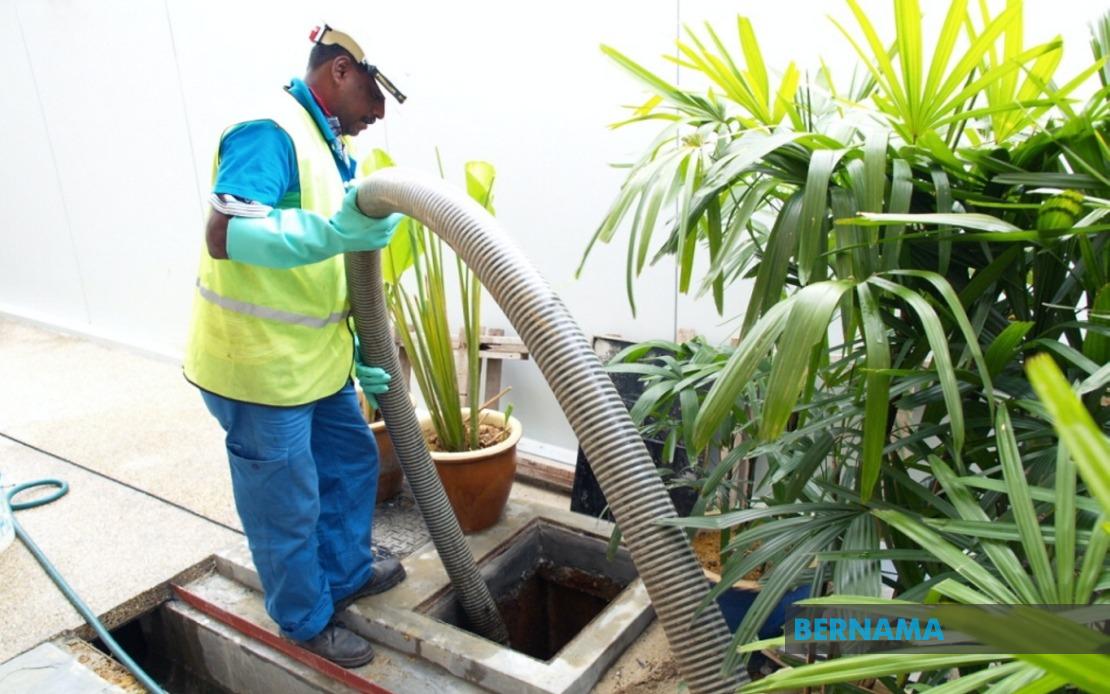
Malaysia's water regulator has intensified enforcement efforts against property owners in Sungai Petani who have neglected mandatory septic tank maintenance, issuing 270 compliance notices during a targeted operation that exposed decades of accumulated neglect in the town's water infrastructure. The National Water Services Commission (SPAN) conducted the inspections as part of Ops Padi 2, a multi-day enforcement campaign spanning August 4 to 6 that examined 341 premises across both commercial and residential zones in the business district.
The operation uncovered a widespread maintenance crisis affecting properties constructed during Malaysia's industrial boom decades. According to Ainal Yusman Mohamad Yusop, director of SPAN's Operations Division Enforcement Section, the inspected premises consisted of 242 commercial establishments and 99 residential units, with the majority dating from the 1970s and 1980s. This demographic profile is significant, as aging infrastructure requires more rigorous maintenance schedules to prevent system failures and environmental contamination.
The enforcement action revealed alarming gaps in property maintenance compliance. Many septic tank systems had gone without professional servicing for extraordinarily long periods, with some records indicating that the last desludging occurred in 1997 or 1999—meaning certain systems have operated without maintenance for roughly a quarter-century. In a functioning wastewater management system, such prolonged neglect poses serious risks to soil integrity, groundwater quality, and public health. The accumulation of solids and sludge in unmaintained tanks can lead to system failure, environmental contamination, and costly emergency repairs that far exceed routine maintenance expenses.
The notices represent enforcement under Malaysia's primary water services legislation, the Water Services Industry Act 2006 (Act 655). This statute explicitly mandates that property owners engage licensed service providers or permit holders to conduct regular desludging operations on their septic tank systems. The regulatory framework exists to ensure that wastewater treatment occurs to acceptable standards and that environmental protection is maintained across commercial and residential landscapes. SPAN's Ops Padi 2 campaign demonstrates a commitment to ensuring compliance with these statutory obligations rather than allowing voluntary adherence.
Property owners receiving compliance notices face a defined timeline for remedial action. The authorities have granted a 14-day window for recipients to respond and complete the required septic tank emptying. This grace period reflects a graduated enforcement approach: initial warnings before escalation to formal penalties. The timeframe is deliberately short enough to prevent further deterioration of systems while allowing reasonable time for property managers to contract with licensed service providers and schedule the work.
Failure to comply with the compliance notices triggers a structured enforcement escalation. SPAN officials indicated that non-responsive property owners will face follow-up enforcement actions, potentially including formal notices of offence and criminal investigations. The stakes are considerable under Act 655, which imposes maximum financial penalties of RM50,000 for violations of Section 65(1)(c). For commercial enterprises operating on tight margins, such fines represent a substantial financial burden, providing clear incentive for prompt compliance rather than continued neglect.
The Sungai Petani operation also highlights the enforcement partnership between SPAN and Indah Water Konsortium Sdn Bhd (IWK), the primary private sector operator providing wastewater services in many parts of Malaysia. IWK had previously issued notices to these same properties regarding septic tank maintenance obligations, yet many owners failed to respond. SPAN's intervention represents the regulatory backstop when industry notices alone prove insufficient to achieve compliance. This cooperative approach between regulator and service provider ensures that enforcement capabilities are marshalled effectively.
For Malaysian businesses and property owners, the operation carries important implications regarding regulatory expectations and financial exposure. Many commercial premises across the country may operate under similar non-compliance regimes, unaware that regulatory scrutiny is intensifying. Property managers accustomed to operating without septic tank maintenance may face similar compliance notices in coming months, as SPAN expands this enforcement model to other municipalities. The Sungai Petani action signals a nationwide shift toward stricter wastewater compliance rather than selective enforcement.
The environmental dimension of this enforcement action deserves emphasis in the Southeast Asian context. Improperly maintained septic systems contribute to groundwater contamination, soil degradation, and pathogenic organism proliferation in densely populated urban and semi-urban areas. Malaysia's commitment to environmental stewardship and public health depends on functional wastewater infrastructure, particularly as communities age and require more intensive management. Enforcement operations like Ops Padi 2 protect not only individual water security but also regional ecosystem integrity.
Beyond immediate compliance, the Sungai Petani operation raises broader questions about infrastructure aging and preventative maintenance culture in Malaysian property management. The discovery that certain septic systems had received no attention for 15-25 years suggests systemic gaps in property owner awareness, financial capability, or regulatory priority. Future policy interventions might address these root causes through subsidized maintenance programs, simplified permitting for small-scale property owners, or mandatory maintenance schedules tied to property licensing rather than relying solely on reactive enforcement campaigns.

