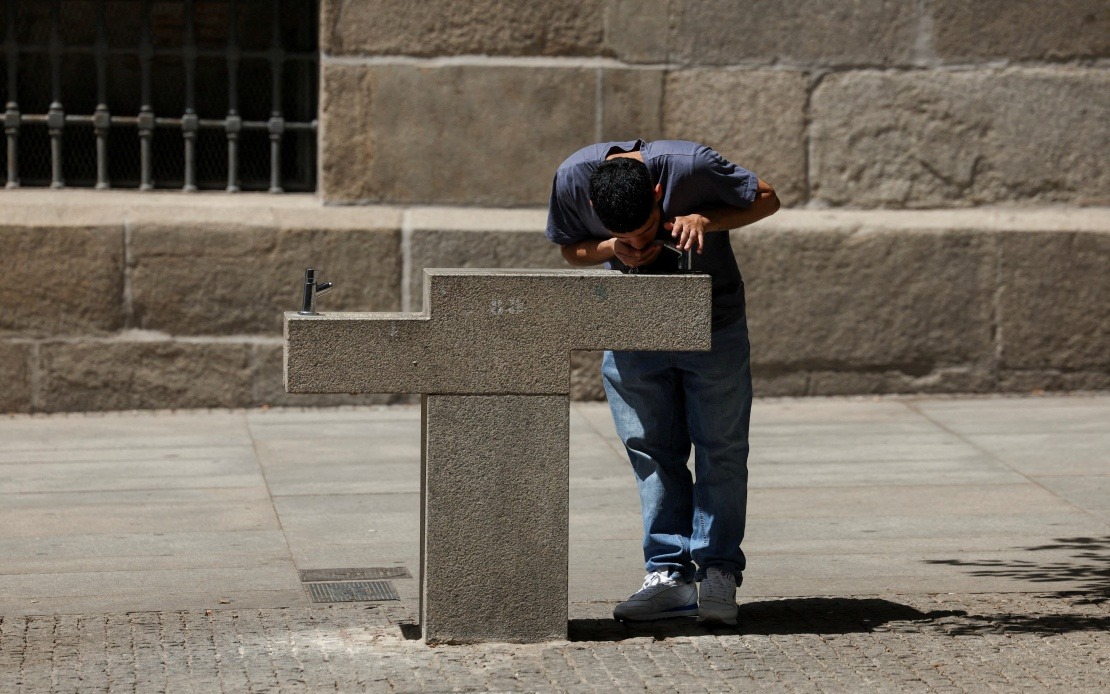
Spain's devastating heatwave in June claimed the lives of over 1,000 people, according to data released by the country's Daily Mortality Monitoring System, a surveillance initiative overseen by the National Epidemiology Centre at the Carlos III Health Institute. The figure of 1,029 deaths attributable to extreme heat represents a grim toll from what meteorologists confirmed was the second-hottest June in Spain's recorded history, underscoring the mounting public health crisis posed by rising temperatures across Southern Europe.
The death toll encompasses fatalities from direct heatstroke as well as individuals whose pre-existing medical conditions deteriorated fatally due to heat exposure. This distinction matters for understanding the full scope of heat-related mortality, as many vulnerable populations—the elderly, those with cardiovascular disease, and people living in poverty—face compounded risks when temperatures climb. Spain's methodology of tracking both direct and indirect heat deaths provides a more comprehensive picture than some other nations' reporting systems, yet even this rigorous accounting likely underestimates the true human cost of extreme weather.
Weather data compiled by Spain's State Meteorological Agency reveals the exceptional nature of June's conditions. The average 24-hour temperature across peninsular Spain reached 24.9 degrees Celsius, marking the second-highest June average since temperature records commenced in 1961. Only June 2025 surpassed this milestone, when the average climbed to 25.2 degrees Celsius—a troubling pattern suggesting that record-breaking heat is becoming routine rather than exceptional. The rapid succession of two consecutive record-breaking years signals an acceleration in warming trends that climate scientists have long predicted for the Mediterranean region.
The peak of the heatwave occurred on June 23, when Spain experienced the hottest single day in its recorded meteorological history. On that date, the national 24-hour average temperature reached 29.6 degrees Celsius, while maximum temperatures in peninsular Spain soared to 38.2 degrees Celsius—a threshold that matched the previous record set just one year earlier in June 2025. Such back-to-back record temperatures raise profound questions about the region's capacity to adapt to what may become the new climatic baseline rather than anomalous extremes.
The intensity of the heat became evident in the sheer number of local temperature records shattered during a concentrated five-day period from June 20 to 24. Weather stations operated by the State Meteorological Agency registered 316 provisional local temperature records during these days alone, comprising 148 maximum temperature records and 168 records for the highest minimum overnight temperatures. The prevalence of overnight temperature records is particularly significant, as it indicates that even during hours traditionally cooler than daytime, dangerous heat persisted—a situation that prevents the human body from recovering through nighttime cooling.
Population exposure to dangerous heat conditions reached alarming proportions on the worst day. On June 23, approximately 35.7 million people—roughly 73 percent of Spain's entire population—faced some degree of health risk from elevated temperatures according to the Health Ministry's Meteosalud alert system cross-referenced with official population statistics. This means that on a single day, nearly three-quarters of Spaniards were living under heat warnings, a situation that strains healthcare systems, emergency services, and public infrastructure simultaneously across an entire nation.
For Malaysian and Southeast Asian observers, Spain's experience offers a cautionary preview of potential climate futures in this region. While tropical nations already operate in warm climates, the unprecedented rapid temperature increases Spain is experiencing mirror trends projected for equatorial and subtropical regions. The compounding effect of humidity in Southeast Asia—making the same absolute temperatures feel substantially hotter—suggests that mortality impacts could be even more severe. Urban heat island effects in rapidly expanding Malaysian cities like Kuala Lumpur and George Town could create microenvironments approaching Spanish conditions during monsoon breaks or El Niño episodes.
The vulnerability of populations to heat-related mortality varies dramatically depending on social and economic factors. Spain's relatively developed healthcare infrastructure and public alert systems mitigated what could have been far higher death tolls. Conversely, countries with less robust health systems, higher rates of outdoor labor, greater poverty, and more inadequate housing face exponentially greater risks from similar temperature extremes. The lesson for Southeast Asia is sobering: developing nations in the tropics and subtropics will bear the heaviest burden of heat-related mortality despite contributing least to historical carbon emissions.
Health authorities across Europe have increasingly focused on heat vulnerability mapping and early warning systems, recognizing that meteorological heat waves and mortality waves do not align perfectly. Deaths spike before, during, and after official heat warnings, creating windows of heightened risk that systems must anticipate. Spain's MoMo system represents one of Europe's most sophisticated approaches, yet even this advanced monitoring cannot prevent deaths—it can only quantify them after the fact. The real challenge lies in fundamental adaptation: retrofitting housing stock for heat resilience, expanding cooling access, improving public transportation to reduce exposure during heat peaks, and protecting outdoor workers through regulatory reform.
The pattern of escalating temperatures across consecutive years raises questions about whether June 2026's deadly heat represents a new plateau or merely a waypoint in an accelerating trend. If June 2025 was shocking and June 2026 merely the second-worst in recent memory, what will June 2027 bring? Spanish health officials and policymakers must grapple with the reality that adaptation strategies designed for historical climate variability may prove inadequate for a world where records fall annually. For developing nations with fewer resources and greater vulnerabilities, this prospect demands urgent international climate finance and technology transfer to build resilience before crisis becomes catastrophe.
The human dimensions of Spain's heat toll extend beyond statistics. Behind the figure of 1,029 deaths stand family members confronting unexpected loss, communities grappling with overwhelmed funeral services, and medical professionals traumatized by inability to save preventable deaths during peak heat periods. These social costs—grief, disrupted social fabrics, eroded trust in institutions—rarely appear in mortality counts yet shape how societies respond to future threats. Spain's tragedy serves as a collective warning for the entire Northern Hemisphere and beyond that the climate crisis has transitioned from abstract future threat to present killer, demanding immediate, transformative action.

