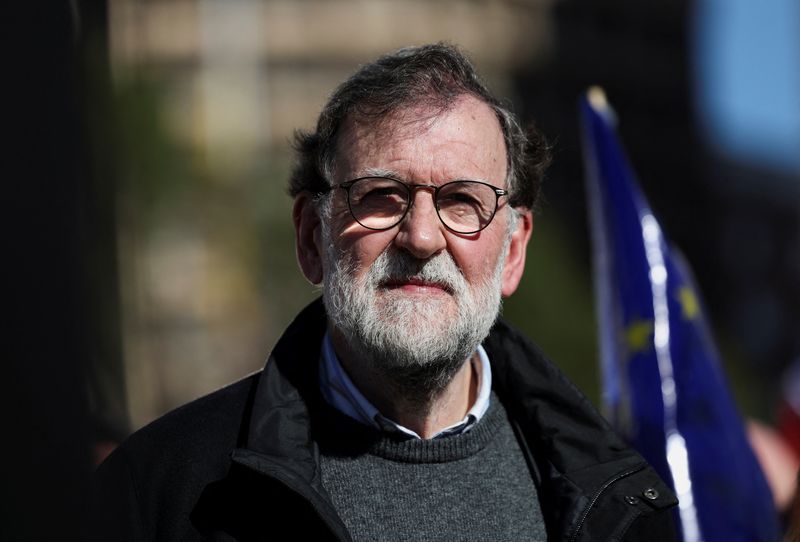
Spain's government moved swiftly to distance itself from provocative comments made by former Prime Minister Mariano Rajoy regarding the ethnic composition of France's national football team, with Foreign Minister Jose Manuel Albares issuing a formal apology on Tuesday and characterising the remarks as reflective of racism and xenophobia that run counter to Spanish values.
Rajoy, who led Spain between 2011 and 2018, published a column in the online publication El Debate on Friday ahead of the World Cup semi-final clash between the two nations. In the piece, whilst acknowledging France possessed a squad of exceptional quality, he posed a provocative question about the team's fundamental identity, appearing to reference the African and Afro-Caribbean heritage of several players in France's squad. His assertion that "there are no French players" in the team sparked immediate controversy across the continent.
Albares delivered a measured but pointed response to the controversy, addressing his French counterpart to communicate Spain's official position. He described Rajoy's column as "intolerable" and stressed that the overwhelming majority of Spanish citizens rejected such viewpoints entirely. Speaking to Cadena SER radio, the foreign minister emphasised the severity of using physical characteristics as a criterion for determining citizenship or national belonging, framing the issue as a fundamental question of human dignity rather than mere political disagreement.
Current Spanish Prime Minister Pedro Sanchez, who was in Paris to participate in France's National Day celebrations, delivered his own rebuke of the comments. In a post on the social media platform X, Sanchez criticised those who sought to measure nationality through the lens of personal surnames, birthplace, or physical appearance, describing Rajoy's column specifically as "shamefully xenophobic." The dual response from both the current and immediate past foreign policy establishment signalled broad institutional concern about the potential diplomatic fallout.
Rajoy's remarks arrived during a period when similar controversies were already testing international relations within European football. Days earlier, Paraguayan Senator Celeste Amarilla had posted a racist tirade on social media following Paraguay's elimination from the tournament, directing abusive language at France captain Kylian Mbappe. Amarilla referred to the player in dehumanising terms and questioned his legitimacy as a French national, prompting swift responses from multiple quarters including Mbappe himself, who defended not only his own identity but also the integrity of Paraguay's players.
The Mbappe incident demonstrated how questions of national identity and representation within professional sports had become increasingly politicised across multiple countries in recent months. The French Football Federation pursued formal legal action in response to Amarilla's comments, whilst Paraguay's government felt compelled to publicly distance itself from the senator's statements, declaring them contrary to the nation's values. These parallel controversies created a pattern suggesting that ethno-nationalist critiques of diverse national teams were gaining traction among some political figures.
France's political establishment responded to Rajoy's column with rare unanimity across the spectrum. Foreign Minister Jean-Noël Barrot condemned the remarks as "pathetic" during an appearance on BFM TV, delivering a pointed statement that encapsulated France's official position: "France has no skin colour." He characterised such statements as indicators of either fundamental ignorance or deliberate racial prejudice, or some combination thereof. This framing shifted the debate from questions of athletic capability to broader questions of whether certain political figures possessed basic understanding of modern national identity.
The National Rally, France's far-right political party often associated with restrictive immigration and identity-focused politics, joined in condemning Rajoy. Spokesman Julien Odoul told FranceInfo television that the comments were "scandalous, shameful, deplorable," and directly accused Rajoy of racism. The fact that even figures from the nationalist end of the political spectrum felt compelled to distance themselves suggested that Rajoy had crossed a line that even opponents of French multiculturalism wished to maintain.
Rajoy's People's Party attempted damage control through a spokesperson, Borja Semper, who characterised the column as lacking malicious intent and suggested it represented sarcastic commentary rather than genuine xenophobic conviction. This framing proved unconvincing to observers across multiple countries, as the literal meaning of questioning whether an officially selected national team contained members of the nation's citizenry carried obvious implications about ethnic and racial belonging that sarcasm did not adequately ameliorate.
The incident reflects broader tensions within European politics regarding immigration, national identity, and the representation of increasingly diverse populations within national institutions, including sports teams. For Malaysia and Southeast Asian observers, the episode illustrates how ethno-nationalist political movements across Europe continue to frame multiculturalism and diversity as threats to national authenticity, even as societies across the region become increasingly integrated and cosmopolitan. The swift institutional response from both Spanish and French governments suggests that there remain political costs to such rhetoric in mainstream European discourse, though the persistence of such commentary indicates the underlying tensions remain unresolved.
The timing of the controversy, emerging just hours before Spain and France were to contest a World Cup semi-final that would determine which nation advanced in the tournament, added peculiar urgency to the diplomatic exchange. What might have been dismissed as peripheral political commentary in other contexts instead became front-page news across European media, amplifying its reach and forcing governments to respond with clarity and force.

