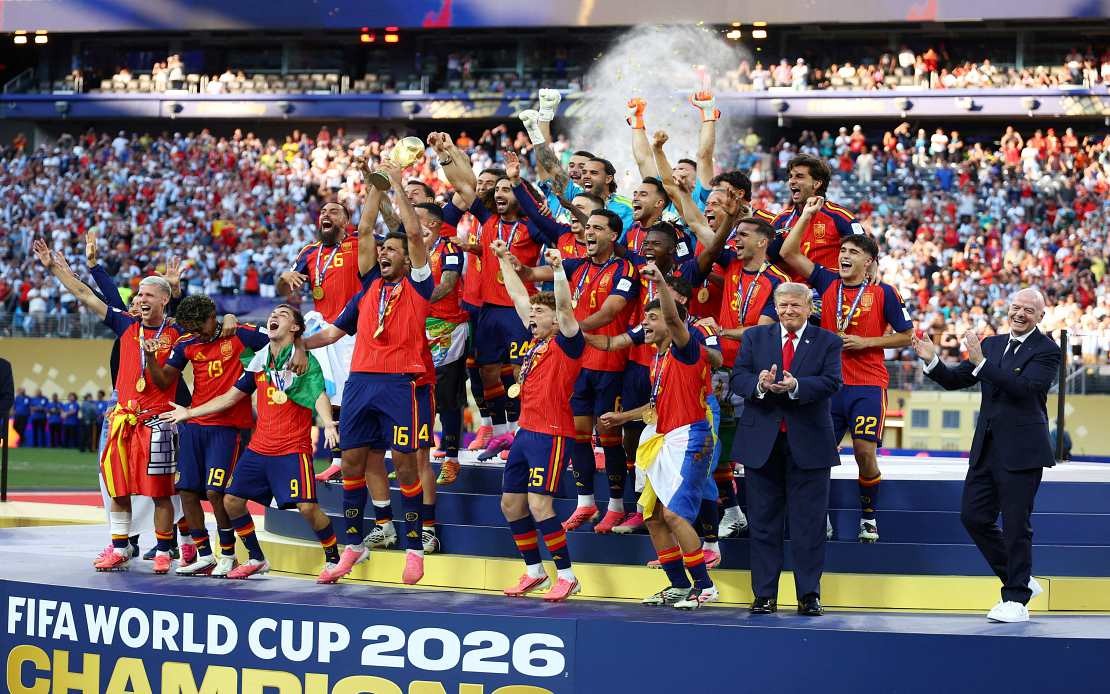
Spain's football squad arrived home to Madrid on Monday afternoon to commence an extensive celebration of their second men's World Cup championship, marking a significant moment in the nation's sporting history. The team, spearheaded by captain Rodri, landed at Madrid airport at 12.50 pm local time, beginning what authorities anticipated would be one of the year's largest public gatherings across the Spanish capital. The homecoming reflected not merely a sporting achievement but a moment of national pride that transcended football, drawing political figures and members of the royal family into the festivities.
The official programme orchestrated by Spanish authorities revealed the scale of preparations for welcoming the champions. Following their airport arrival, the squad was scheduled to attend a formal reception at the Royal Palace hosted by King Felipe VI, underscoring the occasion's significance at the highest levels of Spanish society. This palatial ceremony preceded what organisers expected to be the day's centrepiece—an open-top bus procession navigating through Madrid's principal thoroughfares, designed to accommodate the hundreds of thousands of supporters converging from across the city and neighbouring regions.
The celebrations would culminate at Cibeles Square, one of Madrid's most iconic landmarks, where a comprehensive entertainment programme was arranged to commence at 6 pm. The team itself was anticipated to arrive at this venue approximately three hours later, creating an extended evening of festivities as supporters gathered to express their appreciation directly. The choice of Cibeles Square reflected its traditional role as the focal point for Spanish sporting celebrations, a location deeply embedded in the nation's collective memory of sporting triumphs.
Spain secured their World Cup triumph on Sunday in the United States, with attacker Ferran Torres delivering the decisive goal during extra time against Argentina in a closely contested final. This victory represented Spain's second men's World Cup title, cementing their status as one of football's traditional powerhouses and adding another chapter to their rich sporting legacy. The achievement carried particular resonance given the competitive nature of the tournament and the strength of opposition faced throughout the competition.
The match itself drew prominent Spanish dignitaries to the stadium in New Jersey, where the final took place. King Felipe VI and Prime Minister Pedro Sánchez both attended, demonstrating the match's importance transcending the sporting realm into matters of national interest. Sánchez subsequently utilised social media to commemorate the victory, posting a message declaring Spain's world champion status and praising the national team's performance, reflecting the political establishment's investment in celebrating the squad's accomplishment.
Defender Marc Cucurella, addressing the prospect of the homecoming festivities, expressed the squad's anticipation regarding their return to Spanish soil. Cucurella acknowledged that many supporters who wished to witness the team's accomplishment in person could not attend the American venue, positioning the Madrid celebrations as an opportunity for inclusive national recognition. His remarks emphasised that the players recognised the collective nature of their achievement and the importance of sharing their triumph with the broader Spanish population.
The reception and parade represented a continuation of Spanish traditions surrounding major sporting victories, though the scale of anticipated participation suggested this celebration would rival previous occasions in its scope and intensity. The open-top bus journey through Madrid would traverse routes familiar to supporters who had gathered for past victories, creating a sense of historical continuity whilst marking a fresh accomplishment. The visibility afforded by the bus format ensured maximum public interaction, allowing supporters to express appreciation directly to the players responsible for the championship.
From a broader perspective, Spain's World Cup victory carried implications for football's competitive landscape and the nation's positioning within international sport. The triumph validated the Spanish football federation's developmental strategies and coaching philosophies, reinforcing approaches that had previously generated success in continental competitions. The squad's composition reflected both established talents and emerging players, suggesting a sustainable foundation for future competitive endeavours.
The celebrations occurring across Madrid on Monday represented more than ceremonial acknowledgment of a sporting achievement. For Spanish society, the victory provided a moment of unified national expression, transcending regional, political, and social divisions through shared appreciation of the team's performance. The official programme, encompassing royal recognition, political endorsement, and grassroots public participation, demonstrated how football achievements could mobilise comprehensive social engagement and generate collective positive sentiment.
For Malaysian readers observing these developments, Spain's celebration methodology offers instructive parallels regarding how nations acknowledge sporting accomplishments and utilise such moments for broader social cohesion. Southeast Asian nations, similarly invested in football's development and international success, might reflect upon comparable mechanisms for celebrating their own sporting achievements and the potential these moments offer for strengthening national identity and social solidarity.

