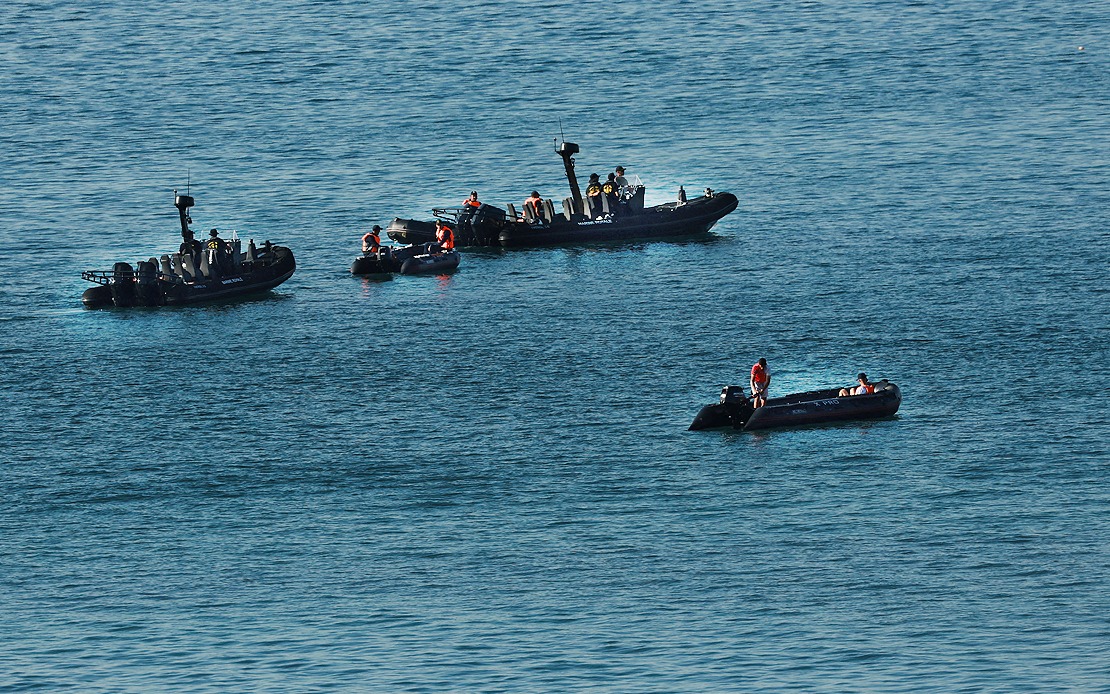
Spanish authorities are conducting an ongoing search operation in waters off Ceuta to locate the bodies of migrants who drowned while attempting to cross from Morocco into the Spanish enclave in North Africa. The recovery effort, which has already yielded 67 bodies, reflects the scale and human toll of a crisis that unfolded with alarming speed in early August. Moroccan nationals who sought to reach European Union territory attempted the perilous sea crossing, resulting in significant loss of life during what became one of the most dramatic migrant surges the region has witnessed in recent years.
The scope of the disaster prompted Spanish authorities to prepare specialised facilities capable of holding up to 200 bodies, a sobering indication of the scale of the emergency response required. The establishment of such morgue capacity underscores the grim reality facing port authorities and government officials scrambling to manage both the immediate humanitarian crisis and the longer-term identification and repatriation procedures that lie ahead. Families across Morocco and beyond now face agonising uncertainty as identification processes work their way through Spanish administrative systems.
The migrant influx into Ceuta—a Spanish territory housing approximately 85,000 people—reached extraordinary proportions when roughly 50,000 individuals crossed the border from Morocco within a matter of days. This represented an unprecedented concentration of migrants entering such a small territory in such a compressed timeframe. The sudden surge exposed weaknesses in border management and revealed how rapidly circumstances could escalate when conditions encouraged mass migration attempts. While Spanish officials reported that most migrants subsequently returned voluntarily to Morocco, the episode left deep political scars and raised uncomfortable questions about EU border security protocols.
The crisis triggered sharp political criticism directed at Spain's left-wing government, with senior EU leaders openly questioning Madrid's management of the situation. The controversy extended beyond mere administrative failures; it reflected broader tensions within the European Union regarding migration policy, burden-sharing among member states, and the adequacy of existing frameworks for handling mass movement of people. Leaders across Europe seized upon the incident to advance their own positions on migration control and sovereignty, making the crisis a focal point for ideological debates that transcend Spain's borders.
Spanish authorities deployed an innovative physical barrier strategy to prevent future surges, installing buoys along the coastal approaches to create a maritime deterrent. This practical response aimed to physically interrupt the sea crossing route that migrants had exploited. Beyond its immediate deterrent function, however, the barrier represented an attempt to address a legal vulnerability that had inadvertently facilitated the crisis. Spanish jurisprudence had created an opening that migrants were quick to exploit—an opening that political and administrative leaders now moved urgently to seal.
The underlying legal complication stemmed from a Spanish Supreme Court ruling that granted asylum eligibility to individuals who crossed borders irregularly through non-fortified sections, particularly maritime routes. This court decision had essentially created a pathway for asylum seekers who could reach Spanish territory by water, distinguishing their status from those apprehended at land borders. The judges' interpretation, while grounded in legal reasoning regarding individual rights assessments, inadvertently incentivised the dangerous sea crossing strategy that claimed dozens of lives. The contradiction between legal protections and practical consequences highlighted the tension between humanitarian commitments and border security imperatives.
For Malaysian observers and policymakers, the Ceuta crisis carries several instructive lessons relevant to Southeast Asia's migration and security landscape. Malaysia, as a major transit point for forced migrants and asylum seekers, confronts analogous challenges regarding irregular maritime crossings, humanitarian obligations, and the complex interplay between legal frameworks and operational realities. The Spanish experience demonstrates how court rulings intended to protect vulnerable populations can inadvertently encourage dangerous migration methods, a dilemma that resonates across the region.
The incident also illustrates broader European anxieties about migration that increasingly shape bilateral and multilateral relationships. Spain's handling of the crisis and the subsequent political backlash reflect pressures mounting across developed nations grappling with irregular migration. These pressures increasingly influence bilateral negotiations, development assistance allocations, and international cooperation frameworks—dynamics that directly affect countries like Malaysia positioned at the intersection of South Asian and Southeast Asian migration corridors.
Moreover, the Ceuta episode underscores the inadequacy of unilateral responses to migration challenges rooted in regional instability and economic disparity. While Spain implemented physical barriers, the fundamental drivers pushing 50,000 people to risk deadly sea crossings remained unaddressed. Similar structural issues—poverty, conflict, limited opportunity—motivate migrants throughout the Indo-Pacific region, suggesting that maritime barriers alone offer incomplete solutions to inherently complex phenomena requiring coordinated international attention.
The recovery operation continuing off Ceuta's coast represents not merely a technical emergency response but a visible manifestation of policy failures and institutional gaps. Each body recovered represents not just a statistical entry but a human trajectory interrupted—a person whose decision to risk the crossing reflected desperation, aspiration, or circumstances so constrained that such peril appeared preferable to remaining in place. For Spain and the European Union, the incident prompted urgent recalibration of border management strategies. For the broader international community, including Southeast Asian nations, it offered a cautionary demonstration of how migration pressures, legal ambiguities, and inadequate coordination create humanitarian disasters that no amount of post-crisis barrier construction can fully remediate.

