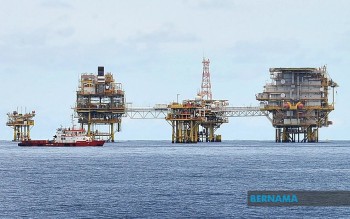
Southeast Asia's offshore energy sector remains on a growth trajectory even as geopolitical turbulence in West Asia has reshaped global energy markets, according to fresh analysis from Hong Leong Investment Bank. The investment bank's outlook reveals that greenfield capital expenditure across the region is anticipated to surpass US$100 billion with a 12 per cent year-on-year increase, demonstrating that energy companies and investors remain committed to long-term regional development despite broader uncertainties. This resilience underscores Southeast Asia's strategic importance as a stable investment destination for energy infrastructure at a time when Middle Eastern supply lines face intermittent disruptions.
The broader Asia-Pacific offshore sector has largely weathered recent geopolitical shocks without significant contraction. While West Asian tensions have dominated headlines, the region's diversified energy landscape means that Southeast Asia, South Asia, and other growth markets can sustain independent momentum. The stability observed across APAC reflects deeper structural factors—ageing production assets requiring replacement, rising regional energy demand, and the necessity for energy security diversification—rather than merely buoyant market conditions. Hong Leong's analysis suggests that this foundation remains intact despite headline volatility, providing Malaysian investors and policymakers with greater confidence in medium-term sectoral prospects.
Crucially, the investment bank distinguishes between two categories of spending that paint different pictures of sector health. Greenfield projects—entirely new developments requiring substantial upfront investment—are accelerating, indicating that energy firms believe future returns justify major capital commitments. Simultaneously, brownfield investments in existing facilities are also expanding, with Southeast Asia expecting a 3 per cent increase and South Asia a notably stronger 23 per cent surge. This two-pronged expansion suggests that operators are simultaneously building for future production and reinforcing current assets, a pattern that typically emerges when supply security concerns are elevated and sustained price expectations remain supportive. For Malaysian companies in the oil and gas services and equipment sector, both investment types generate demand.
The geopolitical backdrop has shifted following a US-Iran memorandum of understanding aimed at de-escalating West Asian tensions. While fragile, this agreement has eased some immediate conflict risks and restored cautious optimism about normalising regional conditions. Hong Leong notes that shipping traffic through the critical Strait of Hormuz has begun recovering, though satellite data suggests many vessels are operating with Automatic Identification System transponders disabled—a indicator that some shipping activity remains nervous about transparency. This cautious resumption of normal flows, combined with formal diplomatic arrangements, suggests that energy markets are pricing in a lower but non-negligible tail risk of future disruptions, supporting elevated price expectations.
Oil price trajectories will materially influence regional investment decisions and returns. Hong Leong has adjusted its 2026 Brent crude forecast to US$80 per barrel from a previously higher US$90 estimate, reflecting confidence that prices will stabilise at elevated but not extreme levels. The bank maintains a 2025 forecast of US$75 per barrel. These price assumptions are critical because they determine project economics and investment hurdle rates across the region. For Malaysian players in fabrication, engineering, and marine support services, sustained Brent prices near US$80 makes the pipeline of regional projects sufficiently attractive to justify additional capacity investment, particularly for specialists in hook-up, commissioning, and offshore support.
A key driver of these price expectations is inventory dynamics in developed economies. The US Energy Information Administration's June outlook projects OECD commercial oil reserves will fall to just 50 days of supply by late 2026, significantly below pre-conflict levels that exceeded 60 days. This inventory compression reflects both the impact of West Asian supply disruptions and growing global energy demand, particularly from Asia. Until global oil flows stabilise and strategic reserves are rebuilt to psychologically comfortable levels, Hong Leong argues that prices face a structural floor around US$75-80 per barrel. The inventory recovery narrative means sustained energy prices even if geopolitical risks fade, supporting confidence in long-term project viability.
Malaysia's national energy champion Petronas emerges as a particular focal point for regional investment dynamics. Hong Leong identifies potential for a Petronas capital expenditure upcycle beginning around 2027, which would substantially benefit domestic oil and gas services providers. This anticipated cycle would encompass upstream development, hook-up and commissioning work, maintenance services, marine support, fabrication, and pipeline-related activities—collectively representing substantial domestic economic opportunity. Malaysian specialised service providers focused on these segments should be positioning capacity and capabilities now to capture this anticipated upturn, which would likely reinforce employment and skilled worker demand across Malaysia's energy service clusters.
However, the investment landscape includes a complicating factor: actual regional supply disruptions have been more severe than initially appreciated. Total production shut-ins in the Strait of Hormuz region climbed from 35 per cent of capacity in March 2026 to 45 per cent by May, indicating that the conflict's impact on regional supply persisted longer than early optimists anticipated. This persistence of disruptions, combined with slower-than-expected recovery timelines, continues supporting elevated price expectations and strengthens the logic for operators to maintain and expand production outside the affected region. Southeast Asia's positioning outside immediate West Asian turbulence becomes a competitive advantage, attracting capital flows away from higher-risk jurisdictions.
Economist Mohd Sedek Jantan of IPPFA emphasises that recent price retreats from earlier peaks have stabilised the crude complex around US$70-75 per barrel for both Brent and West Texas Intermediate benchmarks. This stability, should it persist through coming months, reshapes business decision-making across supply chains dependent on energy costs. Manufacturing, petrochemicals, transportation, and power generation sectors can plan with greater certainty when oil prices are relatively stable, reducing the inflation pressure that has complicated monetary policy and business investment decisions globally. For Malaysian businesses reliant on energy-intensive processes or exposed to fuel surcharges, this price stabilisation improves margin predictability and enables longer-term planning.
The macroeconomic ripples extend beyond energy sector participants. Sustained crude prices within the US$70-75 range directly attenuate cost-push inflation across economies dependent on energy imports, including much of Southeast Asia. By moderating energy-related price pressures, central banks gain policy flexibility to maintain supportive monetary conditions that encourage business investment and consumer spending. This environment reinforces broader economic recovery momentum across the region and reduces stagflation risks that had concerned policymakers. Malaysian policymakers and businesses can increasingly distinguish between structural energy investment opportunities and temporary geopolitical disruptions, allocating capital accordingly.
As markets absorbed this analysis, Brent crude was trading marginally higher at US$69.17 per barrel with a 0.90 per cent gain, while West Texas Intermediate rose 0.94 per cent to US$72.67 per barrel, suggesting modest market validation of the stabilisation thesis. These movements, though incremental, reinforce the emerging consensus that energy prices have found a new equilibrium reflecting both supply constraints and demand resilience. For Malaysian investors evaluating energy sector commitments, the combination of regional offshore investment acceleration, stabilising commodity prices, and anticipated Petronas capital discipline creates a compelling medium-term investment case despite acknowledging persisting geopolitical uncertainties in West Asia.

