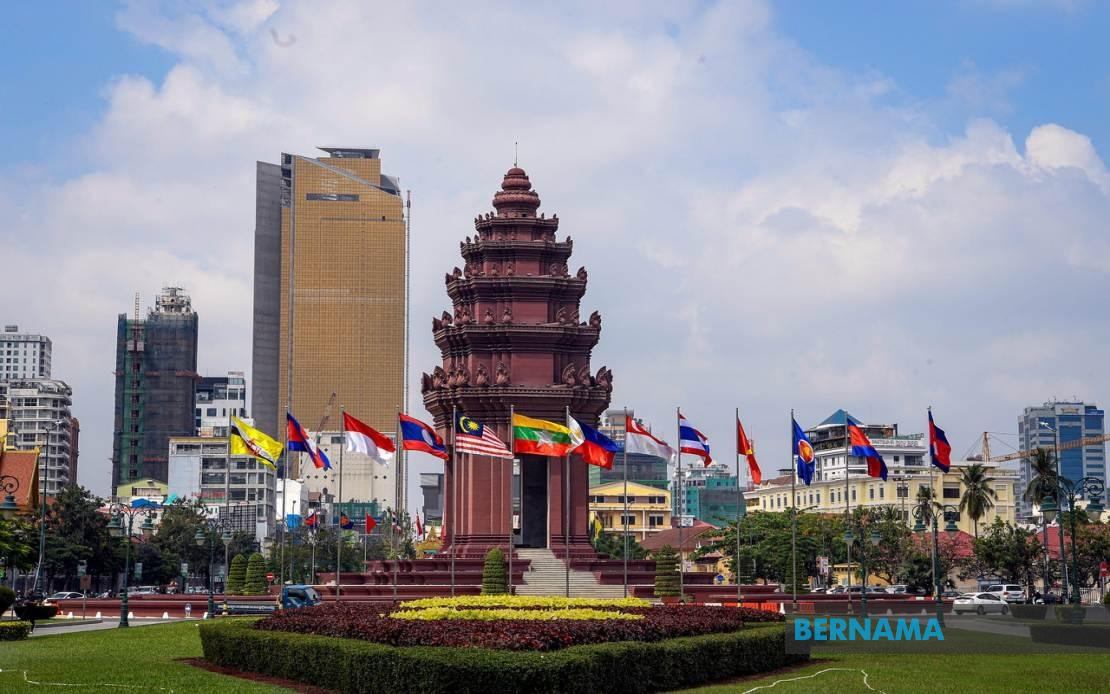
Southeast Asia's policy landscape is shifting decisively towards infrastructural modernisation and economic integration, according to developments across the region in early July 2026. From rural development initiatives spanning the Mekong to airport expansions addressing capacity constraints, governments are grappling with the practical challenge of translating strategic visions into tangible improvements in connectivity, public services and economic opportunity. The flurry of announcements reveals a region equally invested in building digital government capacity and rooting out institutional corruption—two priorities that reflect the maturation of Southeast Asian policymaking beyond crisis management towards systemic reform.
Cambodia's engagement with India under the Mekong-Ganga Cooperation framework demonstrates how regional powers are leveraging multilateral platforms to address development disparities. The signed memoranda of understanding will implement projects specifically targeting Kratie Province's rural communities, reflecting a deliberate effort to distribute development benefits beyond urban centres. This approach carries particular significance for Malaysia and other middle-income economies in the region contemplating how to balance rapid urbanisation with rural economic inclusion. Cambodia's simultaneous push to modernise its Civil Service Ministry—prioritising professional human capital development and digitalisation—suggests policymakers recognise that infrastructure alone cannot sustain competitive advantage; the institutional capacity to manage complex services requires fundamental transformation of how government operates internally.
Indonesia's decision to expand Lt. Col. Wisnu Airfield in Bali exemplifies how Southeast Asian governments are addressing the bottlenecks created by uneven development. Transportation Minister Dudy Purwagandhi's backing for transforming the facility into a northern Bali aviation hub directly addresses congestion at Ngurah Rai International Airport, one of the region's busiest terminals. For Malaysian policymakers observing similar strain on Kuala Lumpur International Airport and regional competitors, the Indonesian approach of distributed hubs rather than singular mega-airports offers a viable blueprint for managing explosive growth in air travel. The project also signals confidence in domestic market expansion and tourism demand resilience despite global economic fluctuations.
Yet Indonesia's simultaneous action against corruption—formally naming former Junior Attorney General Febrie Adriansyah a suspect in an alleged corruption and money laundering case—underscores an uncomfortable truth many Southeast Asian nations face. High-profile legal proceedings against powerful individuals generate headlines, but institutional accountability remains inconsistently applied. The case illustrates why Malaysia and neighbouring countries must sustain pressure on anti-corruption mechanisms rather than treating them as cyclical political exercises. The involvement of a prosecutor in allegations of graft particularly undermines public confidence in the institutions responsible for enforcing the rule of law.
Myanmar's infrastructure momentum focuses on both transportation and energy resilience. The inauguration of Anisakan Airport in Mandalay Region promises to improve domestic connectivity and facilitate agricultural product distribution while attracting investment to peripheral regions. Simultaneously, the 15-megawatt Shwemyoh solar power plant, with planned Phase II (25-MW) and Phase III (30-MW) expansions, addresses the chronic electricity reliability issues that have constrained Myanmar's development. For Malaysia and other nations pursuing renewable energy targets, Myanmar's phased approach to solar expansion offers a model of realistic, incremental capacity building rather than ambitious declarations divorced from implementation capability. The connection between infrastructure diversity and electricity security proves especially relevant as regional economies navigate energy transition pressures.
The Philippines faces overlapping crises demanding simultaneous crisis response and constitutional scrutiny. Tropical Storm Inday's passage and the southwest monsoon's continued precipitation over Luzon and Visayas require coordinated disaster management while the impeachment case against Vice President Sara Z. Duterte proceeds in the Senate. Philippine prosecutors have reportedly established foundational elements of their case during the first trial week, signalling that despite the political drama surrounding high-office impeachment, institutional processes continue functioning. For Malaysian observers, the Philippine case demonstrates both the strength of formal checks on executive power and the inherent tension between constitutional oversight and political stability that democracies must navigate carefully.
Singapore's technical response to privacy concerns through WhatsApp's username feature reservation for public figures and government entities reflects how developed digital governance addresses emerging challenges. Meta's decision to reserve high-profile accounts before rolling out usernames prevents impersonation and fraud while maintaining the privacy benefits of connection without phone number sharing. The approach demonstrates proactive risk management in digital infrastructure. However, Singapore's continued attention to executive condominium income ceiling appeals—845 approved from over 2,500 submissions across five years—reveals that even wealthy, well-administered societies struggle with housing affordability and requires continuously calibrating policy to changing social conditions.
Thailand's security operations simultaneously target traditional organised crime and emerging financial irregularities, indicating broadened law enforcement focus. Police pursuit of alleged roserose network leadership and the heroin-smuggling operation recruiting air hostesses to transport drugs via elephant-print bags reveals the sophistication of transnational criminal networks. The Damage Suppression Institution's discovery of nominee networks linked to foreign property and tourism businesses across five locations on Koh Samui and Koh Phangan, with one registered address housing over 100 companies, exposes vulnerabilities in corporate registration systems. These interconnected investigations suggest Thai authorities are linking financial crime and trafficking operations—a recognition that modern organised crime operates across illicit drug, property and tourism sectors simultaneously.
Vietnam's investigation of a tourist speedboat mishap, though briefly mentioned, reflects the region's ongoing struggle with safety regulation enforcement in high-traffic tourism zones. Water-based tourism incidents appear regularly across Southeast Asian news cycles, suggesting that rapid tourism growth often outpaces the regulatory framework and safety culture required to manage it responsibly. This pattern underscores how spectacular headline announcements of infrastructure and economic expansion must be accompanied by unglamorous but essential work on safety standards, worker training and enforcement mechanisms.
The cumulative picture emerging from these July 2026 developments shows Southeast Asia pursuing sophisticated policy agendas addressing connectivity, institutional modernisation, anti-corruption enforcement and safety regulation. Yet the varied success rates across countries indicate that government capacity, political will and institutional independence remain unevenly distributed across the region. Malaysia, positioned within this ecosystem as a relatively advanced middle-income economy, faces the challenge of learning selectively from neighbours' experiences while addressing its own specific constraints around institutional accountability, infrastructure maintenance and equitable development distribution.
The region's strategic focus on infrastructure expansion and economic integration reflects shared recognition that Southeast Asia's competitive advantage depends on removing physical and institutional barriers to seamless regional commerce and movement. However, the simultaneous prominence of corruption cases, criminal network investigations and safety lapses suggests that the foundational work of building trustworthy institutions capable of impartial enforcement lags behind the political enthusiasm for headline-generating mega-projects. Sustainable regional development ultimately requires both, and the gap between them remains a defining challenge for the next phase of Southeast Asian governance.

