Southeast Asia's political landscape shifted on Wednesday as Laos bid farewell to National Assembly President Xaysomphone Phomvihane, with government leaders, diplomats and citizens gathering at Vientiane's That Luang esplanade to pay final respects. The passing of Phomvihane, who died last Saturday, marks a significant loss for the communist nation's legislative branch at a time when the region faces mounting economic and environmental pressures. His death comes as Laos implements major policy initiatives, underscoring both the institutional continuity required for national development and the need for succession planning within Southeast Asia's single-party states.
Addressing the environmental dimensions of national development, Laos has launched an ambitious multi-sector initiative to strengthen climate resilience and secure water resources for future generations. The Ministry of Agriculture and Environment partnered with WWF-Laos to launch the Xayabouly project, which aims to integrate climate adaptation strategies with rural livelihood support across one of the Mekong region's most vulnerable provinces. Such initiatives reflect growing recognition in Southeast Asia that climate change poses an existential challenge to food security and economic stability, with water systems increasingly strained by competing demands from hydropower, agriculture and expanding urban populations.
Indonesia, the region's largest economy, is moving toward a politically sensitive overhaul of fuel subsidies that has long constrained government budgets and fuelled inflation. Finance Minister Purbaya Yudhi Sadewa outlined plans to gradually restrict access to Pertalite, the country's subsidised petrol grade, targeting higher-income groups while preserving support for vulnerable populations. The policy reflects Jakarta's attempt to thread a difficult needle: reducing the fiscal burden of fuel subsidies, which have historically consumed 10-15 percent of the national budget, while insulating lower-income Indonesians from commodity shock. Similar subsidy rationalisation efforts across the region—from Malaysia to the Philippines—have triggered social unrest, making Indonesia's approach a closely watched test case for political economy reform.
Indonesian rescue operations demonstrated the maritime safety challenges facing Southeast Asia's crowded shipping lanes when the Putri Yasmin ferry caught fire in the Lombok Strait on Wednesday. The Mataram Search and Rescue team successfully evacuated all 106 passengers to safety at Lembar Port in Lombok and Padangbai Port in Bali, averting what could have been a major disaster. The incident highlights ongoing concerns about vessel maintenance standards and emergency response capacity in Southeast Asian waters, through which trillions of dollars in global trade transit annually, making maritime safety a shared regional security interest.
Myanmar's government recognised twin centenarians as the nation's oldest living citizens this week, with a 121-year-old man from Htantabin Township, Yangon and a 121-year-old woman from Kawthaung Township, Tanintharyi Region receiving official acknowledgement. The announcement carries demographic significance for a nation with limited life expectancy data and a population struggling to rebuild social infrastructure following years of internal conflict. More substantively, Myanmar has begun exploring agricultural collaboration with Vietnam on rice seed production, an area where cross-border cooperation could yield tangible benefits for both nations' farming communities and align with regional food security objectives through improved crop yields and genetic advancement.
The Philippines confronted an acute humanitarian crisis as multiple weather systems—tropical cyclones Luis and Maymay combined with the enhanced southwest monsoon—displaced millions. The Office of Civil Defence reported that 3.14 million individuals have been affected, with authorities verifying 21 fatalities and investigating additional reports. The Philippine National Police shifted resources toward post-disaster recovery operations, addressing immediate needs for shelter, clean water and medical care while beginning longer-term reconstruction planning. These climatic events underscore Southeast Asia's position as one of the world's most disaster-prone regions, where climate change is intensifying rainfall extremes and threatening the livelihoods of hundreds of millions.
Singapore, the region's financial hub and legal innovator, confronted cybercriminal impersonation at an unprecedented scale when authorities dismantled more than 500 fake websites fraudulently mimicking the Ministry of Home Affairs and seven Home Team agencies. The operation, announced by the ministry on Wednesday, reflects the growing sophistication of online fraud targeting citizens seeking government services and information. Beyond Singapore's borders, the incident carries implications for the entire region, as criminal networks exploit digital infrastructure to operate cross-border scams targeting Southeast Asian populations increasingly dependent on online government platforms and digital finance.
Singapore's Senior Minister Lee Hsien Loong offered philosophical insight into constitutional and legislative drafting during the same period, emphasising that legal innovation demands political judgment beyond technical expertise. Lee's remarks underscore an enduring tension within Southeast Asian governance, where imported legal frameworks often require substantial modification to accommodate local political realities, social institutions and developmental priorities. His comments resonate across the region, where countries balance democratic accountability with social order and economic competitiveness in ways that diverge from Western models.
Vietnam pursued economic integration with global capital by attracting the United States retail giant Target to participate in the Vietnam International Sourcing Expo 2026 for the first time. Target's participation signals openness to Vietnamese suppliers and represents a potential gateway for smaller Vietnamese manufacturers to access global distribution networks and scale their operations. Meanwhile, Da Nang intensified enforcement against illegal, unreported and unregulated fishing, bolstering maritime surveillance and patrol capacity to protect regional fish stocks and ensure sustainable livelihoods for coastal communities. These parallel efforts reflect Vietnam's dual challenge of economic internationalisation while managing resource depletion and environmental degradation.
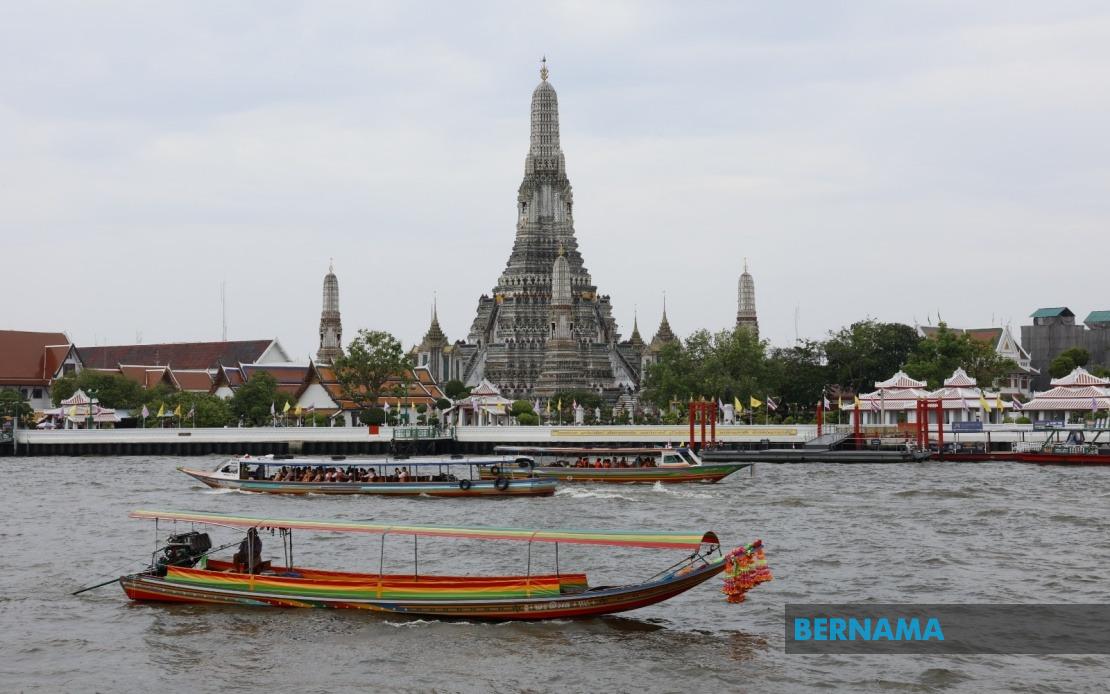
Thailand's government disputed characterisations that Bangkok intends to leverage military ties, including the prestigious Cobra Gold exercises with the United States, as a bargaining chip in tariff negotiations. A government spokesperson firmly denied the allegation, suggesting that Thailand views defence partnerships as strategically autonomous from trade discussions. The statement comes as Thai Airways International reported a significant decline in net profit during the second quarter, reflecting structural challenges within Southeast Asia's tourism and aviation sectors following successive pandemic-related shocks and shifting travel patterns. Thailand's defensive posture regarding US relations signals Bangkok's delicate balancing act as regional powers compete for influence and Bangkok seeks to maintain relationships across the geopolitical spectrum.

