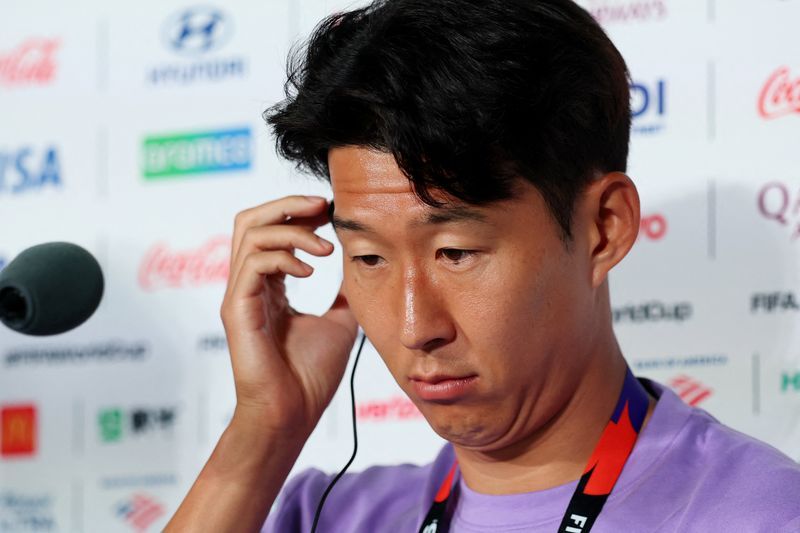
South Korea's national football team has taken the unusual step of withdrawing from voluntary media interactions during the World Cup, following allegations that domestic journalists made derisory comments about captain Son Heung-min's military service obligations. The controversy emerged when remarks were inadvertently captured on an active microphone during a training session at the team's Guadalajara base camp, where Son was conducting separate work away from the main squad. The 33-year-old has become a lightning rod for broader tensions in South Korean society surrounding military conscription, an issue that carries profound cultural and political weight far beyond the football pitch.
Military service remains one of South Korea's most contentious social obligations, with all able-bodied men required to complete approximately 21 months of active duty as a cornerstone of the country's defence strategy against North Korea. The system is ubiquitous and non-negotiable for the vast majority of the male population, shaping the life trajectories of millions and serving as a shared rite of passage for South Korean men. However, the government has carved out narrowly defined pathways for elite athletes to secure exemptions, recognising that sporting achievement at the highest levels can bring national prestige. Gold medals at the Olympics or the Asian Games qualify exceptional athletes for reduced or waived service obligations, a privilege that reflects how deeply athletics are interwoven with national pride and soft power in the Korean context.
Son and his teammates earned this coveted exemption when they captured gold at the 2018 Asian Games, a triumph that allowed them to fulfill their patriotic duty through sporting excellence rather than barracks and drills. Yet this pathway remains emotionally fraught for many South Koreans, and Son's status as an exempt athlete—despite his undeniable contributions to the nation's global sporting reputation—apparently triggered resentment among some members of the domestic media corps. The leaked comments represent not merely a lapse in professional conduct but a window into lingering social attitudes about military service, patriotism, and the perceived fairness of exemptions granted to celebrities and athletes.
The Korea Football Association responded swiftly with a formal statement expressing regret over what it characterised as inappropriate remarks by some media personnel. The federation emphasised that its players, whom it poetically refers to as the Taegeuk Warriors, are striving to represent their nation with honour on the world's largest sporting stage, working tirelessly to justify the faith and support of the Korean public. The association framed the leaked conversation as a source of shock and profound disappointment to the squad, suggesting that the incident has undermined team morale at a critical juncture in the tournament. The KFA's response underscores how sensitive the intersection of sport, military service, and nationalism remains in South Korean public discourse.
In its statement, the KFA requested that media outlets demonstrate greater consideration and adopt a more responsible approach when covering the national team. The federation pledged to continue prioritising the protection and wellbeing of its players while working to foster what it called a healthy media environment. This language suggests an intention to maintain stricter boundaries between the squad and reporters, at least until the controversy subsides. Such measures are relatively uncommon at major tournaments, where media access is typically viewed as an essential component of the competition and a right that journalists exercise regularly.
The voluntary boycott does not extend to all media obligations, however. FIFA's tournament regulations mandate certain media appearances and press conferences, which the South Korean team will continue to fulfill as required. This distinction is important: the squad has exercised selective leverage by withdrawing from optional interactions while remaining compliant with the governing body's formal requirements. In doing so, they have signalled disapproval without openly defying international football's regulatory framework. The manoeuvre represents a measured but pointed form of protest, allowing players to express their frustration whilst maintaining the professional standards expected of participants in world football's premier event.
Son himself underwent a compressed military training programme in 2020, completing a three-week intensive course that included exposure to tear gas, live-fire exercises, and thirty-kilometre forced marches across difficult terrain. The timing of his service coincided with a suspension of the English Premier League due to the COVID-19 pandemic, allowing the Tottenham Hotspur forward to fulfill his obligation without disrupting his club commitments. His willingness to undertake this demanding training rather than pursue a full exemption earned him considerable respect and helped rehabilitate his image among segments of the South Korean public who viewed athlete exemptions with suspicion. Nevertheless, the recent media incident suggests that residual resentment persists in some quarters, particularly among journalists who may view such exemptions as unfair to ordinary citizens.
The episode illuminates the complex relationship between sports, patriotism, and social obligation in South Korea. Unlike many Western democracies, where professional athletes enjoy broad freedom from military conscription and such arrangements attract little public controversy, South Korea's system requires continuous negotiation between national security needs, sporting ambition, and fairness to citizens. The tension is exacerbated by the fact that military service carries genuine risk and hardship, making exemptions appear as privileges rather than neutral accommodations. When journalists mock a player's service record—however lightly intended—they tap into these underlying anxieties about equity and patriotic obligation.
For Malaysian and broader Southeast Asian readers, the South Korean case offers instructive parallels regarding how national security imperatives intersect with professional sport. While Malaysia does not maintain mandatory military conscription on South Korea's scale, the region has witnessed ongoing debates about balancing elite athlete development with broader social expectations and resource allocation. The incident also demonstrates how domestic media scrutiny can disrupt team cohesion and morale during crucial competitions, a lesson relevant to any nation with passionate sports journalism cultures. Furthermore, the controversy underscores how athlete exemptions from civic obligations remain politically and socially contentious across Asia, requiring careful management by sports federations and government bodies.
Looking forward, the South Korean Football Association faces the challenge of rebuilding trust between its squad and the domestic media whilst the tournament continues. The team must maintain focus on its sporting objectives whilst managing the emotional fallout from the controversy. For journalists, the incident serves as a cautionary reminder that casual remarks captured on recording equipment can have significant consequences, particularly when they touch upon deeply felt national values. The broader lesson extends to sports administrations across the region: protecting athlete welfare and creating supportive environments requires vigilance and partnership with media outlets that understand the stakes involved in representing their nations at the world's highest sporting levels.