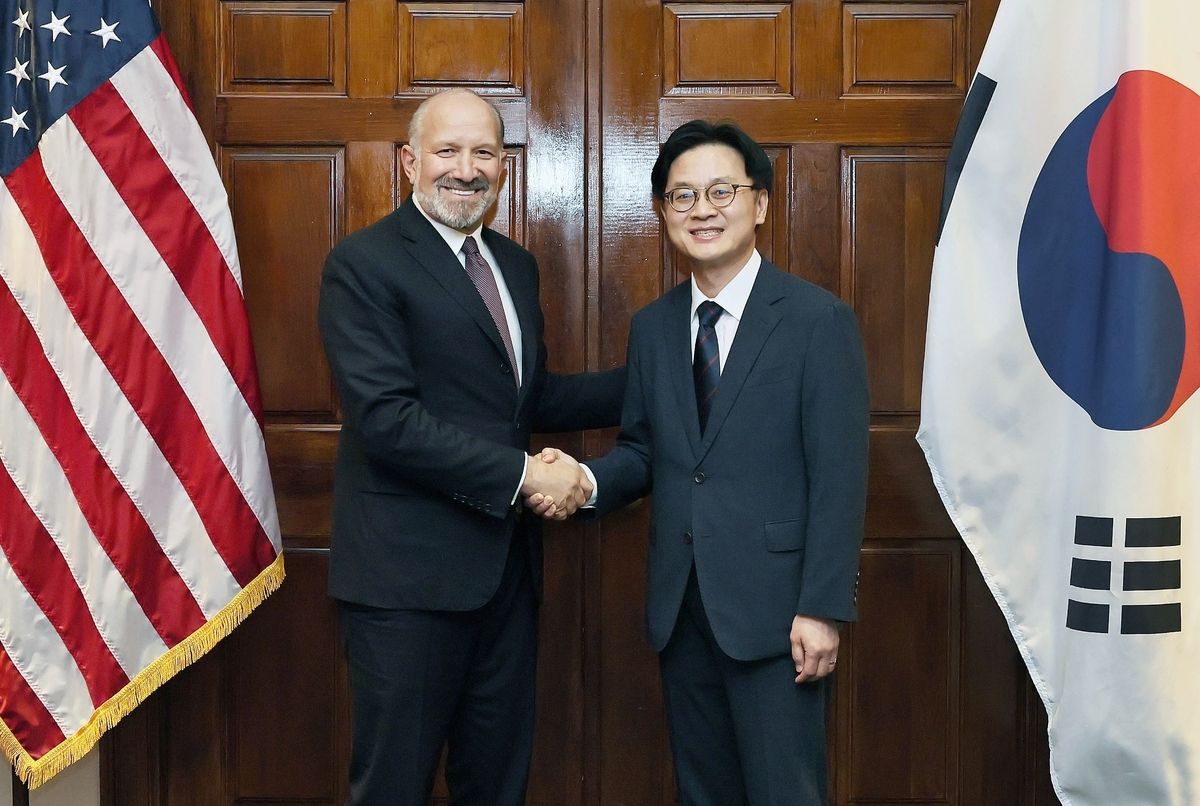
South Korea's Industry Minister Kim Jung-kwan is embarking on a crucial diplomatic mission to Washington this week, arriving amid growing uncertainty over imminent American tariff decisions that could significantly impact South Korean exporters. The visit, scheduled from July 22 to 25, represents Seoul's proactive effort to manage bilateral trade relations during a period of heightened tension over potential additional levies that Washington may impose under Section 301 of the Trade Act. The timing reflects Seoul's recognition that direct engagement with key US officials at this juncture could prove critical in shaping the outcome of ongoing investigations into trade practices related to forced labour allegations.
The shadow looming over these discussions is a pending US announcement on tariffs stemming from an investigation into labour-related trade practices. According to local South Korean media reports, the inquiry could result in fresh pressure on South Korean exports, further straining an already complex trade relationship between the two countries. This backdrop transforms what might otherwise be routine ministerial talks into a high-stakes negotiation where subtle diplomatic messaging and relationship-building could determine whether Seoul manages to mitigate or deflect proposed tariff increases. The convergence of timing between Kim's visit and the expected US decision suggests deliberate coordination to ensure South Korea's voice is heard directly by decision-makers before final determinations are made.
Central to Kim's itinerary is a meeting with US Commerce Secretary Howard Lutnick, where the discussion will focus on strengthening South Korean strategic investment within the American economy. This approach reflects a broader Seoul strategy to deepen economic interdependence with the United States, potentially creating political incentives for the US administration to maintain favourable trade treatment. By highlighting substantial South Korean corporate investments and their contributions to American jobs and industrial capacity, Seoul hopes to frame tariff negotiations not merely as trade disputes but as matters affecting mutually beneficial economic partnerships that both nations have worked to develop.
The agenda extends beyond commerce to encompass energy and resource cooperation, with Kim scheduled to meet US Energy Secretary Chris Wright. This dimension underscores how contemporary trade negotiations have expanded far beyond traditional tariff discussions to encompass strategic resource security, a concern particularly acute in the post-pandemic era when supply chain vulnerabilities have become a central preoccupation for policymakers. Energy cooperation carries additional significance for South Korea, which depends heavily on imports for its energy needs and views partnerships with resource-rich nations and strategic US allies as essential to long-term economic stability.
A particularly notable component of Kim's visit involves attending the opening ceremony for a South Korea-US Shipbuilding Partnership Center in Washington on Thursday. This facility, established following a May agreement between Seoul's Ministry of Trade, Industry and Resources and the US Commerce Department, represents a concrete manifestation of bilateral cooperation in a strategically important sector. The shipbuilding industry holds particular resonance for South Korea, which has built a world-leading position in this field through decades of investment and technological advancement. By creating an official platform for sustained coordination between South Korean and American shipbuilders, both nations are signalling commitment to long-term sectoral partnership that transcends short-term trade frictions.
The shipbuilding initiative gains added weight when considered alongside the broader context of Indo-Pacific strategic competition. As concerns about regional security and supply chain resilience mount, shipbuilding capacity has assumed heightened geopolitical importance. The partnership centre therefore serves not only commercial purposes but also strategic ones, potentially facilitating deeper integration between South Korean and American defence-industrial capabilities. For Malaysia and other Southeast Asian nations monitoring these developments, such partnerships signal the deepening of US-Korea strategic alignment and investment in infrastructure that supports regional security frameworks.
Kim's mandate also encompasses advancing implementation of a South Korean law that took effect in June, designed to incentivise strategic investment in the United States. By working to clarify and specify investment projects under this framework, Seoul aims to channel Korean corporate capital toward American priorities, creating constituencies within the United States that benefit from maintaining strong bilateral economic relations. This legislative approach represents a sophisticated form of economic statecraft, using investment as a tool to build political support for trade policies favourable to South Korean interests.
The ministerial visit incorporates substantial outreach to members of Congress, a critical dimension that reflects Seoul's understanding that trade policy in the United States involves not only executive branch decision-making but also legislative input and constituency concerns. By engaging directly with elected representatives, South Korean officials can articulate how their nation's exports and investment activities benefit American communities, workers, and industries. This grassroots diplomatic engagement complements high-level cabinet discussions and represents a comprehensive approach to building support across the American political system.
Most fundamentally, Kim's statement that Seoul intends to implement existing tariff agreements with Washington and maintain stability in bilateral trade relations reflects South Korea's underlying strategy: avoiding confrontation while demonstrating commitment to cooperative frameworks already established. Rather than resisting American investigations or threatening retaliatory measures, Seoul is choosing engagement and partnership emphasis as its primary negotiating tool. This approach carries implications beyond Seoul's immediate interests, as South Korea's willingness to pursue dialogue rather than escalation may influence how other American trading partners, including those in Southeast Asia, approach similar tariff disputes and trade tensions in the months ahead.

