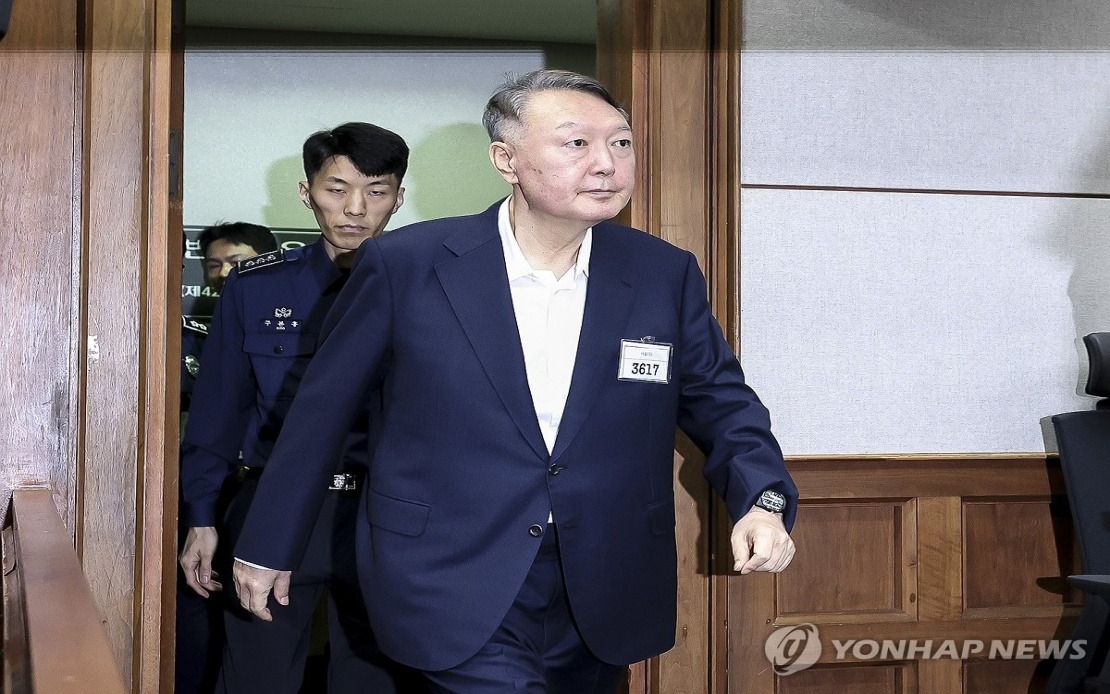
South Korea's Supreme Court has cleared the way for a televised delivery of its verdict against former President Yoon Suk Yeol in an obstruction of justice case, marking a significant moment of judicial transparency in the country's high-profile political drama. The top court announced on Tuesday that it will permit live broadcasting of the ruling, scheduled for delivery at 2 pm on Thursday, despite fierce resistance from the jailed former leader's defence team who argued that public transmission could compromise his right to a fair trial and damage his reputation.
The case represents one of several legal battles engulfing Yoon following his shocking declaration of martial law on December 3, 2024, an act that plunged South Korea into constitutional crisis and has since triggered multiple criminal investigations and trials. This particular obstruction charge emerged after Yoon allegedly ordered his personal bodyguards to physically prevent investigators from executing an arrest warrant against him in January 2025, effectively thwarting law enforcement efforts and triggering additional criminal allegations.
Special counsel Cho Eun-suk's office petitioned for the live broadcast last Friday, seeking to ensure public access to what was already shaping as a landmark judicial proceeding. The request triggered immediate pushback from Yoon's legal representatives, who contended that allowing cameras into the courtroom would inflict irreparable damage to his ability to receive unbiased adjudication and would expose him to harmful public scrutiny. The Supreme Court firmly rejected these concerns, determining that the public interest in witnessing the proceedings outweighed the defendant's privacy considerations.
Broadcasters will receive exclusive access to footage captured using equipment operated directly by the court itself, eliminating concerns about media bias in filming angles or editing decisions. This controlled approach reflects South Korean judicial authorities' efforts to balance transparency with procedural integrity, ensuring that the live feed presents an objective record of the proceedings without editorial manipulation that independent camera operators might introduce.
Yoon stands accused of issuing direct orders to his security detail instructing them to obstruct the arrest warrant execution, representing a serious violation of administrative authority and interference with judicial processes. Beyond this specific charge, he faces allegations of infringing upon the constitutional rights of nine Cabinet members by unilaterally proceeding with the martial law declaration without conducting advance consultations or seeking their input on such a momentous decision.
Additional charges against the former president involve document tampering and destruction, with prosecutors alleging that Yoon deliberately revised the martial law proclamation after it had been formally rescinded, apparently to conceal procedural irregularities and legal defects embedded in the original decree. He subsequently purportedly discarded this revised document, an action that prosecutors characterize as deliberate evidence destruction rather than routine record management.
An intermediate appellate court handed down a seven-year prison sentence against Yoon in April after finding him guilty on these obstruction charges, representing a two-year increase over the original trial court's ruling but falling significantly short of the decade-long sentence recommended by special counsel Eun-suk's investigative team. This intermediate verdict suggests deep divisions within South Korea's judiciary regarding appropriate punishment levels, though the Supreme Court's imminent ruling could substantially revise the penalty in either direction.
Yoon's legal jeopardy extends well beyond the obstruction case set to be decided Thursday, as a parallel appellate proceeding continues to examine whether his martial law declaration constituted an unconstitutional insurrection. In an earlier ruling on those more serious charges, a trial court imposed a life sentence, the harshest possible punishment under South Korean criminal law, reflecting how profoundly some judicial officials view the constitutional implications of Yoon's actions.
The contrast between these two cases illuminates the complex calculus facing South Korean courts as they navigate politically charged prosecutions involving a former head of state. The obstruction charge, while serious, pales in legal and constitutional significance compared to the insurrection allegations, yet both carry substantial prison time recommendations and have captured intense domestic and international attention as observers assess whether South Korea's judicial institutions can operate independently of political pressure.
For regional observers and policymakers across Southeast Asia, the Yoon proceedings carry sobering implications about institutional resilience and the vulnerability of democratic safeguards when political actors attempt to circumvent constitutional constraints. The Malaysian context, where questions about executive power and judicial independence have periodically surfaced in public discourse, offers useful comparative lessons about how institutional design either constrains or enables potential abuse of governmental authority.
The Supreme Court's willingness to broadcast the verdict live reflects confidence that South Korean democratic institutions possess sufficient maturity to withstand the destabilising effects of seeing a former president publicly convicted and imprisoned. This contrasts sharply with scenarios in some regional jurisdictions where similar prosecutions might trigger claims of political persecution or institutional capture, suggesting that South Korea's institutional architecture, notwithstanding current stresses, retains meaningful operational independence.

