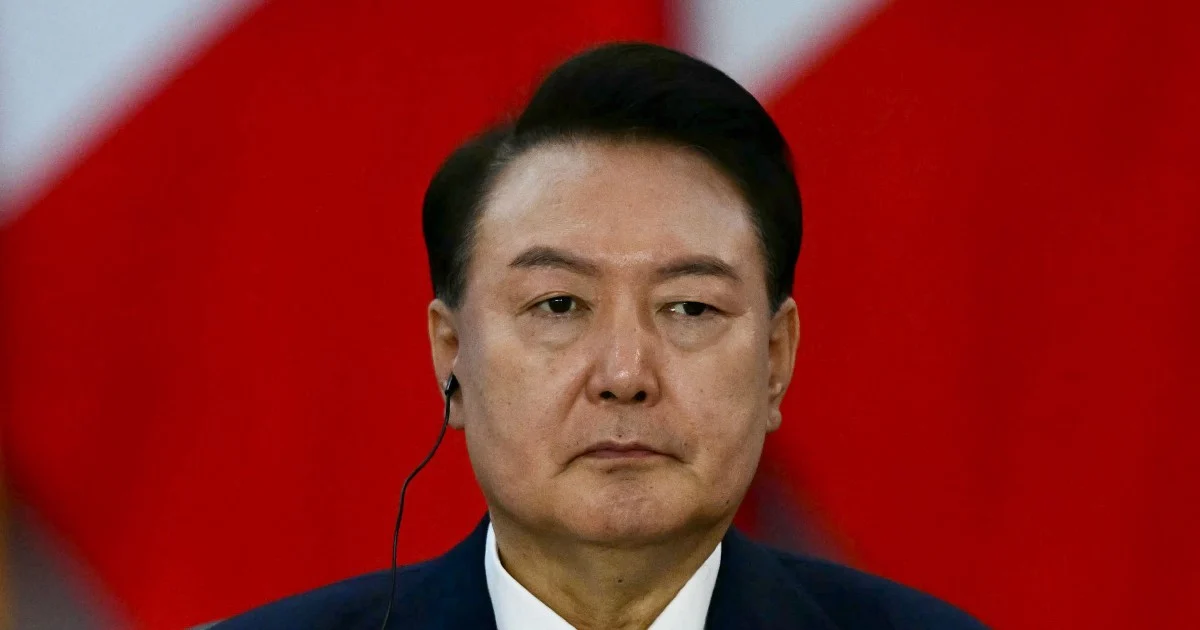
South Korea's highest judicial body is poised to deliver a decisive verdict Thursday regarding former president Yoon Suk Yeol and the turbulent events surrounding his abortive martial law declaration, a case that has dominated the country's political landscape and tested its constitutional foundations.
The Constitutional Court's decision represents a watershed moment in South Korea's recent political history, carrying implications that extend well beyond the individual defendant. The outcome will effectively determine whether the nation's legal framework can hold even the highest former office holders accountable for extraordinary assertions of executive power, or whether institutional safeguards prove insufficient when challenged by a sitting head of state.
Yoon Suk Yeol's December martial law declaration shocked a nation with deep historical memories of military authoritarianism and sudden power grabs. His decision to impose emergency rule, supposedly justified by claims of national security threats, triggered immediate constitutional crises as military personnel attempted to enter the National Assembly and parliament resisted implementation. The chaos that ensued—with opposition lawmakers barricading themselves against armed troops—provided stark television imagery that recalled darker chapters of South Korea's past.
The charges against the former president encompass multiple serious allegations arising from both the declaration itself and the disorderly manner of its enforcement. Prosecutors have pursued arguments that his actions violated constitutional norms prohibiting the arbitrary exercise of emergency powers without genuine national emergency conditions. The specific allegations focus on the nature of the claimed security threats and whether such circumstances genuinely justified invoking extraordinary constitutional provisions designed for extreme scenarios.
For Malaysian observers, this case offers instructive lessons about institutional resilience when facing executive overreach. South Korea's experience demonstrates how constitutional courts can function as meaningful checks on presidential power even after dramatic assertions of emergency authority. The nation's constitutional framework, shaped by its post-authoritarian experience, includes specific mechanisms—including an elected Constitutional Court—that enable rapid judicial intervention in political crises.
The proceedings have attracted significant regional attention because they reflect broader questions about democratic governance in East Asia. How courts respond to former presidents who push constitutional boundaries establishes precedent affecting future executive behaviour. South Korea's Constitutional Court has faced pressure from multiple directions: the incumbent government's political interests, broader public opinion divided on Yoon's legacy, and the fundamental principle that no official should be immune from legal accountability for constitutional violations.
The timing of the verdict carries practical political significance beyond its immediate legal importance. South Korea's political calendar remains congested with other investigations, parliamentary dynamics, and preparations for upcoming elections. A verdict either confirming or rejecting the charges will reshape calculations among political actors regarding the risks and consequences of extraordinary executive actions.
International observers have monitored the case partly as an indicator of South Korean democracy's health. The speed with which institutions mobilized to prevent the martial law declaration's full implementation—particularly parliament's role in convening and voting to terminate emergency rule—demonstrated constitutional safeguards functioning under extreme stress. Thursday's verdict will now examine whether those safeguards extend to meaningful legal consequences.
The chaotic aftermath that followed the declaration's failure created additional charges and complications. Military personnel involvement in attempting to enforce orders, bureaucratic responses to presidential directives, and specific actions during the tumultuous hours of implementation all feed into the legal arguments before the court. Prosecutors must establish that specific actions crossed definable legal thresholds rather than merely representing aggressive political judgement.
For regional governance observers, the case illuminates different approaches to managing post-authoritarian constitutional frameworks. South Korea's system combines elements of presidential and parliamentary governance, creating multiple veto points where emergency declarations can be challenged. Unlike some regional democracies with more centralized executive authority, South Korea's National Assembly possesses explicit constitutional power to terminate martial law declarations through legislative vote—a mechanism that functioned decisively despite the chaotic circumstances.
The Constitutional Court's composition reflects South Korea's particular approach to judicial selection, with justices appointed through a combination of presidential nomination, parliamentary selection, and judicial self-selection. This mixed system aims to prevent any single political actor from dominating constitutional interpretation, though the case has inevitably drawn criticism from supporters of both the government and the former president regarding court composition.
Thursday's verdict will establish whether South Korea's legal system can definitively address extraordinary presidential actions through constitutional means. The judgment will speak to fundamental questions about rule of law, the scope of legitimate emergency powers, and whether democratic systems can effectively police themselves when leaders test institutional boundaries. These questions resonate throughout the region, where different democracies grapple with balancing executive effectiveness against constitutional constraints.

