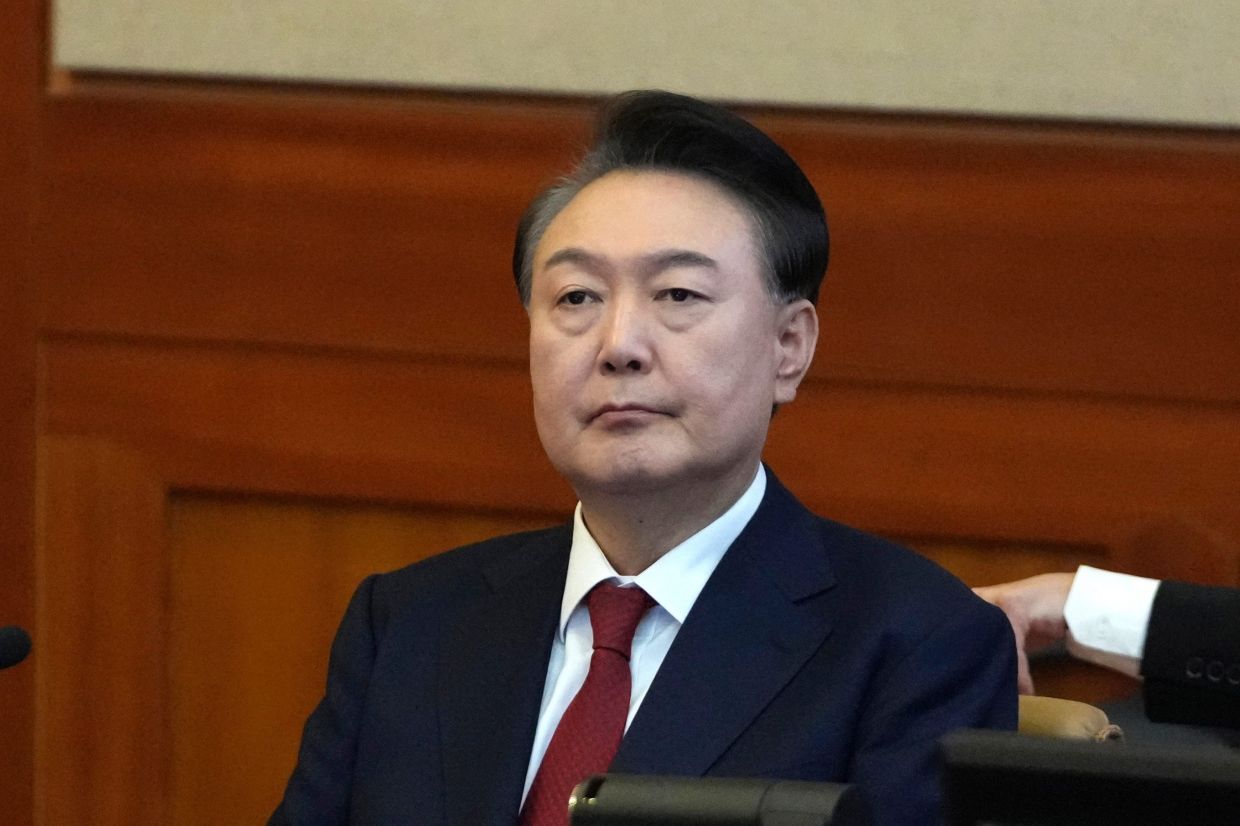
South Korea's highest court has delivered a decisive legal blow to embattled former president Yoon Suk Yeol, affirming his seven-year prison sentence on Thursday in connection with his ill-fated declaration of martial law in December 2024. The Supreme Court's final ruling closes a significant chapter in the criminal proceedings against the ousted leader, though he remains locked in separate legal battles that could extend his incarceration considerably. The court found no error in the lower courts' findings, effectively endorsing the verdict reached through the judicial process and signalling that the nation's legal system had thoroughly examined Yoon's conduct during the crisis.
Yoon's conviction rests on a constellation of charges stemming from the chaotic events surrounding his attempt to impose martial law, a dramatic bid that lasted merely six hours before lawmakers hastily convened to nullify it. Among the offences for which he was found guilty was deliberately obstructing cabinet deliberations by summoning only a select group of ministers to a pre-martial law meeting, thereby circumventing proper governmental procedures. The prosecution also proved that Yoon authorised the creation and distribution of forged documents bearing the prime minister's signature, actions designed to lend false legitimacy to his martial law decree. Additionally, he stood accused of ordering officials to disseminate misleading statements to international media outlets and directing military commanders to destroy sensitive records from secure communications systems, charges aimed at concealing evidence and controlling the narrative surrounding the crisis.
The path to this Supreme Court affirmation involved a series of escalating legal developments across multiple judicial levels. A lower court had initially sentenced Yoon to five years imprisonment in January after finding him guilty on the majority of charges laid against him. When the case proceeded to an appeals court in April, the judges not only upheld the original conviction but added a new guilty verdict regarding the misleading press release sent to foreign media organisations, simultaneously raising the sentence to seven years. The prosecution, unsatisfied with even this enhanced penalty, had appealed to the Supreme Court seeking a ten-year sentence, arguing for a more stringent punishment befitting the gravity of Yoon's alleged misconduct.
Yoon's legal representatives responded to the Supreme Court's dismissal of all appeals with expressions of dismay and procedural objections. His defence team accused the nation's highest court of reaching its judgment without conducting sufficiently thorough deliberation, suggesting that the legal reasoning lacked the rigorous examination such a consequential case demanded. Rather than accepting defeat, the ex-president's lawyers signalled their intention to mount a constitutional challenge to the ruling, asserting that the Supreme Court's decision violated fundamental protections enshrined in South Korea's constitution. They also indicated plans to file formal complaints, keeping alive hope among Yoon's supporters that additional legal avenues remained available for contesting the conviction.
The dramatic late-night televised address in December 2024 in which Yoon announced martial law plunged South Korea into unprecedented constitutional turmoil. The measure, designed ostensibly to bypass parliamentary opposition and suppress what the president characterised as anti-state forces, shocked the nation and caught key international allies, including the United States, entirely off guard. The stock market immediately reacted negatively, tumbling sharply as investors absorbed the implications of civilian rule being suspended and military authority temporarily superseding democratic institutions. Yet the public and parliamentary response was swiftly mobilised, with lawmakers racing to convene an emergency session where they voted overwhelmingly to rescind the martial law declaration within just six hours of its announcement.
The brevity of martial law's implementation did not shield Yoon from the legal and political consequences that followed. Beyond the seven-year sentence now affirmed by the Supreme Court, Yoon faces additional serious criminal convictions in separate proceedings. In a particularly striking case, a court sentenced him to thirty years imprisonment for directing the dispatch of drones into North Korean territory, an action prosecutors characterised as an attempt to artificially manufacture a crisis scenario that would justify his martial law initiative. These mounting sentences, if ultimately served consecutively rather than concurrently, threaten to consume decades of Yoon's remaining years in prison.
Throughout his legal ordeals, Yoon has maintained that his martial law declaration was motivated exclusively by patriotic concern for the nation's wellbeing and constitutional order. He has repeatedly insisted that his actions were necessary to counteract what he perceived as existential threats from hostile domestic political forces and destabilising pressures emanating from North Korea. His defenders argue that he acted within the scope of presidential authority and that his intentions, however misguided in execution, reflected genuine anxiety about national security rather than authoritarian overreach. However, the judiciary's consistent findings against him across multiple courts suggest that South Korean courts have rejected these justifications as insufficient legal or constitutional grounds for suspending democratic governance.
Yoon's fall from power represents a dramatic reversal for a president who had campaigned on promises of strong leadership and conservative governance. He was formally ousted from office in April 2025 following the martial law episode, triggering an immediate presidential election that resulted in the electorate choosing Lee Jae Myung of the centre-left Democratic Party as his successor. The transition of power underscored the South Korean public's rejection of Yoon's approach and marked a significant political realignment that reshuffled the nation's governing priorities. The election outcome reflected broader voter sentiment regarding the martial law crisis and its aftermath, demonstrating democracy's resilience despite the constitutional challenge posed by Yoon's December declaration.
The Supreme Court's final confirmation of Yoon's seven-year sentence carries implications that extend beyond the individual former president to encompass fundamental questions about presidential accountability and the rule of law in South Korea. By affirming the conviction through the highest court rather than overturning it on technical or constitutional grounds, the judiciary signalled its commitment to holding even former chiefs of state answerable to the same legal standards that bind ordinary citizens. This reinforcement of equal application of law represents a crucial validation of democratic institutional integrity during a period when presidential overreach had threatened to undermine constitutional norms. The ruling also provides closure to one dimension of a sprawling legal saga that continues to captivate South Korean political observers and international commentators alike.

