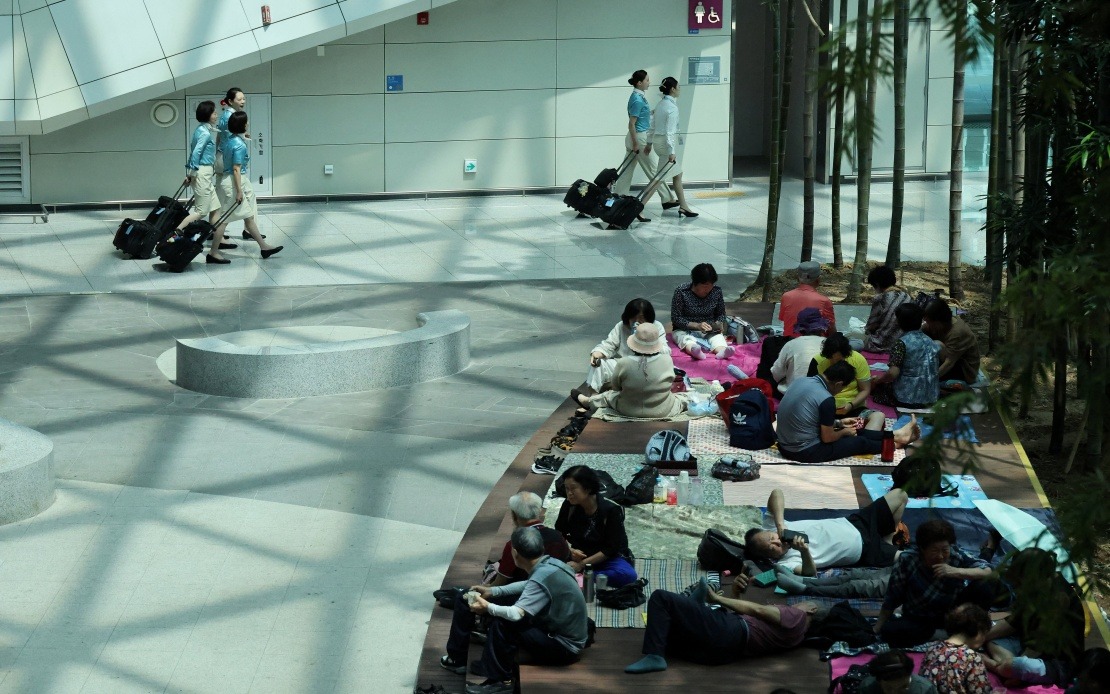
South Korea confronts an escalating health emergency as heat-related illnesses have surged dramatically over the past ten years, underscoring the intensifying impact of climate change on vulnerable populations across the Korean peninsula. Government data analysed by a research institute operating under the interior ministry reveals that what was once a manageable seasonal affliction has transformed into a significant public health challenge, with implications that extend beyond South Korea's borders to other rapidly warming regions in Northeast and Southeast Asia.
The scale of the transformation becomes evident when comparing different periods of the past decade. Between 2011 and 2015, an annual average of merely 215 heat-related patients required medical attention during the late summer period between ipchu and the end of August—a timeframe that marks the traditional astronomical beginning of autumn in the Korean lunar calendar. This baseline figure has become almost unrecognizable in light of recent trends. From 2016 to 2020, the annual average climbed to 658 cases, representing a roughly threefold increase that alarmed public health officials. The trend has persisted through 2021 to 2025, with 638 annual average cases indicating that the crisis has reached a new plateau rather than subsiding.
Mortality data paint an even grimmer picture of the deteriorating situation. Deaths attributed to heat-related illnesses have accelerated alongside case numbers, rising from an annual average of 3.3 deaths during 2012 to 2015, to more than four deaths per year across the 2016 to 2025 period. The absolute figures for 2024 alone demonstrate the acute severity of recent summers: 1,299 people suffered heat-related illnesses between ipchu and late August, while 12 individuals succumbed to heat-induced complications. These numbers represent a stark reminder that behind each statistic lies individual suffering and family tragedy, particularly among elderly populations and those lacking air-conditioning or adequate indoor cooling facilities.
The Korea Disease Control and Prevention Agency has been tracking heat-related conditions through a specialized monitoring system that commenced operations on May 15 each year. The cumulative data from this surveillance mechanism reveals the broader scope of the problem: more than 3,089 heat-related illness cases have been documented since the system's inception, including 26 deaths. This comprehensive monitoring capability allows authorities to identify hotspots, vulnerable demographics, and emerging patterns that inform public health interventions and resource allocation during peak heat periods.
Current meteorological forecasts suggest that South Korea will continue facing dangerously elevated temperatures through late August. The Korea Meteorological Administration projects daytime highs ranging from 31 to 35 degrees Celsius across the nation, a range that exceeds thermal comfort thresholds for many citizens and creates hazardous conditions for outdoor workers, athletes, and those without adequate shelter. A single day in the monitoring period—Friday, prior to the reporting date—illustrated the relentless pressure on healthcare systems, with 202 people requiring emergency room treatment for heat-related conditions nationwide, and three fatalities occurring within a 24-hour cycle.
The implications of South Korea's heat-illness surge extend relevance to Malaysian and Southeast Asian policymakers facing similar climatic pressures. While tropical Southeast Asia has long contended with high temperatures and humidity, the recent South Korean experience suggests that even populations accustomed to temperate climates can experience sudden, severe public health crises when thermal extremes accelerate beyond historical norms. The correlation between climate change and heat-related mortality has become undeniable in the data, prompting questions about infrastructure adequacy, social support systems for vulnerable groups, and workplace safety standards across rapidly developing economies.
The demographic characteristics of affected populations merit closer examination. Heat-related illness data globally consistently shows disproportionate impacts on elderly residents, outdoor laborers, homeless individuals, and those with pre-existing cardiovascular or neurological conditions. South Korea's aging society—with one of the world's highest elderly population ratios—creates structural vulnerability that compounds the effects of rising temperatures. Similarly, Malaysia's demographic profile includes growing numbers of elderly citizens and a substantial migrant worker population engaged in outdoor occupations, both groups facing elevated heat-illness risk.
Workplace regulations and occupational safety standards require reassessment in light of these trends. South Korea's construction sector, manufacturing plants, and agricultural regions all employ hundreds of thousands of workers exposed to direct sunlight and thermal stress for extended periods. The absence of adequate rest breaks, hydration provisions, or enforced work-hour restrictions during peak heat periods can transform routine employment into life-threatening situations. Malaysian employers, particularly in the construction, plantation, and manufacturing sectors, would be wise to examine South Korean regulatory responses and adapt lessons to local contexts.
Public health infrastructure preparedness has become a critical policy frontier. The Korea Disease Control and Prevention Agency's monitoring system represents one component of a comprehensive approach, but emergency department capacity, ambulance availability, and public awareness campaigns all factor into mortality outcomes. Heat-illness prevention depends substantially on community understanding of warning signs—excessive fatigue, dizziness, rapid heartbeat, confusion—and knowledge of appropriate first-aid responses. Educational campaigns must reach beyond affluent urban populations to encompass migrant workers, informal-sector employees, and those with limited access to mainstream media.
Climate adaptation strategies cannot remain confined to emergency response alone. Long-term resilience requires investments in urban cooling infrastructure—increased tree canopy coverage, reflective building materials, accessible public cooling centers—alongside workforce policies that restrict outdoor work during peak thermal hours. South Korea's experience demonstrates that incremental heat increases, when sustained over a decade, can overwhelm existing health systems designed for historical temperature ranges. Anticipatory governance demands that policymakers across Asia design infrastructure and regulations assuming climate conditions substantially warmer than recent baselines.
The trajectory evident in South Korean data—a threefold increase in cases coupled with persistent mortality despite medical advances—signals that passive adaptation proves insufficient. As Southeast Asian nations experience their own temperature escalations driven by broader climatic shifts, the imperative for comprehensive, proactive policy responses becomes increasingly urgent. South Korea's challenge foreshadows complications that other regional economies will face unless deliberate interventions reshape workplace practices, urban design, and healthcare system capacity in preparation for the thermal realities of coming decades.

