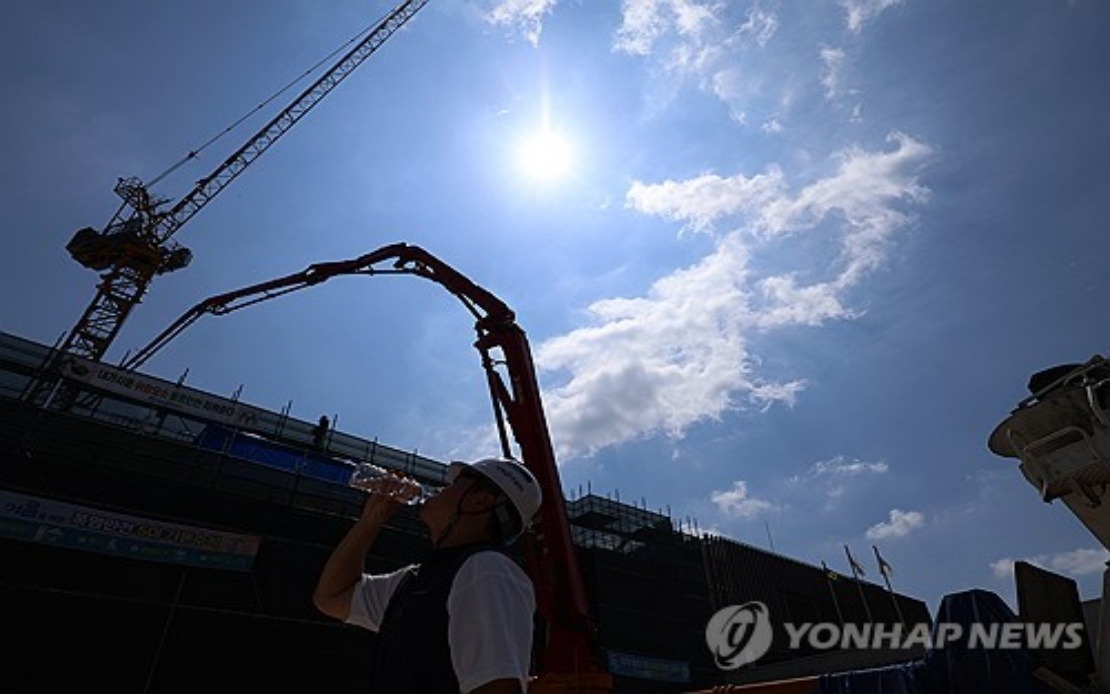
South Korea's meteorological authorities have dramatically expanded heat wave warnings across the capital region, with nearly half of the greater Seoul area now operating under the nation's most severe weather alert as temperatures continue climbing to unprecedented levels. The Korea Meteorological Administration implemented top-tier warnings across southern Incheon and nine surrounding cities and districts in Gyeonggi Province on Wednesday morning, bringing the total affected areas to 20 of the 46 land weather advisory zones covering the metropolitan region. The expansion marks an escalation of the country's struggle with extreme heat that shows no signs of abating as summer intensifies.
The geographic spread of these maximum-level warnings underscores the severity of the weather system affecting the densely populated capital region. Incheon, the country's third-largest city, joined Gwangmyeong, Yeoncheon, Hwaseong and multiple districts in receiving the alerts at 11 am on Wednesday. This represented a significant expansion from Tuesday, when all of Seoul proper was placed under the top-tier warning for the first time since the heat alert system was formally introduced on June 1. The rapid deterioration of weather conditions within a 24-hour period reflects the intensity and unpredictability of the heat wave currently gripping the Korean peninsula.
Particularly noteworthy is the alert's extension to Cheongyang in South Chungcheong Province, marking the first implementation of the highest warning level in the central Chungcheong provinces during this heat event. This geographic expansion beyond the capital region indicates that the heat emergency is not confined to Seoul's metropolitan area but represents a broader climatic phenomenon affecting much of the country. The simultaneous activation of warnings across multiple provinces demonstrates the coordinated response required when extreme weather threatens public safety across such vast population centers.
The Korea Meteorological Administration's criteria for issuing serious heat wave warnings are scientifically rigorous, designed to protect public health by triggering interventions before temperatures become catastrophic. The agency implements top-tier warnings when apparent temperatures—a measure combining heat and humidity that reflects how hot conditions actually feel—are forecast to reach 38 degrees Celsius or higher. Alternatively, warnings are issued when daily maximum temperatures reach 39 degrees Celsius or above in areas that have already experienced apparent temperatures of 35 degrees Celsius or higher for two or more consecutive days. This tiered approach recognizes that sustained heat exposure poses cumulative health risks beyond any single day's temperature spike.
The actual temperatures being recorded have shattered historical records, with alarming implications for public safety across the country. The southeastern city of Yangsan recorded a peak temperature of 42.5 degrees Celsius, representing the highest reading since modern meteorological observations began in 1904—a span of more than 120 years. This unprecedented figure illustrates how dramatically the heat wave exceeds previous benchmarks and suggests that South Korea is experiencing weather conditions outside the normal historical range that infrastructure, urban planning, and public health systems were designed to manage.
The human toll of this extended heat emergency has become increasingly evident through mounting hospital admissions and fatalities. Between May 15 and the start of August, the Korea Disease Control and Prevention Agency documented 2,221 heat-related hospitalizations across the country. More gravely, 19 deaths have been attributed to heat-related causes during the same period. These figures represent concrete consequences of extreme temperatures, with vulnerable populations including elderly citizens, outdoor workers, and those with pre-existing health conditions bearing disproportionate risk. The accumulation of cases over several weeks indicates that the heat wave represents not a brief weather event but a sustained public health crisis requiring ongoing emergency response.
For Malaysian and Southeast Asian observers, South Korea's heat emergency offers important lessons about the emerging climate reality facing the region. While Malaysia and other tropical nations experience consistently high temperatures year-round, the South Korean experience demonstrates how climate change is pushing even temperate zone countries toward heat levels previously considered extreme. Southeast Asia's infrastructure, already stressed by tropical heat, may face similar challenges as baseline temperatures shift upward. The rapid succession of record-breaking heat events in recent years suggests that the region should anticipate increasing frequency of dangerous heat episodes requiring enhanced public health preparedness.
The response mechanisms South Korea has implemented—tiered alert systems, public communications, hospital coordination, and evacuation protocols—represent frameworks that Southeast Asian nations might examine for adaptation to their own contexts. The sophistication of the Korea Meteorological Administration's warning system, with its scientific thresholds and geographic precision, offers a model for how developing climate monitoring infrastructure can translate raw meteorological data into actionable public health interventions. Malaysia's meteorological services might evaluate whether similar graduated alert systems would improve responses to heat waves, flooding, and other climate-related emergencies increasingly affecting the country.
The concentration of warnings in the greater Seoul area reflects a critical vulnerability: the clustering of more than half of South Korea's population in the capital region means that extreme weather affects millions simultaneously, overwhelming healthcare and emergency services. This geographic concentration of population in heat-prone areas—mirrored in Southeast Asian megacities like Bangkok, Jakarta, and Manila—creates cascading risks when extreme weather strikes. Transportation systems may malfunction, power grids may fail under air conditioning demand, and hospitals may become overwhelmed, amplifying the direct health impacts of heat itself.
Looking forward, the persistence of these record-breaking temperatures suggests that South Korea's summer weather patterns may have undergone a fundamental shift. The historical record of 120 years provides limited guidance for conditions that now exceed those benchmarks, raising questions about whether traditional planning assumptions remain valid. For the region, this implies that infrastructure investments, urban design, and climate adaptation planning must account for weather extremes that existing historical data suggests should be rare or impossible. The South Korean experience should prompt Southeast Asian policymakers to reconsider assumptions about temperature limits and to invest proactively in adaptation measures rather than responding reactively once records begin falling regularly.

