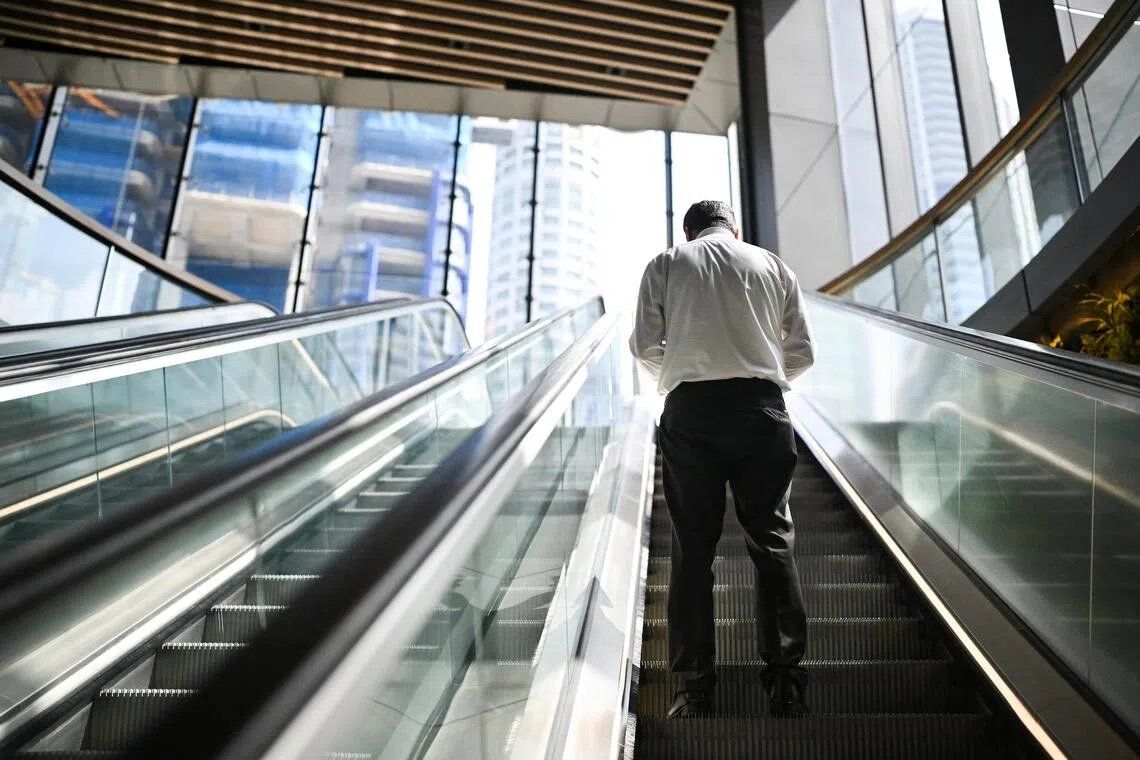
South Korea faces an unexpectedly polarizing social question that has divided commuters for years: the proper way to stand on an escalator. A government survey of 1,000 adults across seven major cities revealed an almost perfect split in public opinion, with 50.1 per cent backing the practice of standing to one side to allow others to walk past, while 49.9 per cent prefer that all passengers remain stationary in two full lines. This razor-thin margin underscores how deeply South Koreans disagree on what should be a straightforward matter of transit etiquette.
The breadth of this disagreement prompted authorities to convene a high-level forum in Seoul on August 29, bringing together roughly 200 citizens and experts to examine whether escalators operate more safely and efficiently when all riders stand still or when one side remains clear for pedestrians. Rather than settling the question with a definitive answer, the forum exposed the genuine complexity underlying what many assume is a simple issue. Jang Gye-ryeon, a public administration researcher at the Korea Institute of Industrial Relations, articulated the deeper intellectual challenge: determining whose efficiency matters in a given context and at what times of day or in which locations. The debate transcends simple preference to encompass competing values around individual convenience, collective throughput, mechanical reliability, and injury prevention.
Empirical evidence examining passenger flow suggests that the two-line arrangement may move more people overall, though walking saves time for individuals. A controlled experiment conducted at a crowded British railway station found that passenger capacity increased between 25 and 30 per cent when both sides of the escalator were occupied, compared with the conventional one-side-standing method. South Korean researchers replicated this finding at Guri Station near Seoul, where 190 people used the escalator during an identical period when both sides were in use, against 164 under the one-side-standing protocol. However, researchers acknowledged significant limitations in drawing firm conclusions from such a constrained sample, suggesting that real-world variables—including rush-hour density, passenger age distribution, and luggage—require far more extensive investigation.
The mechanical and safety argument against walking escalators presents an equally compelling countervailing concern. Sensor testing of escalator steps revealed that downward walking generated impact forces equivalent to approximately 2.01 times a person's body weight, while upward walking produced roughly 1.54 times body weight. Heo Yun-seop, a professor at Korea Lift College, warned that repeated impacts from walking combined with uneven stress from one-sided standing could accumulate damage to critical mechanical components, potentially shortening escalator lifespan and escalating maintenance expenses. Though direct causal evidence linking one-sided standing to mechanical failure remains limited, the cumulative wear pattern presents a legitimate maintenance concern for transport authorities managing aging infrastructure.
Accident statistics add another dimension to the safety case. Between 1993 and 2025, escalator accidents recorded across South Korea attributed 72.3 per cent of incidents to user behaviour rather than mechanical failure. More strikingly, passengers aged 60 and older accounted for 53.3 per cent of those involved in accidents, suggesting that vulnerable populations face heightened risk in crowded conditions or when navigating escalators designed for mixed usage patterns. As South Korea's population rapidly ages, this demographic dimension becomes increasingly relevant to public health and transit policy decisions.
South Korea's own policy history demonstrates how contentious and unstable this issue remains. The government actively promoted one-side standing beginning in 1998, and the practice gained nationwide momentum around the 2002 FIFA World Cup as a mechanism for accommodating time-pressed passengers. However, mounting concerns about accidents and equipment degradation prompted a dramatic reversal: from 2009 to 2014, authorities actively encouraged two-line standing instead. Since 2015, the government has largely abandoned prescriptive guidance, instead promoting three neutral safety principles: always hold the handrail, never walk or run on the escalator, and remain within designated safety markings. This historical whiplash reflects genuine uncertainty about the optimal policy and illustrates how governments struggle to enforce social norms around transit behaviour when evidence remains contested.
The forum itself demonstrated how public deliberation can shift opinion, though not necessarily toward consensus. Before the discussion, only 13.4 per cent of participants favoured leaving one side open for walkers, while 45.9 per cent supported two-line standing. Following eight hours of expert presentations and citizen debate, support for one-side standing more than doubled to 29.9 per cent, though backing for two-line standing declined to 31.4 per cent. The most striking outcome was the emergence of pragmatism: 38.1 per cent of participants ultimately favoured context-dependent rules that would vary by location and crowd density. This suggests that ordinary commuters, when given adequate information and space for reflection, gravitate toward flexible, situation-responsive solutions rather than rigid universal mandates.
The implications extend beyond Seoul's subway system to transit authorities throughout Southeast Asia, where rapid urbanization has created similarly crowded escalator environments. Malaysia's burgeoning metropolitan areas and shopping centres face comparable pressures to manage pedestrian flow safely and efficiently. The South Korean experience demonstrates that escalator etiquette cannot be resolved through simple top-down rules or assumption of universal best practices. Instead, effective policy requires ongoing data collection, localized experimentation, demographic sensitivity, and genuine public engagement.
Interior Minister Yun Ho-jung announced that the government would incorporate insights from the forum into future escalator safety initiatives, though without specifying concrete measures or timelines. This measured commitment suggests authorities recognize the need for further investigation rather than hasty policy reversal. For commuters navigating South Korean transit systems, the absence of clear official guidance means escalator behaviour will likely continue reflecting individual preference and local custom rather than national standards. The deeper lesson from this escalator debate may be that seemingly trivial matters of public conduct often embody genuine tensions between personal efficiency, collective welfare, mechanical systems, and human safety—tensions that demand nuanced, evidence-informed approaches rather than ideological certainty.

