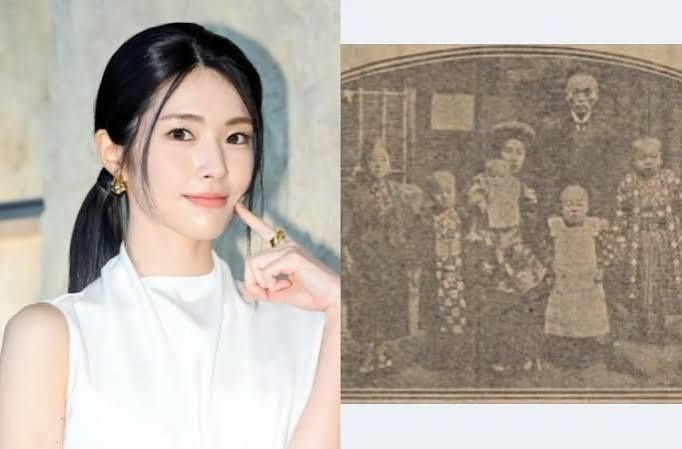
South Korea's genealogy sector has unexpectedly thrust into the spotlight following a controversy surrounding actress Ahn Ha-young and her family's historical connections to Japan's 1910-1945 colonial administration of the Korean peninsula. The dust-up has triggered an extraordinary surge in public curiosity about ancestral origins, with a major family history website crumpling under unexpected demand as citizens across the country attempt to verify their own lineage records and historical backgrounds.
The genealogy portal, whose name translates from Korean as "in search of roots," found itself overwhelmed by the sudden influx of users seeking to examine family records and trace genealogical connections. During the evening of August 12 and into August 13, the website's servers buckled under the unprecedented traffic, experiencing multiple outages that lasted several hours and periodic crashes throughout the following day. The platform typically serves users interested in understanding their ancestry and researching historical context around Korean family clans, but the celebrity-driven controversy transformed it into a national point of focus.
The website ordinarily functions as a comprehensive resource for understanding South Korean familial structures and heritage. It maintains detailed information on 287 distinct family lineages found throughout the country, including documentation of their geographic origins, historical significance, and contemporary population distribution. This encyclopedic approach to genealogy has traditionally attracted researchers, historians, and individuals pursuing personal family history projects, but the Ahn Ha-young situation suddenly made genealogical research a matter of intense public concern.
At the centre of the controversy lies Ahn's great-grandfather, whom the actress had previously described in a television appearance as a pioneering physician. According to Ahn Ha-young's account, her ancestor established Seoul's first Western-style medical clinic and provided healthcare to Emperor Gojong, who reigned from 1852 until 1919. These details painted a portrait of a respected medical professional who contributed meaningfully to Korea's modernisation during the late nineteenth and early twentieth centuries. However, this narrative would soon face serious challenges.
Online communities and historical researchers began circulating allegations that Ahn Sang-ho, the actress's great-grandfather, maintained connections with figures and institutions that collaborated with Japan's colonial administration. The emergence of these claims prompted widespread discussion about whether Ahn's ancestor had actively supported or benefited from Japanese rule. Initially, Ahn Ha-young's management agency moved to contain the damage by denying the allegations outright, a defensive posture that ironically intensified public interest rather than quelling it. Audiences responded to the agency's rebuttal by intensifying their own historical searches, determined to establish the factual record.
The magnitude of public scrutiny eventually forced a reckoning. On August 12, Ahn Ha-young herself issued a formal public apology, acknowledging that she had been uninformed about her family's complete historical record and expressing regret that she had previously spoken about her ancestry without fuller awareness of its complexities. The actress's contrition represented a significant moment of accountability, though it also underscored the emotional weight that colonial-era associations carry within South Korean society even eight decades after liberation.
This episode reflects the deep sensitivities that persist around Korea's experience of Japanese colonialism, a chapter that fundamentally altered Korean society and remains contested in public memory and historical interpretation. The controversy erupted mere days before South Korea's Liberation Day on August 15, the national holiday commemorating the peninsula's freedom from Japanese rule in 1945. The timing amplified the resonance of the story, as the nation prepared collectively to honour its liberation struggle and remember those who resisted occupation. Against this backdrop, revelations about potential collaboration carried heightened moral significance.
The genealogy website's collapse under traffic reveals something important about contemporary South Korean civic engagement: ordinary citizens possess both the capability and the motivation to conduct historical investigations independently. Rather than passively accepting official narratives or institutional pronouncements, thousands of Koreans moved quickly to access primary genealogical records and historical documentation. This grassroots impulse to verify facts and examine one's own family position within contested historical periods demonstrates the enduring relevance of colonial history to modern Korean identity.
For Malaysia and other Southeast Asian societies with their own experiences of colonialism and complex historical legacies, the Ahn Ha-young episode offers instructive observations. It demonstrates how contemporary political and cultural discourse continues to intersect with historical accountability, and how public figures remain vulnerable to scrutiny regarding their family backgrounds. The incident also illustrates the power of digital platforms to democratise access to genealogical information, enabling citizens to conduct independent historical research rather than relying solely on family narratives or institutional expertise.
The broader implications extend to questions about how societies process difficult historical periods and assign responsibility across generations. South Korea's ongoing national conversation about colonial collaboration reflects unresolved tensions within the society itself, where some families benefited materially from Japanese rule while others suffered under occupation. The genealogy website controversy inadvertently created a space where these tensions surfaced, forcing a public actress and her family to confront questions about historical complicity that many Korean families may harbour privately.
Looking forward, the incident may prompt South Korean genealogy websites and historical institutions to strengthen their archival documentation and accessibility. The surge in public demand demonstrates that citizens increasingly seek reliable historical information to understand their family positions within national narratives. Educational institutions and government agencies may need to ensure that colonial-era documentation remains preserved and accessible, enabling future generations to conduct thorough historical research without obstruction.

