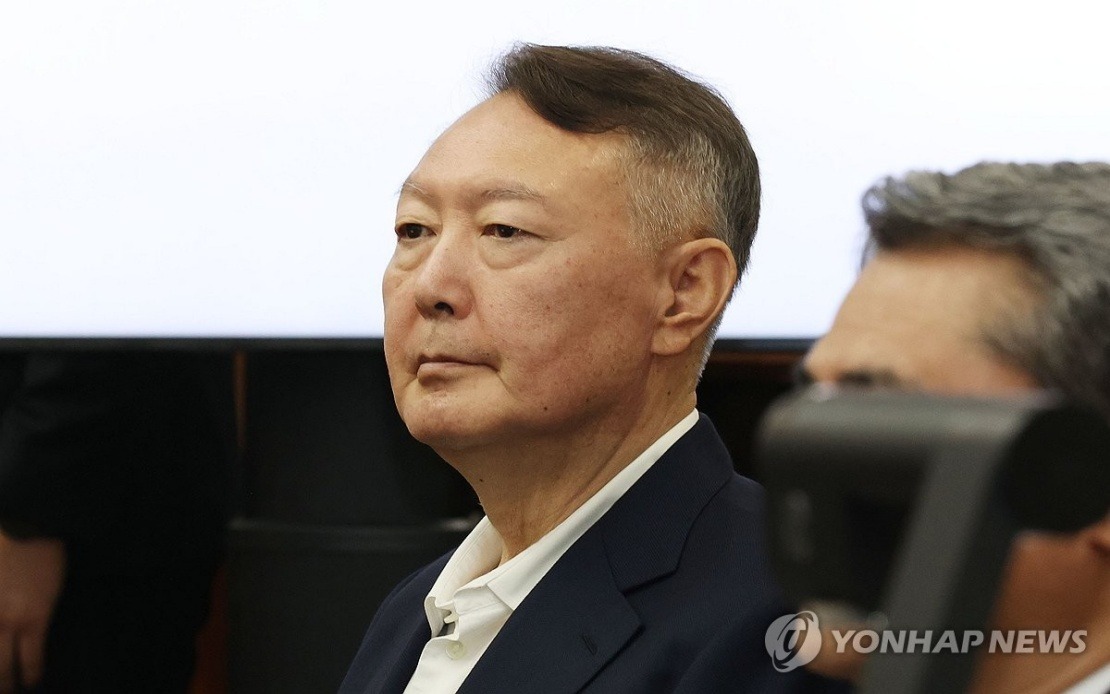
Former South Korean President Yoon Suk Yeol has been handed a two-year prison sentence by a Seoul district court in connection with a scheme involving free opinion polls that he accepted as illegal political funding. The verdict, delivered on Monday, represents a significant legal setback for the imprisoned ex-leader and demonstrates the expanding scope of criminal charges he faces following his failed attempt to impose martial law in 2024. The conviction stands in contrast to the earlier acquittal of Yoon's wife, former first lady Kim Keon Hee, on identical charges related to the same opinion poll scheme, illustrating how courts have drawn different conclusions about the couple's culpability despite their alleged joint involvement.
The Seoul Central District Court found Yoon partially guilty of violating the Political Funds Act after determining he had accepted 14 free opinion polls from power broker Myung Tae-kyun between April 2021 and March 2022. These opinion surveys, valued at approximately 270 million won or US$180,100 in total, were deemed illegal political contributions masquerading as legitimate polling services. The court imposed an additional forfeiture penalty of 13.96 million won, effectively requiring Yoon to surrender the monetary equivalent of a portion of the benefits he received. Special counsel Min Joong-ki's prosecution team had pursued more severe penalties, requesting a four-year sentence, but the court ultimately imposed a more moderate punishment while still holding the former president criminally accountable.
At the heart of the case lies an alleged political arrangement between Yoon and the power broker. The prosecution argued that Yoon promised his backing for former Representative Kim Young-sun's nomination as a parliamentary candidate in the conservative People Power Party's June 2022 by-elections in exchange for receiving the opinion polls. This quid pro quo arrangement forms the crux of the Political Funds Act violation, as accepting any material benefit in exchange for political favours constitutes a serious breach of electoral law in South Korea's regulatory framework. The court ultimately accepted the prosecution's characterization of events, determining that such an exchange did occur and that Yoon's actions violated campaign finance regulations designed to maintain democratic integrity.
Myung Tae-kyun, the power broker who supplied the opinion polls, has also faced legal consequences, receiving an 18-month prison sentence for his role in facilitating the scheme. His relatively lighter sentence compared to Yoon's reflects his secondary position in the arrangement, though he remained instrumental in the illegal transaction. The sentencing of both men underscores the prosecution's success in establishing a coordinated effort to circumvent South Korea's strict campaign finance rules, which have been strengthened considerably over the decades to prevent wealthy individuals and connected figures from gaining undue political influence.
The divergence between Yoon's conviction and Kim Keon Hee's acquittal in April introduces complexity to understanding the case's legal reasoning. When the Seoul High Court cleared Yoon's wife of the same charges, it determined that the couple derived no profit from the opinion polls since Myung had distributed similar surveys to other recipients as well. This logic suggested that accepting something freely available to multiple parties did not constitute an illegal gain. However, the court handling Yoon's trial appears to have weighed the political arrangement and the reciprocal promise more heavily, focusing on the exchange of benefits rather than their exclusive availability. Min's prosecution team has already appealed the acquittal of the former first lady, suggesting they believe the appellate court's reasoning was flawed and that both should face identical liability.
For Malaysian observers and Southeast Asian readers monitoring South Korea's political crisis, this conviction illustrates the serious consequences of campaign finance violations even at the highest levels of government. Unlike some regional democracies where wealthy benefactors retain significant influence over political processes, South Korea has developed relatively robust enforcement mechanisms to hold former leaders accountable for breaches of electoral law. The prosecution's ability to pursue a former president through the courts demonstrates the independence of South Korea's judiciary, despite political pressures that inevitably surround such high-profile cases. This stands in contrast to some regional contexts where such prosecutions might face greater political obstruction.
Yoon's mounting legal jeopardy extends far beyond the opinion poll scandal. In February 2024, a separate court sentenced him to life imprisonment for leading an insurrection through his short-lived declaration of martial law, one of the most serious charges a former president could face. The opinion poll conviction now adds another criminal conviction to his record, demonstrating the cascade of legal problems that flow from his controversial political decisions. These multiple simultaneous trials present an unprecedented challenge for South Korea's legal system and raise questions about how the nation will manage the imprisonment of a former head of state across multiple cases involving serious charges.
The implications for South Korean governance are substantial. The conviction signals to future political leaders that campaign finance violations will be prosecuted regardless of rank or previous office, establishing a precedent for accountability. However, the simultaneous imprisonment of a former president also reflects deeper institutional instability within South Korea's political system, where dramatic shifts in power and subsequent prosecution of predecessors have become almost cyclical. Regional democracies wrestling with similar transitions of power may observe these trials closely to understand how legal systems can balance accountability with political stability.
Looking ahead, the prosecution team's appeal of Kim Keon Hee's acquittal could reshape the legal landscape surrounding this case. Should the appeal succeed, it would establish consistent culpability for both members of the couple and potentially lead to her imprisonment as well. Additionally, the multiple sentences Yoon faces—both the life sentence for the martial law declaration and now the two-year sentence for campaign finance violations—create complex questions about how these sentences will run concurrently or consecutively, and what his actual imprisonment duration will ultimately be. These details remain subjects of ongoing legal proceedings and appellate review, ensuring that South Korea's political crisis will continue to dominate its legal calendar for years to come.

