South Korea stands on the precipice of ending a centuries-old culinary tradition that has survived wars, colonial occupation, and rapid modernisation. From February 2027, the breeding, slaughter, and commercial sale of dogs for meat will be formally prohibited across the nation, marking the culmination of legislation passed in January 2024 after decades of contentious public debate. The ban represents a seismic shift in a society where dog meat consumption has deep historical roots, yet the transition is already reshaping the economic landscape for farmers, vendors, and restaurant owners who have built livelihoods around this industry.
The journey towards this legislative milestone has been neither swift nor without resistance. Historical records trace dog meat consumption in Korea back at least to the Joseon Dynasty, where it was documented in the 17th-century medical text Donguibogam as a warming food believed to restore energy and vitality. The practice intensified during Japan's colonial rule from 1910 to 1945 and in the devastating aftermath of the three-year Korean War, when widespread poverty and food scarcity pushed millions to seek affordable protein sources. What began as subsistence eating became woven into Korean culinary culture, particularly the preparation of boshintang, a stew traditionally consumed during the country's three hottest summer days, known as boknal or "dog days." The cultural entrenchment of this practice meant that advocates for ending it faced formidable social and political headwinds.
Yet attitudes have shifted dramatically in recent decades, particularly among younger and more globally connected Koreans who view dogs primarily as companion animals rather than livestock. Animal welfare organisations like Humane World for Animals have accelerated this shift by demonstrating an alternative future, rescuing approximately 2,800 dogs from farms and facilitating their adoption overseas in the United States, Britain, and Canada. One such rescue, a Labrador named DeeJay rescued from a crowded cage on a dog meat farm in Wonju, was adopted by musician Annie Ko in 2015 and remains one of the few survivors from his litter still living in South Korea. Stories like DeeJay's have contributed to evolving social norms that increasingly view the dog meat trade as incompatible with contemporary Korean identity.
The government's approach to managing the industry's wind-down has combined incentives with enforcement mechanisms. Farmers operating dog meat facilities were granted a three-year grace period following the January 2024 legislation, during which they could receive compensation of up to 600,000 won (approximately US$426) per dog, access low-interest loans for economic transition, and participate in job-retraining and employment counselling programmes. The Ministry of Agriculture, Food and Rural Affairs reported that more than 80 per cent of the known 1,500 dog meat farms had ceased operations by May 2026, leaving fewer than 300 farms still active as the February 2027 deadline approached. This compliance rate, while substantial, suggests that a significant minority of operators intend to continue activities until the absolute final moment, raising questions about enforcement mechanisms and potential evasion.
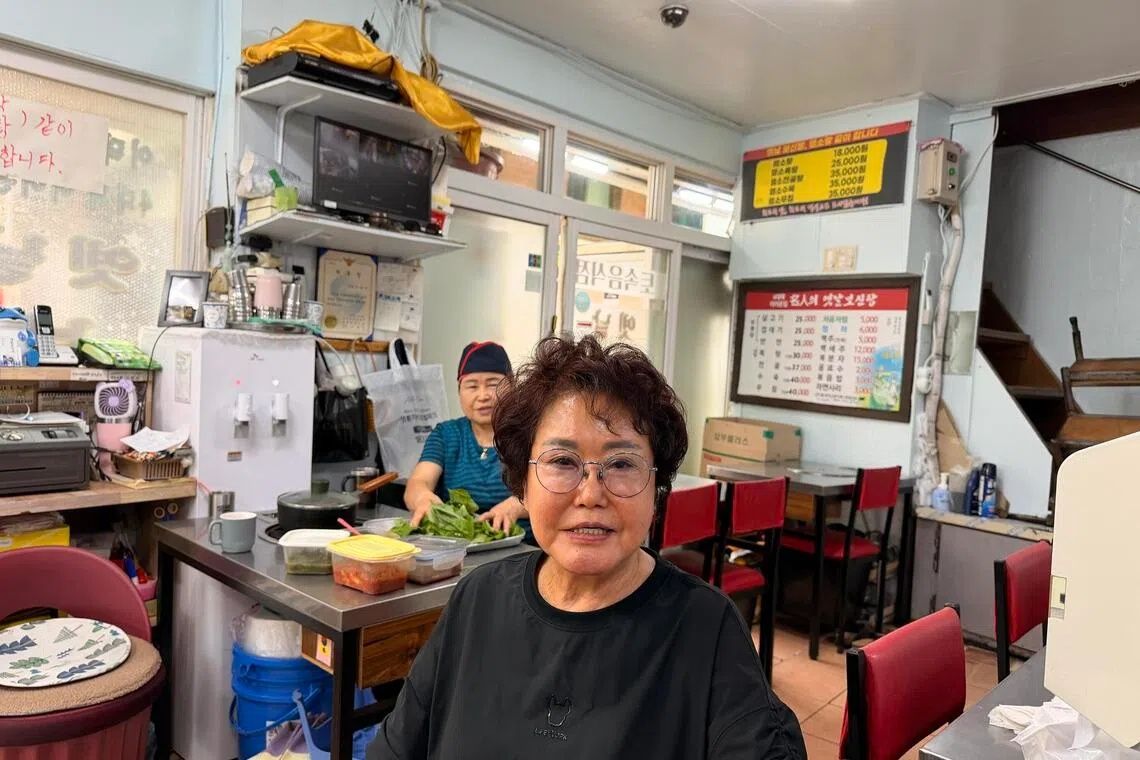
The economic strain on remaining market participants provides a window into the industry's collapse. A vendor at Seoul's Gyeongdong Market, one of the few remaining wholesale outlets for dog meat, described a dramatic price surge as supplies contracted sharply. Wholesale prices tripled from approximately 20,000 won per kilogramme in 2024 to 60,000 won by summer 2026, reflecting scarcity rather than sustained demand. This inflationary pressure cascaded through to retail restaurants, many of which have operated for decades as neighbourhood institutions. Lee Deok-sung, who has operated a boshintang restaurant near Seoul's Dongdaemun Market for 45 years, reported that the summer 2026 season was commercially disastrous, forcing her to raise menu prices from 16,000 won to 25,000 won per bowl. Even with price increases, she struggled to achieve daily profitability, a precarious position as the statutory prohibition looms.
The challenge of finding viable alternatives illustrates the depth of disruption facing the industry. Both long-established boshintang restaurants in the Dongdaemun area began offering black goat stew earlier in 2026, reasoning that the substitute meat shared textural and flavour characteristics with dog meat and could be prepared using existing culinary techniques. However, customer reception has been tepid, with regulars explicitly expressing preference for the traditional protein based on taste superiority. Some clientele pointed to recommendations from traditional Korean medicine practitioners who continue to prescribe dog meat to patients recovering from serious illness, suggesting that medical beliefs about the meat's restorative properties remain influential among certain demographic segments. At 75 years old, restaurant operator Lee Kyung-ja acknowledged that rebuilding a customer base around an unfamiliar alternative at this stage of her life seemed practically impossible, hinting that closure rather than transition may be her destination.
The predicament facing ageing restaurant owners reflects broader generational dynamics in South Korean society. Younger consumers have largely abandoned dog meat consumption, viewing it as incompatible with contemporary values regarding animal welfare and South Korea's image as a developed, modern nation. The restaurants clinging to the tradition serve increasingly elderly clientele bound by habit and cultural nostalgia rather than necessity. Lee Kyung-ja reported that on some days the restaurant received no customers whatsoever, a stunning decline for an establishment that once thrived as a destination restaurant. The absence of a natural successor generation willing to perpetuate these businesses suggests that even without the statutory ban, market forces would likely have eliminated much of the industry within a decade or two. The 2027 deadline simply accelerates an inevitable process that changing demographics and values had already set in motion.
For Malaysia and the wider Southeast Asian region, South Korea's experience offers instructive parallels and contrasts. While dog meat consumption is not a significant commercial practice in Malaysia, the country does face periodic tensions over animal welfare practices in other contexts, from traditional medicine use of endangered species to practices within the livestock sector. South Korea's legislative approach—combining a clear prohibition date with economic transition support for affected workers—represents a policy model worth studying. The government recognised that moral suasion alone would not convince farmers and vendors to abandon livelihoods, necessitating substantial compensation and retraining programmes. This pragmatic integration of welfare concerns with economic reality may resonate in policy circles across Asia.
The remaining questions for South Korea centre on implementation and enforcement. With fewer than 300 farms still operating as of May 2026, authorities face the challenge of preventing illegal operations after February 2027. Underground markets have historically emerged following prohibition of culturally entrenched practices, and some observers worry that a black market for dog meat could persist, though likely at diminished scale. The government's strategy has emphasised gradual phase-out over sudden prohibition, allowing market prices to rise naturally as supply contracts and demand shifts. This approach contrasts with more punitive alternatives and reflects learning from previous failed prohibition attempts that generated evasion rather than compliance.
The cultural significance of this transition extends beyond economics into questions of national identity and international standing. For decades, South Korea's dog meat trade attracted international criticism and contributed to diplomatic tensions with Western nations where dogs are viewed exclusively as companions. The ban represents symbolic reconciliation with global norms while acknowledging that Korean identity need not depend on preserving every historical practice. Younger Koreans increasingly distinguish between maintaining valued traditions and abandoning practices that conflict with contemporary ethics and global integration. This maturation of cultural consciousness suggests that the February 2027 deadline will mark not a rupture with Korean heritage but rather an evolution reflecting changed values within Korean society itself.
As the countdown to February 2027 continues, the remaining months will determine whether this transition occurs smoothly or faces significant disruption. The substantial compensation offered to farmers, combined with evidence of their compliance, suggests that policymakers have learned from previous failed prohibition efforts elsewhere. Yet the economic desperation evident in restaurants that cannot sell their inventory, combined with the cultural weight of centuries of tradition, indicates that some resistance will persist until the final deadline and possibly beyond. The outcome will reveal whether legislative prohibition, combined with economic incentives and generational value shifts, can successfully redirect an entire industry within a compressed timeframe. For animal welfare advocates and policy experts across Asia, South Korea's experience will provide valuable lessons about managing the intersection of tradition, economics, and evolving ethical standards.

