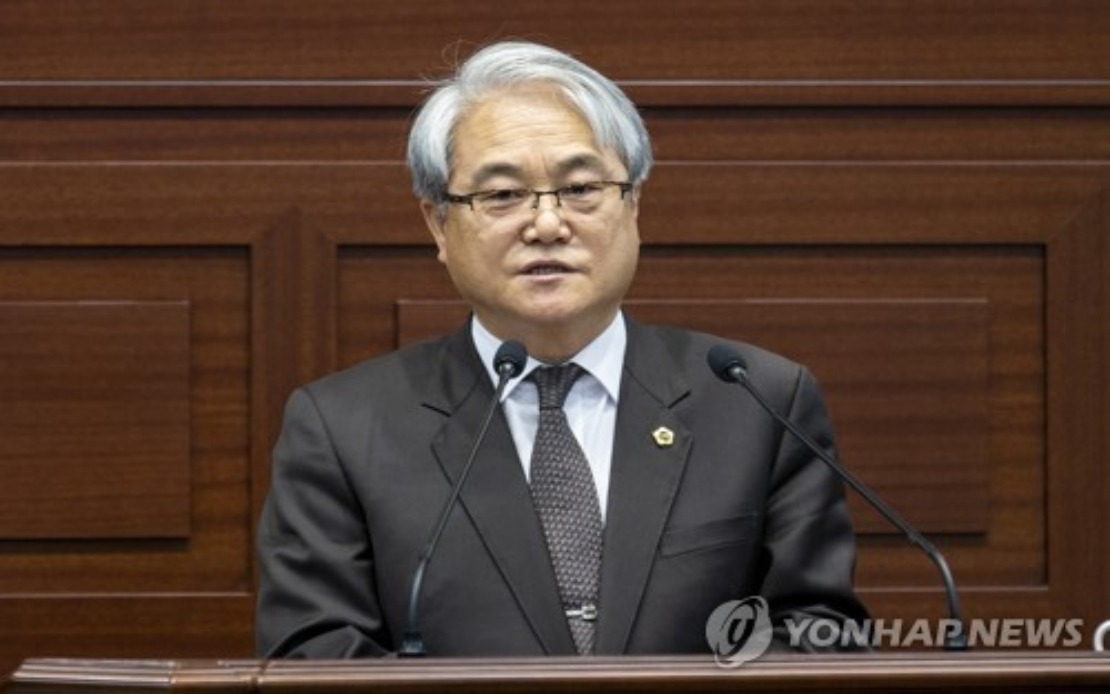
The body of Kim Ha-soo, who served as chief of Cheongdo County in South Korea's southeast region, was discovered on a mountain early Monday morning by rescue workers. According to police, the discovery included a handwritten note apparently left by Kim, though authorities have withheld specific details about the circumstances surrounding the death. The 7 a.m. recovery marked an abrupt and tragic conclusion to a high-profile corruption case that had captured public attention in recent weeks.
Kim's death occurs at a particularly sensitive moment in South Korean governance, where anti-corruption efforts have intensified across all levels of administration. The former county chief had been under active investigation for allegedly receiving improper payments from a public sector employee in exchange for facilitating job advancement opportunities during his tenure from 2022 through early 2024. This type of quid pro quo arrangement—where officials leverage their positions to demand or accept bribes for career benefits—remains one of the most persistent corruption vulnerabilities within South Korea's bureaucratic system.
The investigation had already claimed another life before Kim's death. A man suspected of serving as the intermediary in delivering the bribery payments was found dead under circumstances that investigators are still examining. This pattern of deaths linked to a single corruption case has raised questions about the pressures and consequences faced by those entangled in high-level misconduct allegations, contributing to broader concerns about the psychological toll of legal proceedings in South Korea's notoriously rigorous investigative system.
Beyond the bribery allegations, Kim was simultaneously facing separate charges that reflected a troubling pattern of abuse of official authority. Prosecutors had referred him for investigation related to a break-in at a nursing home director's residence in January, an incident that suggested Kim may have misused his official position to settle personal grievances or pursue unofficial objectives. Such cases underscore how corruption and abuse of power frequently intersect within local government structures, with officials leveraging their authority across multiple domains.
The circumstances of Kim's death, while officially unconfirmed pending investigation, may have implications for how South Korea's anti-corruption mechanisms operate at the county and municipal levels. Local government positions in South Korea occupy a particularly complex space—they provide substantial leverage over business permitting, personnel decisions, and public resource allocation, yet the supervision of county-level officials can be inconsistent compared to their counterparts in larger metropolitan authorities. This structural vulnerability has historically made smaller administrative jurisdictions susceptible to systemic corruption.
For observers across Southeast Asia, including Malaysia, the case illustrates the persistent challenges facing regional anti-corruption agencies. South Korea's framework for investigating local government misconduct is comparatively robust, with dedicated prosecution units and systematic referral processes. Yet despite these institutional strengths, the country continues to grapple with determined corruption networks that exploit their positions methodically. The implications for Malaysian governance are noteworthy, particularly as the country intensifies its own anti-corruption efforts through agencies like the Malaysian Anti-Corruption Commission.
The timing and nature of Kim's death may also influence how future investigations into local government corruption unfold within South Korea. If suicides or deaths associated with corruption probes become more frequent, they could alter the psychology of investigations themselves—potentially affecting witness cooperation, institutional morale among honest officials, or the public's confidence in corruption cases proceeding through conventional legal channels. This phenomenon has been documented in other jurisdictions where high-stakes investigations create acute psychological pressures on those involved.
Police statements indicate that the note recovered alongside Kim's body may contain information relevant to understanding his motivations, though authorities have maintained confidentiality to preserve investigative integrity. Such documents often provide crucial context for understanding how individuals under investigation experience legal proceedings, the weight of public scrutiny, and the personal consequences they perceive themselves facing. The content and tone of such communications frequently become central to understanding broader patterns within specific institutional environments.
For South Korea's anti-corruption establishment, the case presents competing challenges. Demonstrating serious consequences for misconduct remains essential for institutional credibility, yet the apparent suicide of someone under investigation raises questions about investigation intensity, prosecutorial strategy, and the psychological dimensions of enforcement. Regional governance experts have increasingly emphasized that sustainable anti-corruption frameworks must balance rigorous accountability with procedural fairness that preserves individuals' dignity throughout investigations.
The investigation into Kim's tenure as Cheongdo County chief will likely continue despite his death, with prosecutors pursuing questions about accomplices, beneficiaries of preferential treatment, and systemic vulnerabilities that enabled the alleged misconduct. Individuals who facilitated the bribery arrangements or benefited from promotion decisions made in exchange for payments remain potential subjects of investigation. This means the corruption case may ultimately generate institutional reforms affecting how county-level personnel decisions are monitored and documented.
For Malaysian audiences tracking governance developments in the region, South Korea's approach to county-level corruption investigation—despite its tragic conclusion in this case—remains instructive. The systematic referral of evidence, the multi-dimensional investigation spanning bribery and abuse of authority, and the integration of prosecution resources reflect institutional capacity that continues developing across Southeast Asia. Yet the human consequences of such intensive investigations warrant careful consideration as countries strengthen their enforcement mechanisms.

