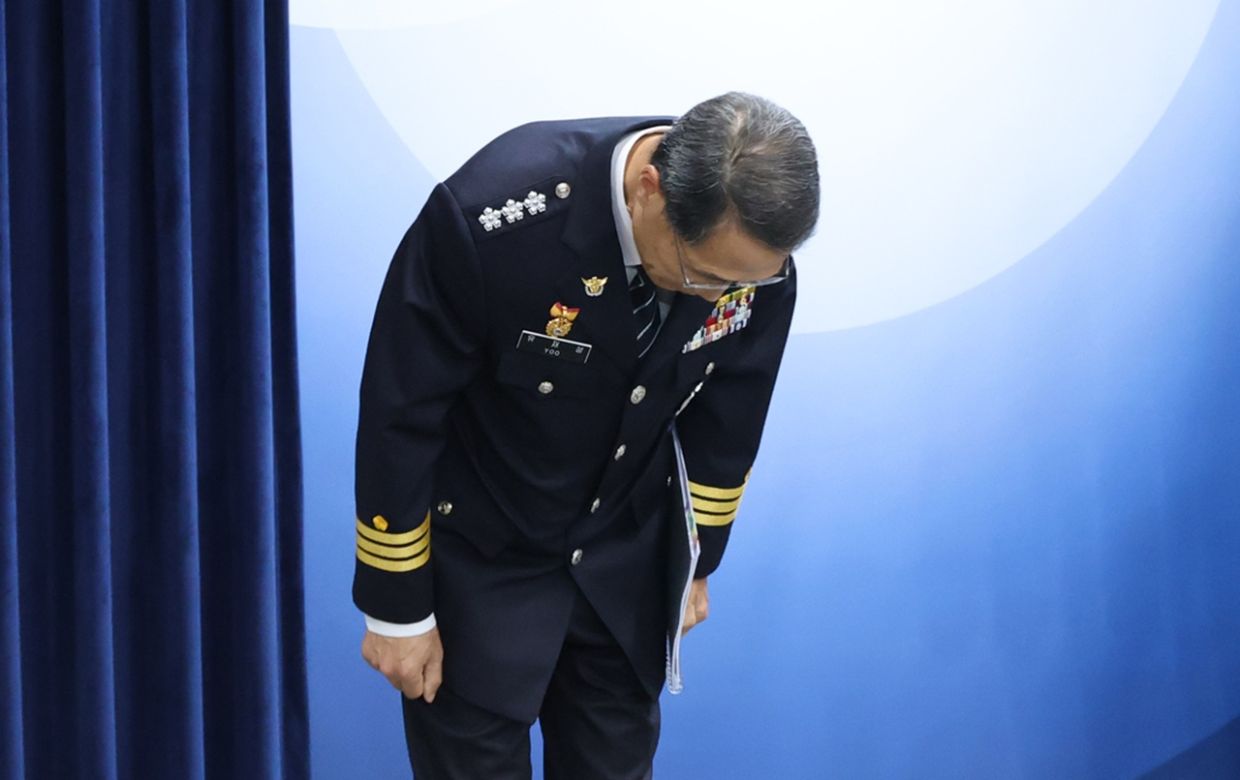
South Korea's acting National Police Agency Commissioner General Yoo Jae-sung has announced a comprehensive reform agenda aimed at rebuilding institutional credibility, responding to mounting public outrage over a high-profile investigation that revealed serious lapses in professional conduct. Speaking during a press briefing at the Government Complex Seoul on Monday, July 20, Yoo acknowledged the depth of public concern and committed the police force to fundamental operational changes designed to prevent similar failures and restore confidence in law enforcement.
The immediate catalyst for this intervention is the controversial investigation into Jang Yoon-gi, arrested for the alleged murder of a teenage girl in Gwangju in May. The case has become emblematic of systemic problems within the police force after investigators were accused of leaking sensitive investigative details to Jang's father, a currently serving police officer, whilst simultaneously failing to preserve critical evidence. These allegations suggest not merely individual misconduct but a worrying pattern of institutional vulnerability to conflicts of interest, particularly when familial ties intersect with professional authority.
Yoo's reform package, unveiled last week and expanded during Monday's briefing, addresses several structural weaknesses identified through the scandal. The centrepiece of the strategy is an investigative reform task force, scheduled to commence operations by month's end, comprising seven to ten members where outside experts represent more than half the panel. This deliberate composition reflects recognition that internal-only reform efforts lack sufficient independence and credibility. The task force will examine personnel management protocols to eliminate improper relationships between officers and local communities, whilst simultaneously developing improved procedures for handling cases involving socially vulnerable populations—a particularly sensitive issue given the victim's age.
Beyond the task force, the agency is establishing an internal affairs investigation unit under the National Office of Investigation, designed to examine serious misconduct allegations involving police personnel irrespective of rank or seniority. This democratisation of accountability represents a significant departure from previous systems where senior officers often enjoyed greater insulation from rigorous scrutiny. The unit's broad mandate signals official acknowledgement that institutional corruption can flourish at any level when oversight mechanisms remain inconsistent or hierarchically selective.
Yoo also detailed plans for a substantial civilian oversight body operating under the Korean National Police Commission, expected to comprise approximately one hundred civilian investigators tasked with examining alleged human rights violations and investigative misconduct. Implementation requires amendments to the Police Act, with relevant legislative proposals already submitted to the National Assembly. Yoo emphasised that effective operation of such oversight requires statutory provisions enabling findings to generate concrete recommendations for personnel action or disciplinary measures—a technical detail with significant implications, as toothless oversight merely generates bureaucratic appearance without substantive accountability.
The broader context for these reforms extends beyond the immediate scandal to encompassing longstanding tension between operational flexibility and civilian accountability within Korean policing. The Interior Ministry has simultaneously proposed expanding mandatory rotation policies for officers nationwide, a practice currently limited to superintendent-level and some senior inspector positions. Yoo's cautious stance on this proposal reveals practical tensions inherent in systemic reform: whilst rotation prevents entrenched relationships and local patronage networks, applying rotations across all ranks creates substantial logistical and financial burdens that require careful calibration.
The rotation system's resource implications are substantial and revealing. Currently, official residences are provided to officers at superintendent level and above when transferred under rotation protocols. Extending comparable arrangements to lower-ranking personnel would generate considerable expense whilst raising fairness questions across the force. Yoo's commitment to gathering rank-and-file officer opinions before finalising rotation expansion demonstrates recognition that institutional reform requiring frontline personnel cooperation cannot be implemented through mandate alone—buy-in requires addressing practical concerns regarding housing support, family stability, and professional quality of life.
For Malaysian and Southeast Asian observers, the South Korean experience offers instructive parallels regarding police institutional integrity and the challenges of introducing meaningful civilian oversight within hierarchical security bureaucracies. Many regional police forces confront similar vulnerabilities to nepotism, rank-based protection, and insufficient external accountability mechanisms. The Korean response—emphasising civilian expertise in oversight bodies, democratising internal investigation procedures, and acknowledging the interconnection between operational policies and frontline morale—reflects lessons applicable across different administrative contexts.
The scandal also illuminates how familial connections within security services can systematically compromise investigative objectivity, particularly in cases involving vulnerable victims. Yoo's acknowledgement that the police will await special investigation team findings before concluding the internal inspection of Jang's father suggests appropriate deference to parallel investigations, yet underscores the importance of independent investigation mechanisms that operate separately from hierarchical police chains of command.
Implementing these reforms presents significant practical challenges beyond legislative requirements. Civilian oversight bodies require recruitment and training of qualified investigators comfortable operating within police institutional environments whilst maintaining genuine independence. Task forces must balance external expert perspectives with police operational knowledge. Rotation systems must account for regional variations, family circumstances, and practical service delivery requirements across diverse geographic areas. Yoo's commitment to phased implementation and reasonable compromise approaches indicates recognition that ambitious institutional reform risks foundering on implementation difficulties if stakeholder concerns remain unaddressed.
The sequence of reform implementation matters considerably. Yoo indicated that immediately feasible measures will be introduced promptly whilst the task force deliberates longer-term structural changes, a pragmatic sequencing that allows demonstrable institutional responsiveness before pursuing more complex systemic modifications. This approach acknowledges public demands for visible change whilst protecting reform quality by allocating adequate consideration time to complex policy questions requiring careful design.
Ultimately, the credibility of these reforms depends upon political commitment sustained beyond immediate public pressure and genuine institutional willingness to implement findings from independent oversight mechanisms even when conclusions prove uncomfortable for police leadership. History suggests that announced reform packages frequently diminish in impact through diluted implementation, selective interpretation, or competing institutional priorities that reassert themselves once public attention shifts elsewhere. The Korean National Police will require continued external scrutiny and transparent reporting mechanisms to ensure that Monday's pledges translate into sustained operational change rather than rhetorical repositioning.

