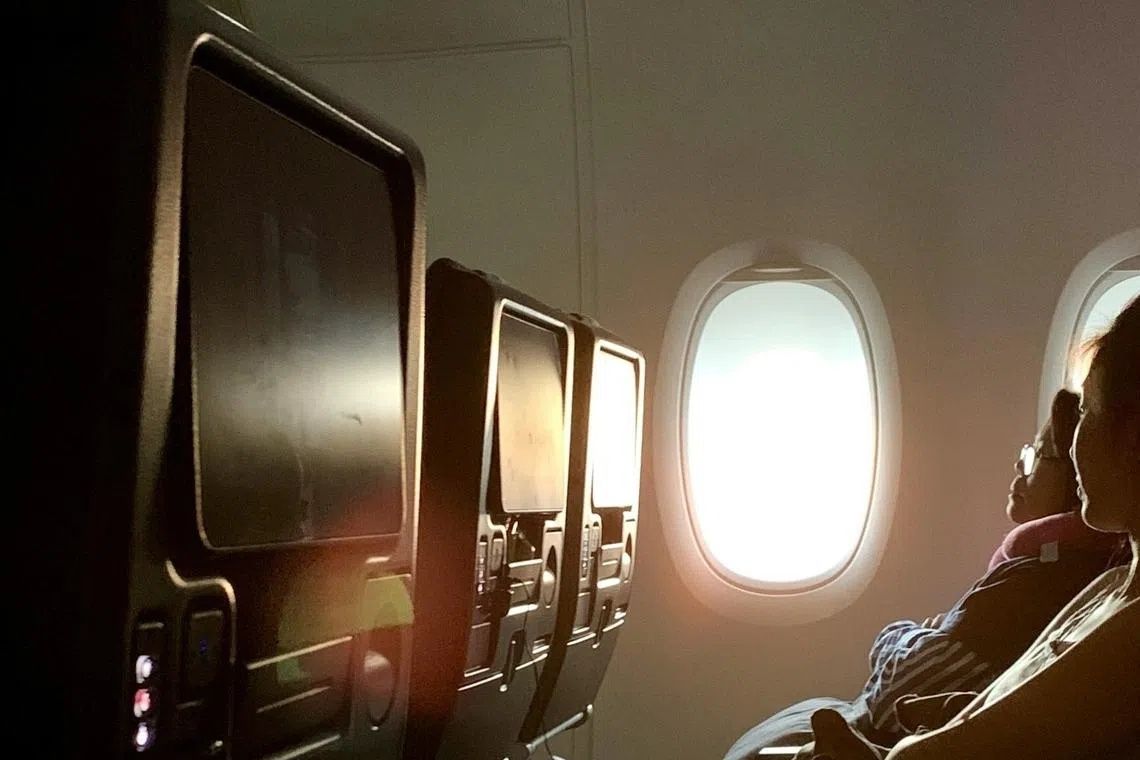
A middle school student in South Korea has escalated concerns about child safety by filing a formal government petition demanding stricter controls over in-flight entertainment, citing personal exposure to violent and sexually suggestive scenes that proved impossible to avoid during a recent flight. The complaint, submitted through Petition 24—the official government platform administered by the Ministry of the Interior and Safety—highlights a growing tension between passenger convenience and the protection of younger travellers from mature content that major carriers currently permit in their cabin entertainment systems.
The petitioner described a troubling scenario in which they were unable to avoid watching inappropriate material despite attempting to look away, while their elementary school-aged sister was similarly exposed to the offensive scenes. This account underscores a fundamental weakness in current aviation industry practices: the assumption that passengers can simply decline to view objectionable content when screens are positioned directly in their sightline for extended periods. Unlike traditional television or cinema settings where viewers exercise greater control over their visual environment, commercial aircraft cabins present a captive audience with limited ability to shield themselves or accompanying children from unwanted exposure.
The student's proposal centres on implementing mandatory technological barriers—specifically privacy screens on individual seatback monitors—to prevent underage passengers from accessing content rated above certain age thresholds. This suggestion reflects emerging consumer expectations that airlines should employ available technology to enforce the same content restrictions that exist in terrestrial broadcasting and cinema, where certification systems rigorously control what material reaches specific age groups. The petition emphasises that existing South Korean legislation, including the Child Welfare Act and Youth Protection Act, establish clear legal frameworks obligating society to shield minors from potentially harmful media, yet the aviation sector has largely operated outside these protective mechanisms.
The revelation has drawn attention to how South Korea's two dominant carriers—Korean Air and Asiana Airlines—currently manage their in-flight content libraries. While both airlines have implemented a policy prohibiting the broadcast of films classified for audiences aged 19 and above, they continue to offer programming rated for viewers 15 and older, which may include violent or suggestive material. Additionally, carriers typically utilise edited versions of films with the most graphic sequences removed or modified, a practice that provides some buffer but does not eliminate exposure to all objectionable content within lower age brackets.
The industry's approach was thrown into sharper focus by a 2020 incident in which both Korean Air and Asiana removed the internationally acclaimed film Parasite from their entertainment catalogues despite its 15-plus rating. The decision reflected heightened sensitivity to violent and sexual content, yet it simultaneously revealed the inconsistency in content curation: if a respected film warranted removal due to such scenes, how are other similarly rated productions deemed acceptable for passengers who cannot opt out of viewing them?
For Malaysian and Southeast Asian travellers, this petition carries particular significance as it raises questions applicable across the region's aviation sector. Airlines operating within ASEAN markets, including Malaysia Airlines, AirAsia, and regional carriers, operate under varying content policies that lack standardised child-protection protocols. The absence of unified guidelines creates a patchwork regulatory environment where a minor might encounter vastly different in-flight entertainment standards depending on which airline and route they select. This inconsistency places the onus primarily on parents to investigate each carrier's policies rather than trusting industry-wide safeguards.
The technological solution proposed—privacy screens or age-gated access—remains relatively inexpensive and technically feasible, particularly as airlines increasingly upgrade their in-flight entertainment systems to touchscreen interfaces with authentication capabilities. Airlines in other regions have experimented with parental control features and content filtering, demonstrating that such measures are operationally viable. The primary barrier appears to be industry reluctance rather than technical inability, as carriers balance passenger satisfaction, system complexity, and operational costs against child welfare considerations.
The petition also illuminates broader questions about corporate responsibility in shared spaces where vulnerable populations cannot exit or substantially alter their environment. Unlike restaurants, shopping centres, or public transport where individuals can relocate, airline passengers—particularly children—are confined to their seats for the duration of flights. This captive status creates a unique ethical obligation for service providers to exercise heightened caution regarding content exposure.
From a regulatory perspective, South Korea's pathway forward may influence policy discussions across Asia-Pacific aviation authorities. If the petition gains traction within the Korean government, potential legislative responses could establish binding content standards for all carriers operating domestic routes, creating precedent that other countries might adopt. Such a development would represent a significant shift from the current industry-led approach, where carriers self-regulate with minimal government intervention concerning child protection in entertainment contexts.
For Malaysian airlines and aviation authorities, this South Korean case study offers a timely opportunity to reassess existing policies before similar complaints emerge domestically. Regional carriers might proactively implement privacy screen technology, strengthen age-appropriate content curation, or establish transparent parental controls that align with international child protection standards. Such initiatives would enhance competitive positioning while demonstrating commitment to family-oriented travel experiences that Southeast Asian demographics increasingly demand.
The teenager's complaint ultimately represents a broader generational expectation that corporations operating in shared public spaces should integrate child-welfare considerations into service design rather than treating such protections as optional enhancements. As in-flight entertainment systems become increasingly sophisticated, the moral and legal imperative to protect minors from inappropriate content will likely intensify across aviation industries worldwide.

