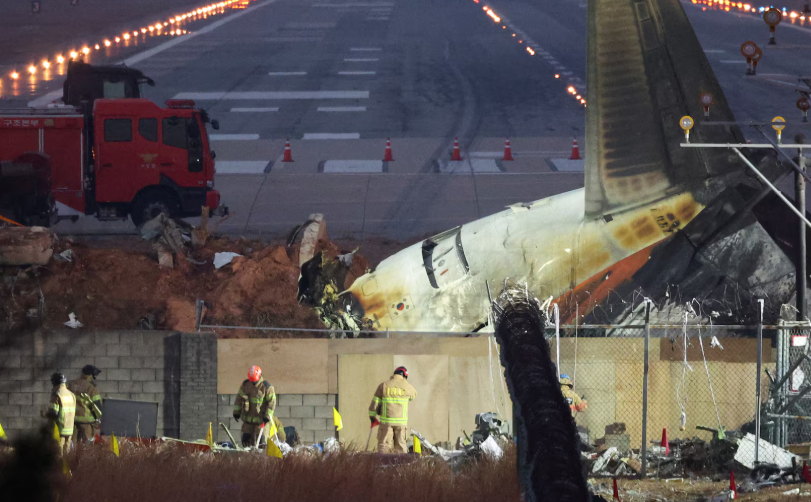
South Korean law enforcement has intensified its investigation into the Jeju Air disaster by conducting coordinated raids on multiple government and state-run facilities. Police teams descended on Korea Airports Corp, the transport ministry, and the Busan Regional Office of Aviation on Tuesday to gather additional evidence as they build their case into what became one of the nation's deadliest aviation incidents. The operation marks a significant escalation in the probe into the tragedy that claimed 179 lives when a Jeju Air aircraft crashed at Muan International Airport in late December 2024.
The Korea Airports Corp, which operates the majority of South Korea's major domestic airports with the exception of Incheon International Airport, was the primary focus of investigators during the raids. Officials conducting the search emphasised that they were seeking documentary and physical evidence that could help them establish a clearer understanding of how the incident unfolded and what factors contributed to the catastrophic outcome. The seizure of materials from KAC facilities reflects growing scrutiny of the airport's operational protocols and safety management systems leading up to the crash.
Tuesday's action represented the third occasion on which investigators have searched the transport ministry's offices, underlining the persistent nature of the inquiry and the breadth of documentation authorities believe may be relevant. The repeated visits suggest that investigators are methodically working through complex administrative records and communications that may shed light on decision-making processes and oversight mechanisms that existed before the disaster. Each successive search has yielded additional lines of inquiry or prompted investigators to seek further clarification on previously collected materials.
Among the charges being pursued against 74 suspects thus far is professional negligence resulting in death or injury, a serious criminal allegation that places responsibility on individuals or organisations for failing to exercise adequate care in their duties. This category of offence typically applies to persons whose actions or inactions, through carelessness rather than intentional wrongdoing, directly led to loss of life or harm. Investigators are examining whether officials at the airport, airlines, or regulatory bodies failed to implement necessary safety protocols or properly maintain equipment.
Police authorities have indicated that additional charges relating to causing a serious public disaster remain under consideration. This more severe classification would broaden the scope of culpability beyond individual negligence to suggest systemic failures across organisations. Such charges acknowledge that multiple institutional actors may have contributed to conditions that made the tragedy possible, potentially implicating managers, supervisors, and decision-makers at various levels of the chain of command.
The investigation has centred on two critical questions that often dominate inquiries into major aviation accidents: what precisely caused the aircraft to crash at Muan International Airport on December 29, 2024, and whether the responsible government agencies and airport operators adequately responded to prevent the disaster or could have mitigated its consequences. These dual lines of inquiry are intrinsically linked, as establishing the root cause often reveals whether the incident was preventable through proper procedure adherence and maintenance oversight.
For Malaysian and Southeast Asian observers, the Jeju Air investigation carries particular relevance given the region's reliance on regional aviation infrastructure and the shared challenges airlines and airports face in maintaining safety standards across busy routes. The incident has prompted regional carriers and airport operators to reassess their own protocols, as the crash demonstrated how quickly a seemingly routine domestic flight can transform into a catastrophic event. Aviation safety remains a paramount concern across Asia, where passenger volumes continue to surge and airport infrastructure must accommodate increasing traffic.
The systematic nature of the South Korean police response—involving multiple raids, repeated visits to key facilities, and coordination across different investigative teams—reflects international best practices in major accident investigation. Rather than relying solely on technical analysis of aircraft wreckage, authorities are pursuing a comprehensive review of organisational behaviour and decision-making that preceded the tragedy. This holistic approach recognises that modern aviation disasters rarely result from a single failure point but instead emerge from chains of circumstances that accumulate until catastrophe becomes inevitable.
The involvement of 74 suspects demonstrates that South Korean investigators view the incident not as isolated pilot error or mechanical malfunction alone, but as reflecting wider operational, management, or regulatory deficiencies. This expansive interpretation of responsibility suggests thorough examination of how numerous individuals and organisations may have contributed, either through action or negligence, to creating unsafe conditions. The scope of the investigation signals that accountability will extend well beyond the flight deck.
As the probe advances through its evidence-gathering phase, the raids on KAC, the transport ministry, and aviation regulatory offices signal that investigators have likely identified specific areas of concern requiring documentary verification. The systematic collection of records and communications will eventually form the evidentiary foundation for prosecutions. The intensity and coordination of these enforcement actions underscores the seriousness with which South Korean authorities view the need to establish accountability and, potentially, implement systemic reforms to prevent similar tragedies in the future.

