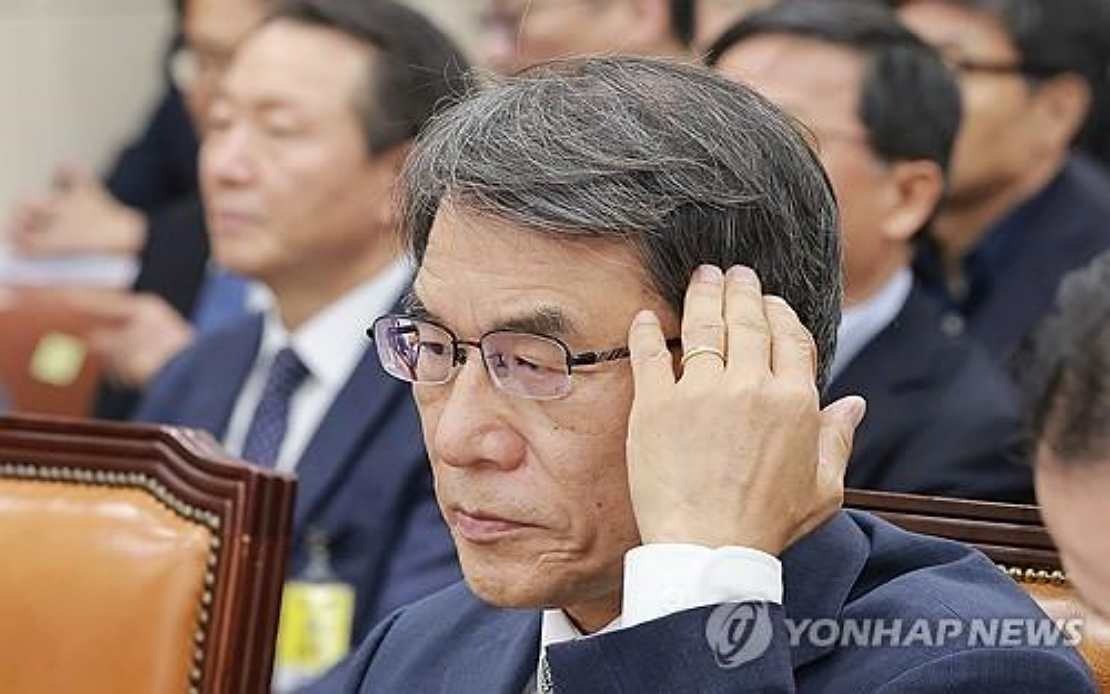
South Korean authorities escalated a high-profile corruption investigation on Monday by conducting a formal raid on the National Election Commission's headquarters in Seoul, targeting evidence related to suspected embezzlement by the organisation's former chief Roh Tae-ak. The joint police-prosecution team presented a search warrant naming Roh and several unnamed NEC officials as criminal suspects, moving the inquiry from the complaint stage into active forensic investigation of the commission's financial records and administrative practices.
The operation centred on the NEC chairperson's office and focused on three major international business trips undertaken by Roh during his tenure. According to investigators, Roh travelled to Australia and New Zealand, Germany and Estonia, and Denmark and Sweden on separate official missions, with his spouse joining him on all three occasions. Yet the publicly filed post-trip reports submitted by the NEC systematically omitted any mention of his spouse's participation, a discrepancy that prosecutors argue suggests deliberate concealment to circumvent travel regulations and misuse of commission resources.
The embezzlement allegations form part of a much broader pattern of misconduct emerging within the election watchdog. Investigators have identified 461 commission employees who collectively undertook 107 overseas business trips between 2022 and June of this year, with the destinations raising serious questions about justification for public expenditure. These trips targeted resort areas and celebrated tourist locations including the Maldives, Bangkok, Kota Kinabalu in Malaysian Borneo, and Florence in Italy—destinations that bear little relation to the standard oversight functions one would expect from an election management agency.
For Malaysian observers, this case highlights the institutional vulnerabilities that can emerge when oversight bodies themselves lack sufficient external accountability mechanisms. The National Election Commission in South Korea holds a mandate to ensure electoral integrity and public confidence in the voting process, yet the systematic nature of the misconduct suggests internal controls failed catastrophically. The parallel to electoral management bodies across Southeast Asia is instructive, particularly in jurisdictions where election commissions operate with significant autonomy and limited parliamentary or civil society oversight.
The investigation gained momentum following a formal complaint filed by South Korea's main opposition People Power Party on June 19, which alleged occupational embezzlement in connection with Roh's international travel. This development underscores how political opposition parties can serve as important accountability mechanisms when internal governance structures prove inadequate. Roh subsequently resigned in June following his involvement in a separate scandal—severe ballot shortages that disrupted voting procedures at multiple polling stations across southern Seoul during the June 3 local elections, an incident that damaged public trust in electoral administration.
The timing of Roh's departure is noteworthy because it occurred before formal charges could be filed, a pattern common in South Korean corporate and governmental scandals where senior figures resign to limit institutional reputational damage. However, investigators have proceeded with their inquiry regardless, suggesting they view the evidence as substantial enough to warrant criminal prosecution. The decision to name additional unnamed officials as suspects indicates the investigation's scope extends well beyond Roh himself, potentially implicating mid-level managers and administrative staff who either approved or facilitated the questionable overseas expenditures.
The Maldives trips deserve particular attention, as this destination frequently features in corruption narratives across Asian bureaucracies. Resort holidays authorised under the guise of official business travel represent a classic form of occupational fraud, where public funds are misappropriated not through dramatic theft but through systematic normalisation of personal benefit. The inclusion of 107 trips over a concentrated 18-month period suggests either remarkably poor management oversight or, more troublingly, a deliberate institutional culture that treated international travel as a tacit employment benefit rather than a necessity-driven expense.
This case carries implications for regional governance standards at a moment when several Southeast Asian nations are themselves reforming their electoral administration structures. Countries like Malaysia, which operate their own election commissions with significant public trust responsibilities, can derive valuable lessons from South Korea's experience. The investigation demonstrates that even developed democracies with sophisticated institutional frameworks can experience grave lapses in financial governance, and that prevention requires robust systems combining internal controls, external audit mechanisms, and political accountability.
The raid itself represents an important assertion of prosecutorial independence in a country with a complicated history of using corruption investigations for political purposes. Investigators proceeded despite potential political sensitivity surrounding the opposition party's role in triggering the complaint, suggesting a degree of institutional autonomy from immediate political interference. Yet the case also illustrates how election bodies can become politically contested terrain, with opposing parties leveraging scandals to damage institutional credibility during sensitive electoral periods.
Looking forward, the National Election Commission faces the dual challenge of completing a thorough investigation while simultaneously rebuilding institutional trust ahead of future electoral cycles. South Korea's next major elections will inevitably witness scrutiny of electoral administration reliability, particularly among voters who witnessed the June 3 ballot shortages. The investigation's findings and any resulting prosecutions will establish crucial precedents regarding acceptable conduct standards within election management organisations, not only in South Korea but potentially across the region where observers monitor how similar bodies handle accountability crises.
The broader question confronting South Korean policymakers concerns whether current governance structures within the NEC permit adequate prevention of future misconduct. The investigation's revelation of systematic overseas travel fraud suggests that existing financial oversight, approval hierarchies, and external audit procedures failed to serve their intended protective function. Without structural reforms addressing these gaps, new leadership alone will prove insufficient to restore public confidence in an institution fundamentally responsible for electoral legitimacy.

