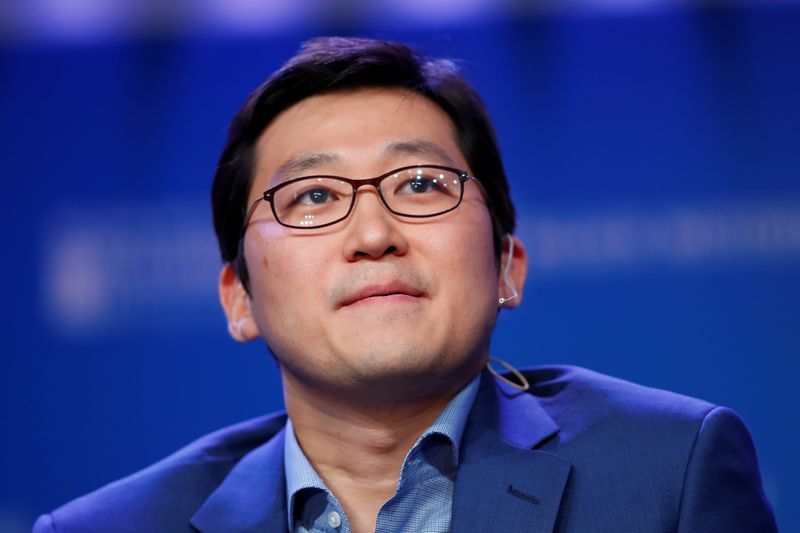
The Seoul High Court on Tuesday granted an injunction that suspends a significant regulatory designation affecting one of South Korea's most prominent technology companies. The decision to halt the Fair Trade Commission's (FTC) move to designate Coupang founder Kim Bom as the group's controlling entity comes as the e-commerce giant fights to overturn the agency's April ruling that fundamentally altered the company's regulatory classification.
The court's action essentially freezes the FTC designation, which had sought to replace Coupang itself as the "same person" entity under South Korean fair trade law. This technical but consequential reclassification would have subjected the U.S.-listed company to stricter disclosure requirements and more rigorous governance standards. According to court documentation, the injunction will remain effective for 30 days following the Seoul High Court's eventual ruling on the main case, when the validity of the FTC's original decision will undergo full judicial scrutiny.
In justifying the suspension, the court determined that an "urgent need to prevent irreparable harm" to both Coupang and Kim warranted the temporary measure. The judges found no evidence that maintaining the suspension would contradict the public interest, a standard consideration in such regulatory disputes. This reasoning suggests the court took seriously the company's contentions about potential damage from the designation change, though the full merits of those arguments will be decided once litigation concludes.
The FTC's April designation emerged from an extensive investigation into family involvement within Coupang's corporate structure. South Korean regulators examined how members of Kim's family participated in the group's management and operations, treating these connections as evidence that Kim himself exercised effective control over the conglomerate. Under the country's fair trade regulatory framework, such a designation carries substantial implications for how the company reports financial information and conducts corporate governance.
The regulatory action occurred against a backdrop of intensified official scrutiny following a major data security incident that exposed customer information. The Personal Information Protection Commission separately imposed a record fine on Coupang related to the breach, creating a cluster of regulatory actions that have generated diplomatic friction between Seoul and Washington. American officials have expressed concern about what they view as disproportionate regulatory treatment directed at the U.S.-listed company.
Coupang's challenge to the FTC designation represents the company's effort to resist what it characterises as regulatory overreach during a period of heightened enforcement activity. For Southeast Asian observers, this dispute illuminates broader tensions between tech company operations and government regulation across the region. Many companies operating in this part of the world face similar pressures as regulators grapple with balancing consumer protection against maintaining attractive conditions for corporate investment.
The temporary suspension provides Coupang operational breathing room as the main lawsuit proceeds through the judicial system. During this period, the company avoids the additional compliance burdens that would accompany the controlling entity designation, though it remains technically subject to the FTC's April decision. This interim relief demonstrates how courts can intervene in regulatory matters when applicants demonstrate sufficient likelihood of irreparable harm.
The case also reflects evolving dynamics in how South Korea regulates its technology sector. Coupang has grown from a domestic logistics innovator to a major regional player with significant cross-border operations, and the company's regulatory status carries implications for how Seoul approaches supervision of large technology firms. The outcome of this litigation could influence regulatory approaches throughout Asia, where similar questions about family control structures and corporate governance persist.
For Malaysian and Southeast Asian technology companies, the Coupang situation underscores the importance of transparent governance structures and anticipating regulatory interpretations of corporate ownership. The case demonstrates that regulatory agencies across developed Asian economies are increasingly willing to look past formal corporate structures to identify real economic control, a principle that could apply to firms operating across multiple jurisdictions.
The broader context of U.S.-South Korea tensions over Coupang's treatment adds diplomatic dimensions to what might otherwise appear as routine regulatory matters. American investment in South Korean technology companies represents substantial capital flows, and regulatory actions that American officials perceive as unfairly targeting their firms can escalate into trade and diplomatic friction. This dynamic warns Southeast Asian regulators that aggressive enforcement against foreign-invested tech companies may trigger international responses.
As the main lawsuit progresses toward resolution, both the FTC and Coupang will present their full arguments regarding whether family involvement constitutes effective control under fair trade law. The court's decision on this fundamental question could reshape how South Korean regulators approach similar situations involving family-backed technology conglomerates. The implications extend beyond Coupang itself to other companies operating across the region with similar ownership structures.
The 30-day post-ruling period during which the suspension remains effective creates a defined timeline for administrative implementation of whatever decision the court ultimately reaches. This structure provides legal certainty about when new regulatory obligations would commence, should the court ultimately uphold the FTC designation. For now, the temporary injunction grants Coupang continued operational stability while the judiciary determines whether the regulatory classification should persist.

