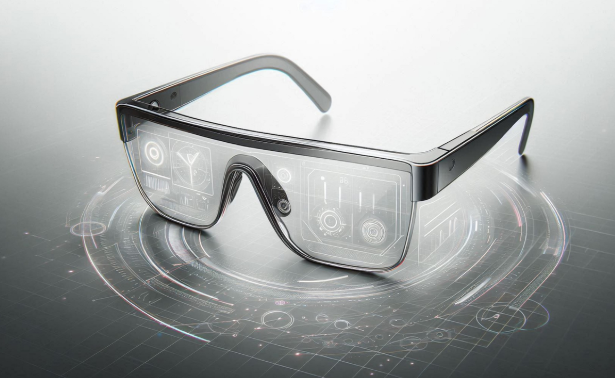
South Korean law enforcement has entered uncharted legal territory by bringing charges against a man in his 40s for deploying artificial intelligence-equipped eyewear to obtain unauthorized answers during a professional qualification examination. The Gwangju District Prosecutors' Office filed summary indictment against the suspect in June on grounds of breaching the National Technical Qualification Act, according to reports from local media outlets released this week. The case represents a watershed moment for examination integrity in the country and highlights how rapidly emerging consumer technologies can outpace regulatory frameworks designed to maintain the sanctity of standardized testing.
The defendant was apprehended in May while attempting to complete a fire protection facilities engineer certification exam at a testing centre in Gwangju. What ultimately exposed his scheme was a seemingly innocuous detail that an attentive examination proctor noticed: light refracting off the surface of his eyeglass lenses in an unusual manner. This keen observation by the supervisor triggered an investigation that would uncover the sophisticated apparatus the man had constructed. Upon interrogation, the suspect disclosed that he had engineered a custom artificial intelligence application specifically designed to communicate with the eyewear device, and claimed his primary motivation was to verify whether the system could reliably transmit correct examination answers through the glasses' display mechanism.
The scope of this problem extends considerably beyond the single indicted individual. Authorities subsequently identified and charged two additional men in their 20s who had been caught employing identical cheating techniques at separate examination venues during the same month—one incident occurring in Seoul and another in the port city of Mokpo. These discoveries suggest that knowledge of this circumvention method had already begun circulating among test-takers, raising concerns that such techniques could proliferate unless decisive action is implemented. The fact that multiple perpetrators across different geographic locations were deploying the same technology indicates this is not an isolated incident but rather an emerging pattern that could fundamentally challenge the reliability of Korea's examination system.
The abuse of AI glasses in examination halls has not been confined to technical qualification tests. At least three individuals have been intercepted attempting to use similar devices while sitting for TOEIC examinations, which assess English language proficiency and are widely taken by professionals and students in South Korea and throughout the region. Two such cases came to light in May, with an additional incident discovered in June. These TOEIC violations underscore how the technology's applications span multiple testing categories and demonstrate that exam fraudsters are rapidly adapting to use whatever tools become available to gain competitive advantage.
The proliferation of these incidents has galvanized Korea's examination authorities into urgent action. On July 10, officials representing the various governmental and private organizations responsible for administering major national qualification examinations convened for an emergency coordination meeting. The gathering was explicitly convened to formulate and deliberate upon potential countermeasures that could effectively curtail future attempts to use AI glasses and comparable emerging technologies for cheating purposes. This represents a significant departure from the typically reactive posture that regulatory bodies often adopt in response to examination fraud.
Among the substantive measures under consideration is the formal addition of artificial intelligence eyewear to the explicit enumeration of prohibited items within examination rooms. Currently, most testing protocols contain general prohibitions against electronic devices and communication equipment, but do not specifically reference AI glasses by name. By explicitly listing such devices, examination administrators would eliminate any ambiguity regarding permissibility and provide grounds for immediate confiscation upon discovery. This specificity in regulatory language is crucial in a legal context, as it prevents defence arguments that particular devices were not clearly prohibited.
Equally important to the regulatory arsenal is the consideration of substantially enhanced penalties for individuals caught engaging in examination fraud. The current National Technical Qualification Act provides baseline sanctions, but authorities are evaluating whether these consequences are sufficiently severe to serve as genuine deterrents. By significantly elevating the stakes—through increased fines, extended bans from retaking examinations, or potential criminal penalties—lawmakers hope to reshape the cost-benefit calculus that might otherwise tempt individuals to attempt such schemes. The deterrent effect operates on two levels: it discourages prospective cheaters from attempting similar infractions, and it validates the seriousness with which the system treats violations.
This situation carries particular resonance for Malaysia and broader Southeast Asia, where examination integrity remains a paramount concern across educational and professional certification systems. As artificial intelligence technologies proliferate and become increasingly accessible to consumers, the same vulnerabilities that South Korea now confronts will inevitably surface in other jurisdictions. The sophistication of the cheating apparatus discovered in these cases—custom-designed AI applications integrated with consumer eyewear—demonstrates that motivated individuals with technical capability can rapidly develop unauthorized solutions that exploit gaps between current regulations and emerging technology.
The regulatory response unfolding in South Korea offers valuable lessons for examination bodies throughout the region. Rather than waiting for widespread abuse before responding, proactive identification and explicit prohibition of emerging technologies can prevent the normalization of new cheating methods. Additionally, the coordination among multiple examination authorities signals the necessity for inter-agency cooperation, as examination fraud increasingly transcends individual test types or administrative jurisdictions. In the Southeast Asian context, where cross-border professional mobility and competitive examination landscapes are expanding, collaborative approaches to maintaining testing integrity become increasingly essential.
Further, the South Korean approach illuminates the broader challenge of balancing technological innovation with institutional integrity. Artificial intelligence and wearable technologies offer legitimate applications in education and professional development, yet the same capabilities can be weaponized for unauthorized purposes. Examination administrators must develop sufficiently nuanced policies that restrict malicious applications while preserving the utility of genuine innovations. This distinction becomes more difficult as technologies become more capable and ubiquitous, requiring examination bodies to maintain ongoing vigilance and adapt their protocols accordingly.
The enforcement action against the man in his 40s and the two younger suspects represents merely the initial judicial response to this emerging challenge. How comprehensively South Korean authorities can implement preventive measures, how strictly they enforce enhanced penalties, and whether they can effectively close technological loopholes will determine whether this case becomes an isolated incident or the beginning of a broader trend. For examination systems throughout Asia that face mounting pressure from increasingly sophisticated forms of cheating, the South Korean experience will serve as a critical case study in how to respond when technological advancement outpaces regulatory capacity.

