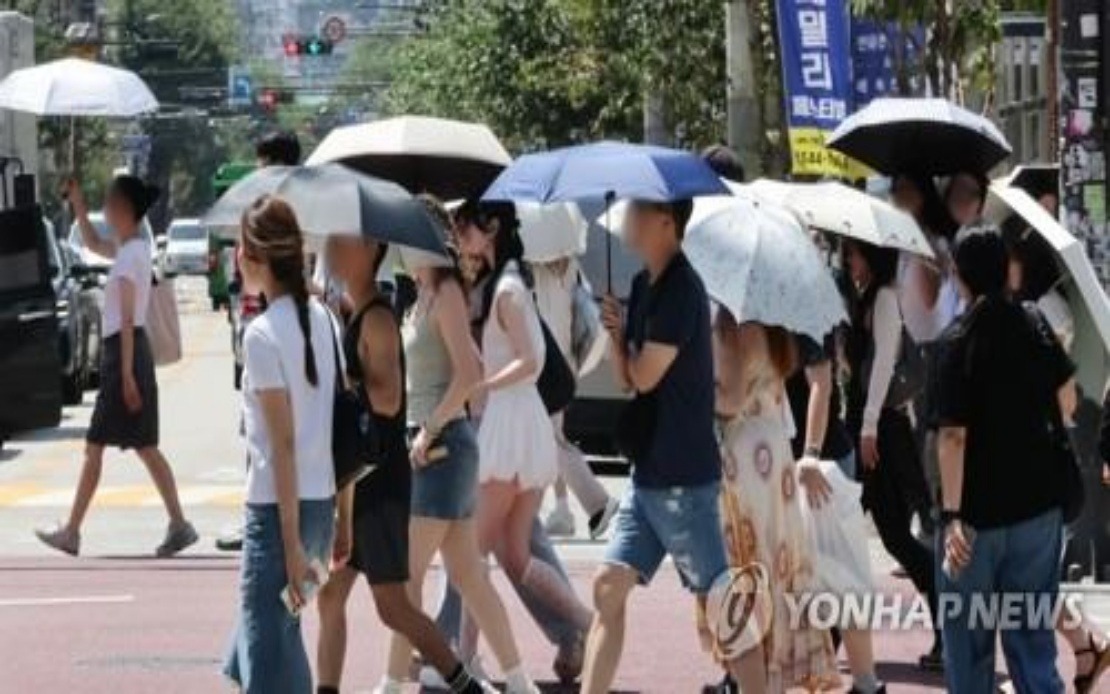
South Korea faced an exceptional weather crisis on Friday when temperatures soared past 40 degrees Celsius in the capital and at least two other major cities, intensifying concerns about an ongoing and punishing heat wave gripping the peninsula. The Korea Meteorological Administration confirmed that Seoul's Nowon district in the northern part of the city reached 40.2°C in the early afternoon, a threshold not breached in the capital for nearly six years.
This latest milestone represents a troubling acceleration in extreme weather events affecting East Asia's fourth-largest economy. The last time Seoul experienced such torrid conditions was on August 1, 2018, when the mercury climbed to 41.8°C. The intervening years have witnessed increasingly volatile summer weather patterns, and meteorologists attribute the current situation to the same atmospheric mechanisms that have been delivering record-breaking heat waves across the globe with greater frequency and intensity.
Beyond the capital, the heat penetrated deep into South Korean territory. Hanam's Deokpung district, situated immediately southeast of Seoul in the metropolitan area, recorded the highest reading of the day at 40.7°C. Further south, Gwangyang—situated roughly 300 kilometres from Seoul—also broke into the dangerous 40°C range, reaching 40.2°C during the afternoon hours. Meanwhile, inland areas including Yeongweol in Gangwon Province and Yeoju in Gyeonggi Province both hit 39.8°C, suggesting that the extreme conditions were not confined to isolated pockets but rather blanketed substantial portions of the nation.
The structural dimensions of this heat wave reveal how exceptional current conditions have become compared to historical patterns. From June 1 through Thursday—a roughly two-month window—South Korea averaged 14.8 days of what the KMA classifies as heat wave conditions, defined as daytime temperatures of 33°C or above. This frequency ranks as the fourth highest since the country established its nationwide weather observation network in 1973, indicating that while not unprecedented, current conditions belong firmly in the realm of extreme outliers rather than typical summer variation.
Perhaps more alarming for public health authorities is the nighttime thermal stress gripping the peninsula. Tropical nights—meteorologically defined as evenings where the minimum temperature remains at or above 25°C—reached a record 13 consecutive days. These warm nights prevent ambient temperature recovery and human heat dissipation, leaving populations in a state of constant thermal stress even during hours when relief would normally arrive. The combination of punishing daytime heat and oppressive nighttime warmth creates conditions that strain the young, elderly, and those with pre-existing health conditions far more severely than isolated hot days followed by cool nights.
Government meteorologists signalled modest relief on the horizon, though with clear caveats about persistence of uncomfortable conditions. The KMA forecast predicted morning lows across the nation would range between 21°C and 26°C on Saturday, with daytime highs distributed between 26°C and 35°C nationwide. While these figures represent improvement compared to Friday's readings, they still indicate afternoon temperatures significantly above seasonal norms, particularly given that early August typically brings moderating conditions in temperate portions of South Korea.
In response to the projected easing of the most severe conditions, South Korea's weather authority made a tactical adjustment to its alert system on Friday evening. The KMA downgraded Seoul and the eastern and southwestern regions from the highest classification—serious heat wave warnings—to ordinary heat warnings, effective at 6 p.m. Friday. This decision reflected confidence that the absolute worst of Friday's conditions would not repeat on Saturday, though the authority maintained that sweltering circumstances would persist throughout the weekend period.
The capital had endured top-tier warnings since Tuesday, indicating that decision-makers had assessed conditions as sufficiently dangerous to warrant the strongest available public alerts. The KMA's operational framework defines serious heat wave warnings with precision: such alerts activate when apparent temperature—a composite measure incorporating humidity and wind that reflects how heat actually feels on human skin—reaches 38°C or higher, or when official daily maximum temperatures hit 39°C or above, within areas where the maximum perceived temperature exceeds 35°C for two or more consecutive days.
For Malaysian and Southeast Asian observers, South Korea's experience carries sobering implications about climate resilience and urban heat management in densely populated regions. Seoul's metropolitan area contains roughly half of South Korea's 52 million population, and the concentration of infrastructure, vehicles, and industrial activity creates urban heat island effects that amplify temperatures compared to surrounding rural areas. As extreme heat becomes more frequent across Asia due to long-term atmospheric changes, cities throughout the region—including Kuala Lumpur, Bangkok, Jakarta, and Manila—face similar pressures on cooling infrastructure, electricity grids, and public health systems. South Korea's response, encompassing precise real-time monitoring, risk-stratified alert systems, and flexible adjustment protocols, offers lessons for neighbouring nations grappling with comparable challenges during their own intensifying summer seasons.

