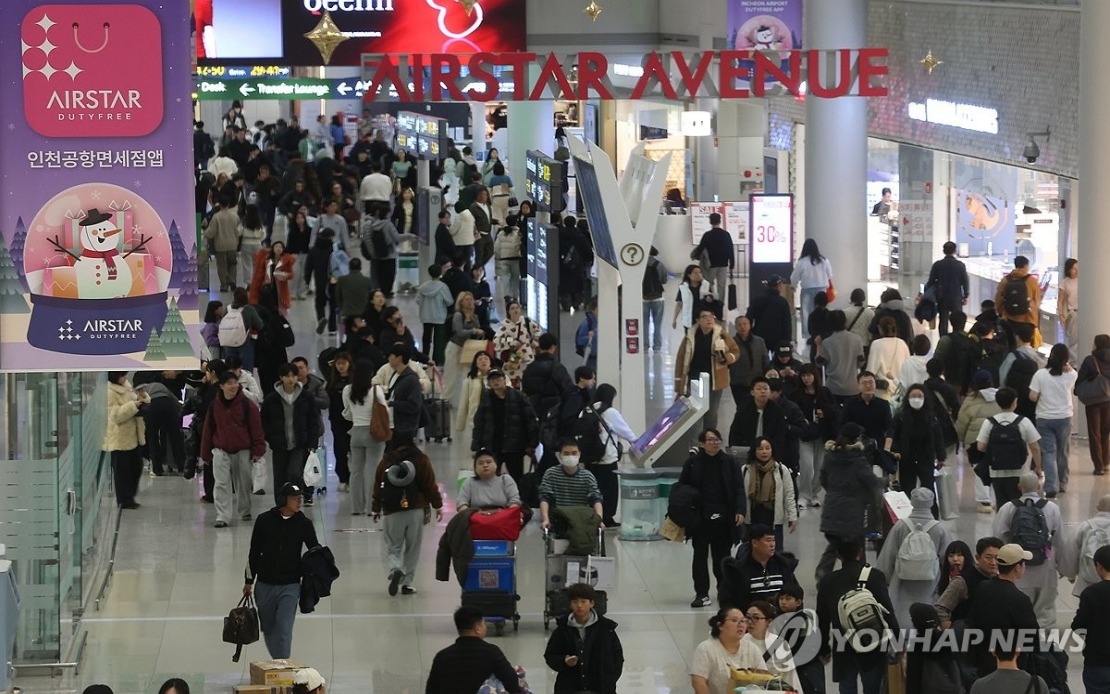
South Korea's tourism sector is experiencing a remarkable resurgence, having crossed the symbolic 10-million-visitor threshold during the third weekend of June—a milestone reached roughly a month ahead of schedule compared to 2023. The Ministry of Culture, Sports and Tourism confirmed this unprecedented achievement, marking the first time the nation has accumulated such visitor numbers within a single calendar year's first half. The accelerated pace suggests that Seoul and its provincial destinations are positioned to establish a new annual tourism record when 2024 concludes, capitalising on pent-up travel demand and enhanced international connectivity.
The momentum underlying these arrival figures reflects a fundamental shift in how foreign tourists perceive South Korea as a destination. May alone witnessed 1.95 million international visitors, representing a robust 19.4 per cent year-on-year increase that demonstrates sustained appetite for Korean experiences across multiple source markets. This consistency indicates that the country's tourism appeal transcends seasonal fluctuations, with visitors distributing their arrivals across months rather than concentrating in traditional peak periods. For Malaysian and Southeast Asian readers, this growth trajectory underscores how South Korea has successfully repositioned itself as a premier East Asian destination, directly competing with established rivals like Thailand and Vietnam for regional tourist spending.
China maintains its dominant position as South Korea's largest source market, with Chinese nationals comprising 560,000 of May's visitors—substantially more than any competing nation. This concentration reflects both China's massive population and Seoul's success in tailoring tourism offerings to Chinese preferences, from duty-free shopping experiences to cultural attractions resonating with Mandarin-speaking audiences. Japan follows as the second-largest market with 360,000 arrivals during the same month, while American visitors numbered 210,000. The diversity among top three markets indicates that South Korea has successfully diversified its visitor base beyond any single geographic region, reducing vulnerability to travel disruptions originating from particular countries or regions.
Beyond headline arrival statistics, visitor expenditure patterns reveal deeper economic impact. Foreign tourists' card spending—encompassing both physical retail transactions and online purchases—reached 2.12 trillion won (approximately US$1.38 billion) during May alone, marking the first month in which spending surpassed the 2 trillion won threshold since the government commenced tracking such metrics in 2018. This spending level translates directly into revenue for hotels, restaurants, retail establishments, and transportation operators throughout the nation. For context, this single month's foreign visitor spending exceeds the entire annual tourism expenditure of several smaller Southeast Asian nations, illustrating South Korea's capacity to extract substantial economic value from its tourism sector.
A particularly noteworthy development involves the geographical distribution of arrivals expanding significantly beyond the Seoul metropolitan region, historically the gravitational centre of Korean tourism. Inbound traffic through regional airports demonstrates consistent month-on-month growth, rising from 230,000 arrivals in January to 360,000 by May. This expansion indicates that provincial destinations—including Busan, Incheon, Jeju, and Daegu—are successfully attracting international visitors and capturing a growing proportion of total inbound tourism. For South Korea's regional economies, this dispersal creates opportunities for more equitable wealth distribution across provinces that historically received minimal foreign visitor spending. The trend also suggests that tourism marketing strategies emphasising destinations beyond Seoul are achieving tangible results.
The achievement of these growth targets occurred despite macroeconomic headwinds that could have constrained international travel. Elevated fuel surcharges attributable to Middle East geopolitical tensions and associated shipping disruptions typically increase airline operating costs, which carriers pass partially to passengers through higher ticket prices. Despite this cost pressures, year-to-date inbound arrivals through May increased 21 per cent compared to the equivalent period in 2023. This growth rate suggests that South Korea's destination appeal has strengthened sufficiently to absorb incremental travel costs without meaningfully suppressing demand. For Southeast Asian tourism authorities evaluating competitive positioning, South Korea's resilience under adverse conditions provides a cautionary reminder that strong brand positioning and diverse market sourcing can mitigate external shocks.
Official government strategy moving forward emphasises deepening private-sector partnerships to sustain and accelerate growth momentum. Kang Jung-won, heading the Ministry of Culture, Sports and Tourism's tourism policy division, explicitly referenced collaboration with Korean cultural ambassadors—particularly K-pop artists whose global fanbase commands substantial purchasing power and geographic diversity. Additionally, the ministry intends to mobilise South Korea's major export companies as tourism promoters, leveraging their international networks and brand recognition to funnel qualified visitors toward Korean destinations. This public-private collaboration model differs substantially from pure government-directed tourism marketing, instead enabling private enterprises to integrate tourism promotion into their existing international commercial operations.
The K-pop strategy warrants particular attention for Malaysian stakeholders, as the genre commands disproportionate influence among young Southeast Asian demographics. Korean entertainment exports have created powerful emotional connections between regional youth audiences and Korean culture, generating what cultural economists term "soft power" advantages. When K-pop fans from Malaysia, Singapore, Thailand, and Indonesia travel to South Korea for concerts, fan meetings, and cultural experiences, they simultaneously spend money on accommodation, food, shopping, and attractions. This creates multiplier effects throughout Korean service sectors. The strategy implicitly recognises that entertainment and cultural products function as tourism infrastructure, conditioning foreign audiences to view South Korea as intrinsically desirable.
The broader implications of South Korea's accelerating tourism growth extend beyond purely economic measures. The country's capacity to welcome double-digit millions of annual visitors tests infrastructure resilience—transportation networks, accommodation stock, restaurant and attraction capacity. Successfully absorbing 10 million arrivals within six months without widespread service failures or customer dissatisfaction demonstrates investments in scalable tourism infrastructure. For comparative context, Malaysia's tourism authority has historically targeted visitor arrivals in comparable ranges, making South Korea's execution and results directly relevant for benchmarking Malaysian tourism sector performance and identifying operational best practices.
Looking forward, South Korea appears positioned to establish a new annual tourism record, contingent on maintaining current growth momentum through the second half of 2024. Should June-through-December performance equal first-half results, annual arrivals would substantially exceed 20 million visitors, representing a watershed achievement. Such performance would reflect not momentary demand spikes but structural improvements in South Korea's tourism competitiveness, marketing effectiveness, and destination management. For regional competitors throughout Southeast Asia, South Korea's sustained growth trajectory serves as both benchmark and competitive reminder regarding the economic value of strategic tourism sector investment.