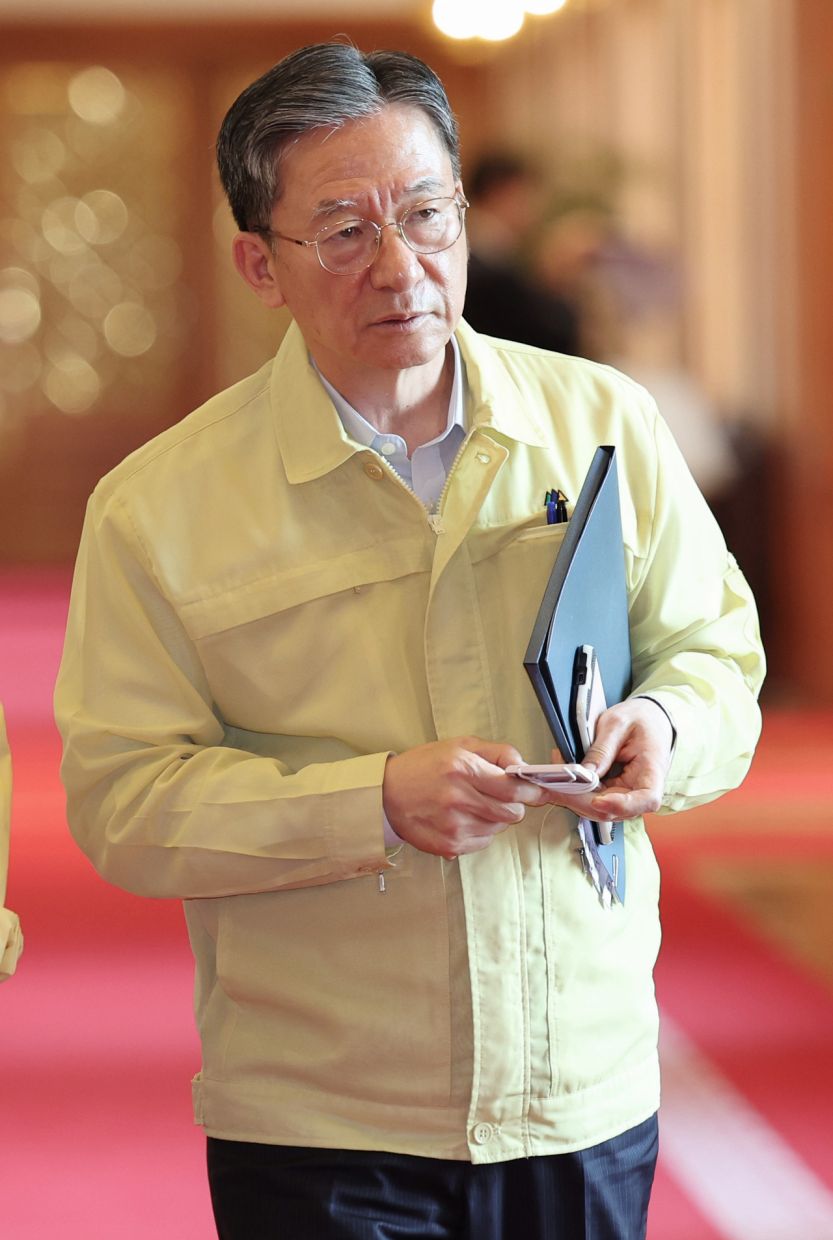
South Korea's Justice Minister Jung Sung-ho submitted his resignation on Tuesday, marking the latest upheaval in the country's ongoing struggle to reshape its criminal justice system. The departure comes amid fundamental disagreements between the minister and the Democratic Party over whether prosecutors should retain the power to conduct supplementary investigations—a capability that has long positioned South Korea's prosecution service as one of the region's most powerful law enforcement bodies.
The crux of the dispute centres on competing visions for how South Korea should balance investigative and prosecutorial functions. Jung has advocated for maintaining prosecutors' authority to launch their own investigations when police inquiries appear incomplete, arguing that such supplementary powers serve as a necessary check on potentially deficient preliminary investigations. The ruling Democratic Party, however, has taken the opposite stance, pushing aggressively toward a comprehensive separation of investigative and prosecutorial roles. Party strategists argue that concentrating these functions within a single institution creates dangerous opportunities for abuse and allows excessive power to accumulate within the prosecution.
Under current procedures, when prosecutors receive a case from police, they retain discretion to order supplementary investigations if they determine the original inquiry was insufficient. This mechanism has historically given South Korea's prosecutors considerable leverage over criminal proceedings and has occasionally drawn international scrutiny regarding fairness and separation of powers. The proposed changes reflect broader regional and global movements toward constraining prosecutorial autonomy and preventing potential overreach.
The transformation will become law on October 2 when the revised Criminal Procedure Act takes effect. Once implemented, prosecutors will lose the ability to independently initiate investigations. Instead, their role will narrow to a reviewing function—examining whether police investigations meet evidentiary standards, deciding which cases warrant formal charges, and representing the state during trial proceedings. This fundamental restructuring represents one of South Korea's most significant criminal justice reforms in recent decades and aligns the country more closely with common-law models that emphasise clearer functional boundaries.
Jung's decision to step down, announced publicly on Tuesday afternoon, cited personal health concerns as his primary motivation. However, local news agencies including Yonhap News Agency reported that his resignation statement contained an additional significant element—an acknowledgment that "it would be desirable for the new criminal justice system to be completed under new leadership." This carefully worded phrase suggests Jung recognised that his policy disagreements with the Democratic Party had created an untenable position, and that his continued tenure might obstruct the government's reform agenda.
The justice minister's departure carries particular significance for Malaysia and other Southeast Asian nations closely monitoring criminal justice developments across the region. South Korea's prosecution system has traditionally served as a model for several Asian democracies, and its structural reforms may influence ongoing debates about prosecutorial independence and accountability in neighbouring jurisdictions. The shift toward constraining prosecutorial powers challenges assumptions that have guided law enforcement architecture in multiple countries throughout East and Southeast Asia.
Vice Justice Minister Lee Jin-soo will assume the acting minister portfolio, taking charge during a critical transition period. Lee's leadership will prove essential as the government navigates the implementation of sweeping procedural changes and reconciles the prosecution service's identity with its substantially diminished investigative mandate. The acting minister will face pressure to ensure smooth operational continuity while the organisation adapts to fundamentally altered responsibilities and capabilities.
This episode illustrates the tensions that frequently arise when governments attempt major institutional restructuring. Jung's resignation exposes the reality that seemingly technical administrative changes often conceal deeper philosophical disagreements about power, governance, and democratic accountability. The Democratic Party's determination to push through these changes despite ministerial resistance suggests strong political commitment to the reform agenda, even at the cost of unity within the executive branch.
The broader context of South Korea's criminal justice evolution involves growing awareness of prosecutorial overreach concerns that have animated recent political debates. Multiple high-profile cases over the past decade have drawn public criticism regarding how prosecutors have wielded their extensive investigative and political influence. The Democratic Party's push for reform partly reflects popular sentiment favouring tighter constraints on prosecutorial discretion and greater transparency in criminal proceedings.
For Malaysian observers, the South Korean experience offers instructive lessons regarding the complexities inherent in restructuring entrenched institutional arrangements. Criminal justice systems develop over decades, and the stakeholders invested in existing structures—prosecutors' offices, police forces, bar associations—typically resist substantial reallocation of responsibilities. Jung's resignation underscores how even executive-level officials may find themselves unable to bridge fundamental disagreements about institutional design and democratic governance principles.

