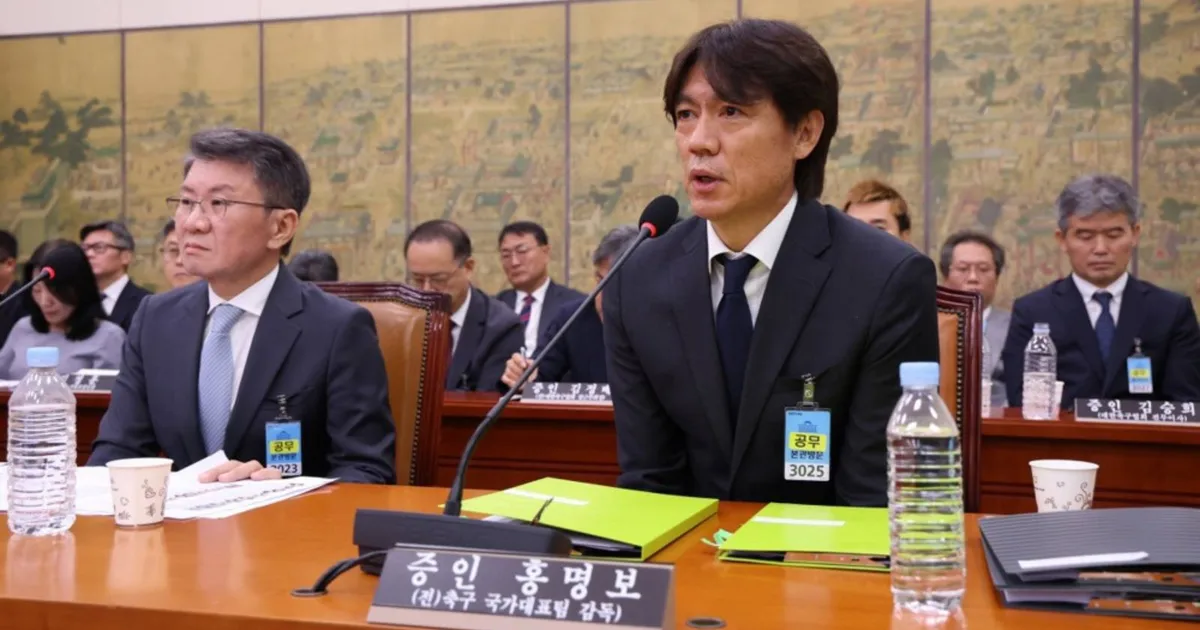
South Korean law enforcement has launched a formal investigation into the football association's handling of Hong Myung-bo's appointment as national team coach, conducting raids on the organisation as part of a probe into alleged obstruction of business practices. The action comes against the backdrop of widespread criticism over the national squad's disappointing performance at the most recent World Cup tournament, which has triggered questions about the decision-making processes at the country's governing body.
The investigation focuses on claims that certain parties deliberately impeded the normal functioning of the football association during the appointment procedure. Authorities are scrutinising whether irregularities or improper interference occurred when the governing body selected Hong for the coaching position, an appointment that has proven controversial given the timing and circumstances surrounding the national team's recent international setback.
For Malaysian and Southeast Asian football observers, the South Korean investigation underscores broader governance challenges that plague Asian football associations. Like their counterparts across the region, South Korean football officials operate under intense public pressure to deliver results on the international stage, where expectations are invariably high and disappointment can quickly transform into institutional crisis. The contrast between Asia's football ambitions and the actual competitive returns—particularly at World Cup level—regularly exposes tensions within national federations.
Hong Myung-bo, a decorated figure in South Korean football with a distinguished playing career, faced an uphill battle from his appointment. The timing of his installation as coach, shortly after the World Cup elimination, suggested an attempt to stabilise a ship perceived to be sinking. However, the process itself has now become the subject of official inquiry, suggesting that the decision may have been hastily executed or potentially influenced by institutional power dynamics rather than purely sporting merit.
The allegation of obstruction of business operations is particularly significant as it implies that formal administrative procedures may have been circumvented or compromised. In Asian football contexts, where administrative structures remain vulnerable to political interference and personality-driven decision-making, such investigations serve as important accountability mechanisms. The South Korean authorities' willingness to examine these processes suggests a degree of institutional integrity that, while sometimes absent in neighbouring countries, reflects a mature sporting democracy.
The World Cup campaign that precipitated this crisis appears to have fallen significantly short of national expectations. South Korea's elimination from the tournament would have disappointed a football-passionate nation with a strong tradition in the sport. The resulting recriminations and blame-shifting within Korean football circles created an environment where institutional accountability suddenly became paramount, forcing officials and decision-makers to justify their actions under public and legal scrutiny.
For Southeast Asian football administrators, the South Korean example carries cautionary implications. Governance failures, administrative irregularities, and questionable appointment procedures have occasionally surfaced in regional football bodies, yet they rarely attract the level of investigative attention demonstrated here. The deployment of police resources to examine sports governance decisions reflects a broader societal commitment to transparency and accountability that helps prevent the kind of institutional decay that undermines sporting integrity.
The Hong appointment saga also illustrates how closely entwined sporting performance and institutional legitimacy have become in competitive football environments. A poor World Cup result does not merely represent a sporting disappointment; it becomes a trigger for institutional inquest, potentially exposing weaknesses in governance, selection procedures, and administrative transparency. This interconnection between performance and governance scrutiny has become increasingly pronounced throughout Asian football, where expectations remain astronomically high but resources and structural support sometimes lag behind ambition.
The ongoing police investigation suggests that Korean football authorities face potential charges related to improper administrative conduct. This development carries implications beyond South Korea's borders, as it establishes precedent for holding sports administrators accountable through formal legal mechanisms rather than relying solely on internal disciplinary processes. In a region where sports governance sometimes operates in grey zones characterised by informal arrangements and personal relationships, the South Korean model offers an alternative pathway toward institutional reform.
As the investigation progresses, attention will likely focus on identifying which officials or decision-makers may have attempted to influence or obstruct the appointment process. The inquiry promises to illuminate the internal politics of South Korean football during a period of significant institutional stress. For Malaysian and other regional sports administrators, the unfolding case serves as a reminder that domestic football governance carries both sporting and legal dimensions, and that institutional accountability increasingly transcends the traditional boundaries of sporting organisations.
The broader significance of this investigation extends beyond individual personalities or specific appointments. It signals that even powerful football federations in major sporting nations can face institutional scrutiny when processes appear compromised or decisions seem questionable. For Southeast Asian football communities accustomed to less transparent governance structures, the South Korean example demonstrates how legal and police mechanisms can serve as checks on administrative overreach and irregular procedure, ultimately strengthening rather than threatening the integrity of national football governance.

