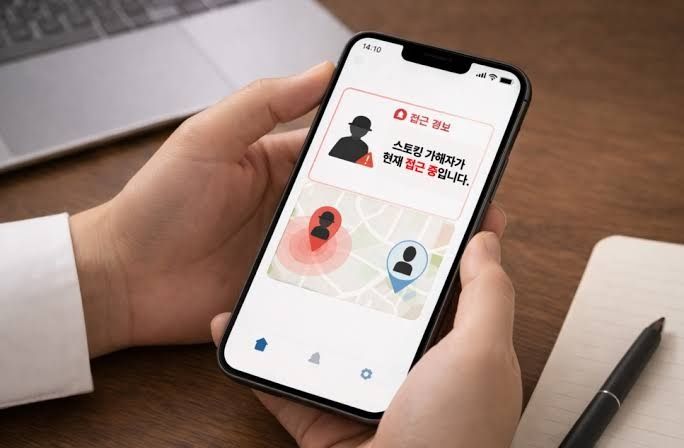
South Korea took a decisive step towards combating stalking crimes on June 24 by launching an innovative mobile application that grants victims unprecedented access to the whereabouts of their suspected harassers. The system, administered through the Ministry of Justice, represents a significant technological intervention in a persistent public safety challenge that has claimed numerous lives despite existing protective measures. By enabling victims to view a suspect's current position and direction of travel on their mobile devices, the government aims to empower individuals with information that could prove critical in preventing harm or escaping dangerous situations.
The escalation of protective measures reflects mounting frustration with the limitations of earlier safeguarding strategies. For years, South Korean authorities had provided stalking victims with smartwatch-style emergency alert devices designed to summon help during immediate threats. Yet these conventional tools proved inadequate in preventing tragedy. Between 2021 and August 2025, according to data presented by Democratic Party Representative Lee Gwang-hee, 23 individuals were either killed or became targets of attempted murder despite having received these emergency devices. Such statistics underscored a critical gap in the victim protection framework and prompted policymakers to pursue more sophisticated technological solutions.
Electronic monitoring of alleged stalkers represents a newer dimension of South Korea's enforcement toolkit. Beginning in 2024, courts began ordering high-risk offenders to wear ankle monitors in cases deemed particularly threatening, supplementing rather than replacing the emergency notification devices already in circulation. The electronic monitors themselves generate valuable location data, yet this information remained largely inaccessible to victims themselves. The June 2024 application launch changed that calculus by creating a direct pipeline of location intelligence to those most at risk, transforming what had been law enforcement intelligence into a practical safety resource for vulnerable individuals.
The introduction of location-sharing technology inevitably raises thorny questions about privacy and the extent to which surveillance of suspects can be justified in the name of victim protection. The South Korean government did not rush to deploy this system without deliberation on such concerns. Instead, the Ministry of Justice took time to revise the regulatory framework governing electronic monitoring before making the application widely available. Those revisions, finalised in December 2025, presumably established guardrails around how location data could be collected, stored, transmitted, and used—attempting to balance the competing interests of victim safety and suspect privacy rights.
For Malaysian readers and policymakers across Southeast Asia, the South Korean approach offers instructive lessons about the evolving nature of stalking as a public safety crisis. Harassment and stalking represent persistent problems throughout the region, yet technological responses remain unevenly developed. Malaysia's own legal framework addresses harassment and criminal intimidation, but the integration of electronic monitoring with victim-accessible tracking systems remains underdeveloped compared to South Korea's emerging infrastructure. As digital literacy increases across Southeast Asia and mobile devices become ubiquitous, the technical capacity to implement such systems exists; the question becomes whether regional governments will move swiftly to establish appropriate legal and regulatory foundations before such technology becomes commonplace.
The effectiveness of real-time location sharing depends critically on how victims can respond to the information they receive. Simply knowing a suspect's location offers psychological reassurance and situational awareness, yet it requires complementary law enforcement systems capable of rapid response. In South Korea's case, the application serves as an early warning mechanism, allowing victims to avoid areas where suspects are present or to alert authorities when boundary violations occur. The system's success ultimately hinges on whether police can respond promptly when victims report that monitored individuals have approached restricted zones or violated court-imposed distance requirements.
The forthcoming expansion of victim access to the court system represents another significant structural reform. Beginning April 2027, stalking victims will gain the ability to petition courts directly for restraining orders, rather than depending on law enforcement agencies to initiate such requests on their behalf. This reform addresses a fundamental asymmetry in existing systems where victims must navigate bureaucratic processes controlled by state officials. By granting victims direct standing to seek court protection, South Korea acknowledges that those experiencing harassment possess critical information about their own safety needs and should not be entirely dependent on the discretionary decisions of prosecutors or police officers.
This procedural innovation has particular resonance in Southeast Asian contexts where victim access to judicial remedies sometimes remains limited by institutional capacity or prosecutorial discretion. In several regional jurisdictions, victims of harassment or stalking must file complaints through police channels, which may lack resources or prioritise such cases differently than victims would prefer. Direct court petition mechanisms could accelerate the protective process and ensure that judicial resources respond to victim concerns rather than filtering such requests through law enforcement gatekeepers who may face competing priorities.
The comprehensive approach being assembled by South Korea—combining electronic monitoring, real-time victim tracking, privacy safeguards, and expanded court access—suggests recognition that stalking prevention requires multiple, overlapping interventions rather than single technological or procedural solutions. Each component addresses different vulnerabilities in victim protection: electronic monitors create accountability for suspects; real-time tracking enhances victim awareness; regulatory revisions attempt to manage surveillance trade-offs; and direct court petitioning removes bureaucratic obstacles. Together, these measures form an integrated ecosystem designed to reduce the gaps that currently allow harm to occur despite existing protective mechanisms.
As South Korea continues refining these systems through 2027 and beyond, implementation challenges will inevitably emerge. Technical reliability, false alerts, victim training, police responsiveness, and the psychological impact of constant surveillance on both victims and suspects will require ongoing attention. Yet the willingness to experiment with integrated technology-plus-procedure solutions distinguishes South Korea's approach from many jurisdictions that have essentially accepted that stalking prevention remains fundamentally limited by existing tools. For a region like Southeast Asia, where stalking cases frequently escalate to violence and where victim protection often remains ad hoc and reactive, South Korea's structured, proactive framework offers a potential model worth studying and adapting to local legal and institutional contexts.

