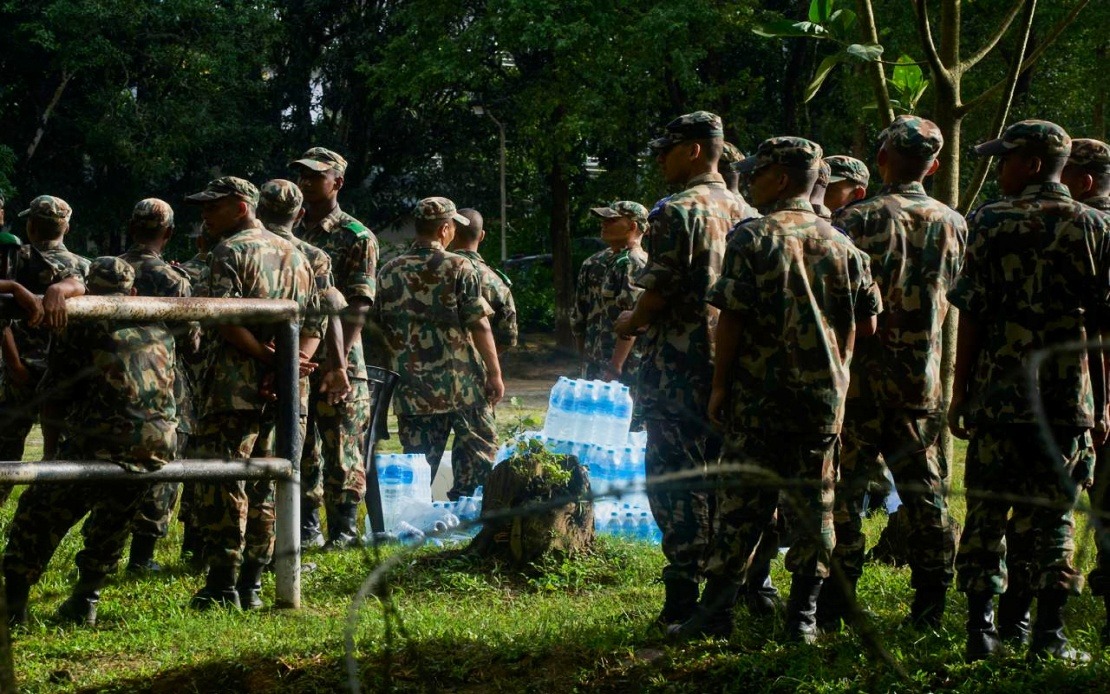
South Korea mobilised its diplomatic and emergency response apparatus on Thursday, sending a dedicated team to Nepal as search and rescue operations intensified for nine of its citizens unaccounted for following a devastating natural disaster. The missing nationals—comprising six employees of power construction specialist Doosan Enerbility Co. and three staff members from Korea South-East Power Co., a state-owned utility—vanished when a torrential flash flood combined with a destructive mudslide engulfed the Upper Trishuli-1 hydropower plant construction site in Nepal's Rasuwa district on Wednesday. The incident underscores the growing risks that Korean companies and workers face as they expand their footprint in major infrastructure projects across South Asia and developing regions.
The 11-member emergency response contingent, comprising representatives from Seoul's Foreign Ministry alongside trained personnel from national police and fire services, departed for the Nepali capital on Thursday with instructions to arrive in Kathmandu by evening. This rapid mobilisation reflected the gravity with which the South Korean government views the incident and its commitment to leveraging official channels and rescue expertise to locate the missing workers. The deployment represents a standard protocol in such situations, though the scale and composition of the team signal heightened concern about the complexity of operations in Nepal's challenging mountain terrain and the coordination requirements between multiple international agencies.
Separately, the situation for other South Korean personnel at the site carried some positive developments. An additional ten Doosan employees who had been stranded in the affected area were confirmed to have survived, though they remained awaiting formal evacuation and transport to safety. These workers, along with approximately 200 other foreign nationals engaged on the broader construction project, had managed to leave the immediate danger zone during the initial emergency, demonstrating the scale of international involvement in this major infrastructure venture. The differentiation between those successfully evacuated and the nine individuals still missing highlights the chaotic and unpredictable nature of the flooding event.
The Upper Trishuli-1 facility represents a substantial joint undertaking by the two Korean corporations, situated roughly 70 kilometres northwest of Kathmandu on the Trishuli River. The 216-megawatt plant, intended to contribute significantly to Nepal's hydroelectric generation capacity, commenced construction in January 2022 with a completion target of the current year. Industry analysts now anticipate that damage from the flooding will impose substantial delays on the project timeline, creating economic consequences for both the Korean firms involved and Nepal's broader energy infrastructure development plans. The project's disruption also reflects vulnerabilities in construction operations within the Himalayan region, where seasonal weather patterns and topographical challenges present recurring hazards.
The broader disaster context in Nepal reveals an emergency of substantial proportions. Official reports indicate that the flooding and mudslide claimed at least 160 lives across the affected region, with 403 individuals reported missing—notably, 341 of these missing persons are foreign nationals. This composition underscores how the disaster disproportionately impacted international workers and companies operating on development projects in Nepal's north-central Himalayan zone near the Nepal-Tibet frontier. The concentration of missing foreigners reflects the clustering of international construction and industrial initiatives in these regions, as well as potential differences in preparedness and evacuation capabilities between local and international operations.
Responding to the crisis, both Doosan Enerbility and Korea South-East Power established their own emergency response units, with corporate officials indicating plans to dispatch field teams directly to the accident site. This dual-track approach—combining government resources with company-led response capabilities—represents standard practice in Korean crisis management for overseas incidents. The coordination between state institutions and private enterprise creates redundancy and multiple lines of communication with Nepali authorities, enhancing the likelihood of locating survivors and recovering those deceased.
At the political level, South Korea's leadership signalled maximum commitment to the rescue effort. President Lee Jae Myung issued directives instructing government agencies to mobilise all available resources toward searching for and rescuing the missing nationals. Foreign Minister Cho Hyun planned direct engagement with his Nepali counterpart to request official cooperation and coordination with Nepali search and rescue authorities. This high-level diplomatic engagement reflects both the seriousness with which Seoul treats incidents affecting its citizens abroad and the importance placed on maintaining cooperative relationships with Nepal during crisis situations.
For Malaysian readers and Southeast Asian observers, this incident carries several instructive dimensions. The disaster underscores how regional infrastructure development ambitions can expose workers to environmental risks that transcend standard occupational safety frameworks. Korean companies have become increasingly prominent across Southeast and South Asia, particularly in energy, construction, and manufacturing sectors, making incidents in these regions relevant to understanding broader patterns of cross-border business operations. The rapid governmental response demonstrates institutional capabilities that developing-country governments may aspire to replicate in protecting their own nationals working abroad.
The flooding itself reflects climate and environmental vulnerabilities increasingly evident across the Himalayan and monsoon-influenced regions that encompass much of South Asia. Nepal's susceptibility to extreme weather events, particularly during monsoon seasons, suggests that similar risks may confront projects in comparable environments throughout the region. Companies and governments across Southeast Asia, many operating in similar topographical and climatic contexts, may draw lessons regarding risk assessment, emergency preparedness, and the protocols necessary for protecting international workforces in disaster-prone locations.
The incident also illustrates the complexity of managing multinational rescue operations in regions with limited infrastructure and challenging geography. Coordination between South Korean authorities, Nepali government bodies, and international agencies requires sophisticated diplomatic and logistical arrangements. For other nations with nationals working in Nepal or similar environments, the response model deployed by Seoul may provide a reference framework for structuring crisis management protocols. The emphasis on rapid team deployment combining government, police, and emergency services offers a template that other countries with significant overseas workforces might consider adopting or adapting.

