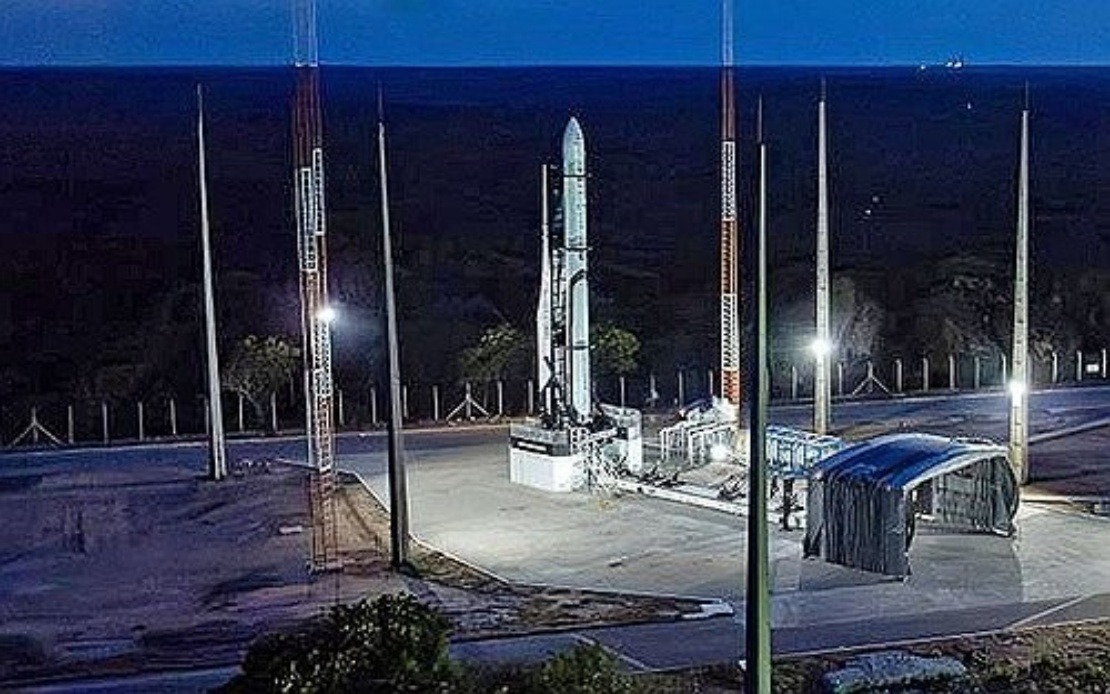
South Korea's Defence Ministry announced on Tuesday that it was deferring the launch of the Mir space rocket, pushing back what would have represented a significant milestone in the nation's independent space capabilities. The rocket had been scheduled to lift off at 2 pm from a sea platform positioned off the southern coast of Jeju Island, but technical concerns detected during final preparations prompted officials to halt the countdown. The ministry stated that unspecified issues emerged during the closing stages of launch readiness, necessitating a comprehensive postponement with no immediate timeline provided for rescheduling.
This launch would have marked the first operational test of a fully integrated four-stage solid-fuel vehicle, representing a qualitative leap from previous trials. Throughout 2022 and 2023, South Korean engineers had conducted a series of test flights evaluating partial three-stage configurations to validate individual components and systems. The progression towards a complete four-stage platform demonstrates the technological sophistication required for independent satellite deployment, yet also underscores the inherent risks when scaling up aerospace systems. Each stage in rocket development introduces additional complexity, from propellant management to structural integrity under extreme acceleration and stress conditions.
Seoul's investment in solid-fuel propulsion technology reflects strategic priorities distinct from liquid-fuel alternatives. Solid rockets offer inherent advantages in storage stability—remaining mission-ready for extended periods without degradation—and enable rapid deployment when operational urgency demands. Unlike their liquid counterparts, which require careful handling and pre-launch fuelling procedures, solid-fuel systems can maintain operational status indefinitely, a capability particularly valuable for military applications requiring swift response capabilities. This characteristic aligns with South Korea's overarching security concerns regarding potential North Korean provocations, where reaction time remains a critical operational variable.
The Mir programme forms the cornerstone of South Korea's broader effort to establish autonomous surveillance and reconnaissance infrastructure. Since commencing development in 2021, the initiative has maintained parallel progression with an alternative military spy satellite initiative that has successfully deployed five reconnaissance satellites using SpaceX's Falcon 9 rockets, with the most recent launch occurring in November. This dual-track approach provides strategic redundancy while allowing engineers to develop and refine domestic capabilities without complete dependency on American launch vehicles or satellite technology.
South Korean defence planners envision an extensive constellation of 60 small satellites distributed throughout low-Earth orbit by 2030, supplementing the existing cluster of five larger military observation platforms. This expanded network would establish comprehensive monitoring capacity across the Korean Peninsula and beyond, enabling continuous surveillance of adversarial military activities and infrastructure. The constellation model offers distinct advantages over individual large satellites: distributed sensor nodes provide redundancy against system failures, improve temporal resolution through overlapping coverage areas, and complicate potential adversarial countermeasures through sheer numerical distribution.
The current reliance on American satellite intelligence has long constrained Seoul's strategic autonomy in monitoring developments within North Korea. By cultivating domestic space capabilities, South Korea seeks to reduce this dependency while building institutional expertise and industrial capacity for sustained long-term operations. The sophistication required to design, manufacture, and operate dozens of coordinated satellites demands substantial investments across multiple sectors including aerospace engineering, software development, and satellite operations infrastructure.
International observers view South Korea's space ambitions within the broader context of regional technological competition. The nation's advanced manufacturing capabilities, substantial research budgets, and accumulated aerospace experience position it to achieve independent space launch competency more readily than most regional actors. However, the sector remains governed by international agreements and export control regimes that constrain technology transfer and component sourcing, obligating South Korean engineers to develop indigenous solutions wherever possible.
The postponement also reflects the stringent safety standards increasingly demanded by responsible spacefaring nations. Launch failures carry catastrophic consequences extending beyond programme setbacks—they risk environmental damage, property destruction, and loss of life in surrounding areas. Jeju Island's coastal location, with its civilian population proximity, demands particularly rigorous safety verification before any launch attempt. The Defence Ministry's decision to halt proceedings based on detected anomalies demonstrates appropriate caution rather than schedule-driven recklessness, a posture that ultimately strengthens long-term programme credibility and public confidence.
For Malaysia and Southeast Asia, South Korea's space developments carry strategic implications extending beyond bilateral relations. The region's security architecture increasingly depends on satellite-based intelligence, communications, and navigation capabilities. As Seoul advances autonomous space systems, it reinforces regional technological diversification and reduces collective dependence on extra-regional powers for critical space infrastructure. This diffusion of space competency across multiple Asian nations creates a more resilient regional environment and supports emerging Southeast Asian space initiatives.
The Mir programme's continuation—despite this temporary setback—signals Seoul's long-term commitment to space industrialisation and military modernisation. The Defence Ministry's commitment to announcing a revised launch schedule demonstrates continued programme momentum rather than fundamental abandonment. Engineering challenges encountered during development phases provide valuable diagnostic information enabling systematic refinement and risk mitigation in subsequent attempts. South Korea's aerospace sector possesses the technical depth and industrial capacity to resolve identified issues and ultimately achieve operational success with the four-stage system.
Meanwhile, the parallel success of the spy satellite programme using Falcon 9 rockets provides immediate operational capability while domestic systems undergo final validation. This complementary approach allows Seoul to maintain surveillance requirements without depending entirely on indigenous launch capacity while development continues. The strategic significance of achieving independent space launch capacity extends beyond military applications—it establishes technological foundation for commercial space operations, scientific research missions, and long-term industrial development within South Korea's aerospace sector.

