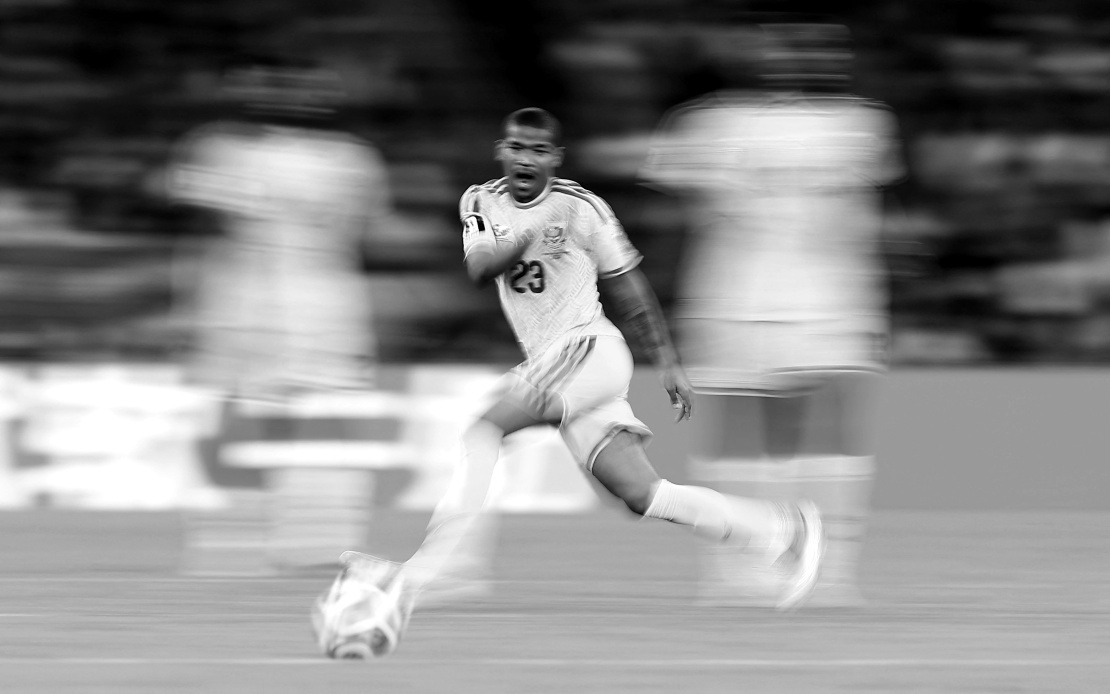
A promising South African footballer who competed in this year's FIFA World Cup has died at just 25 years old, the Confederation of African Football confirmed on Saturday. Jayden Adams, a midfielder who represented his nation at the tournament, was found at a residence in Schotschekloof, central Cape Town, on Saturday morning. While authorities have opened a formal investigation, the precise circumstances surrounding his death remain unclear at this stage, with no official cause yet determined.
Adams had most recently been playing for Mamelodi Sundowns, one of South Africa's leading domestic clubs. During the World Cup held earlier this year, he made meaningful contributions to his country's campaign, appearing in all three group-stage matches as South Africa competed on the international stage. The squad's performance marked a watershed moment for South African football—the nation reached the knockout round for the first time in its World Cup history before being eliminated on 28 June by co-hosts Canada in the round of 32.
The midfielder's career trajectory demonstrated considerable promise and steady progression through South African football. He made his senior international debut in 2022, establishing himself relatively quickly within the national setup. Beyond his World Cup appearance, Adams had also been selected for South Africa's squad at the 2023 Africa Cup of Nations, where the team reached the semifinal stage—further evidence of his growing status within the domestic and continental game.
At club level, Adams began his professional journey with Stellenbosch FC before securing a move to Mamelodi Sundowns in January 2025, a transfer that represented a significant step up in his career. During his time with the Johannesburg-based outfit, he contributed to success on multiple fronts, helping the side capture domestic league titles and reaching the heights of continental competition through victories in the African Champions League. Such achievements at his age suggested a bright future lay ahead.
South Africa's Sports, Arts and Culture Minister Gayton McKenzie released a statement acknowledging the tragedy while requesting restraint from the public and media regarding speculation about the circumstances. "South African football has lost one of its brightest young talents," McKenzie said, offering formal condolences to Adams' family members, his teammates at club and international level, and the broader football community who had followed his development. The minister's intervention reflected the gravity with which the nation's sporting establishment viewed the loss.
The football world extended expressions of sympathy beyond South Africa's borders. Gianni Infantino, president of FIFA, the global governing body of association football, released a statement acknowledging Adams' passing and the void his absence would create within international football circles. Such statements from FIFA leadership underscore the respect and recognition Adams had earned despite his relatively young age and career span, suggesting his talent and character had made an impression at the highest levels of the sport.
Adams' death arrives during a period of significant development for South African football on the global stage. The nation's reaching the knockout phase of the World Cup for the first time represented a watershed achievement that elevated the profile of the squad and its players internationally. Adams' participation in that campaign meant he stood among a select group representing his country at sport's greatest tournament. For many young footballers in South Africa aspiring to international careers, Adams' path—moving from domestic clubs to World Cup representation—represented an achievable trajectory and source of inspiration.
The loss carries particular weight given the relative rarity of such tragedies within professional football, where athletes are typically monitored closely through club medical and fitness programmes. Questions about player welfare, mental health support, and duty of care have periodically surfaced within football discourse, though investigations into Adams' specific circumstances remain ongoing. The South African football community and his supporters now await clarity on the factors that led to this untimely death.
For Malaysian and Southeast Asian observers, Adams' passing serves as a sobering reminder of the vulnerabilities that exist even among elite professional athletes, regardless of national sporting infrastructure or international profile. His death also highlights how rapidly prospects can be transformed into tragedy, disrupting not only families and clubs but entire football cultures that have invested hope and expectation in emerging talent. As South Africa processes this loss, the broader football world will await further details while honouring the memory of a player whose career, though brief, made a mark at the highest levels of international competition.

