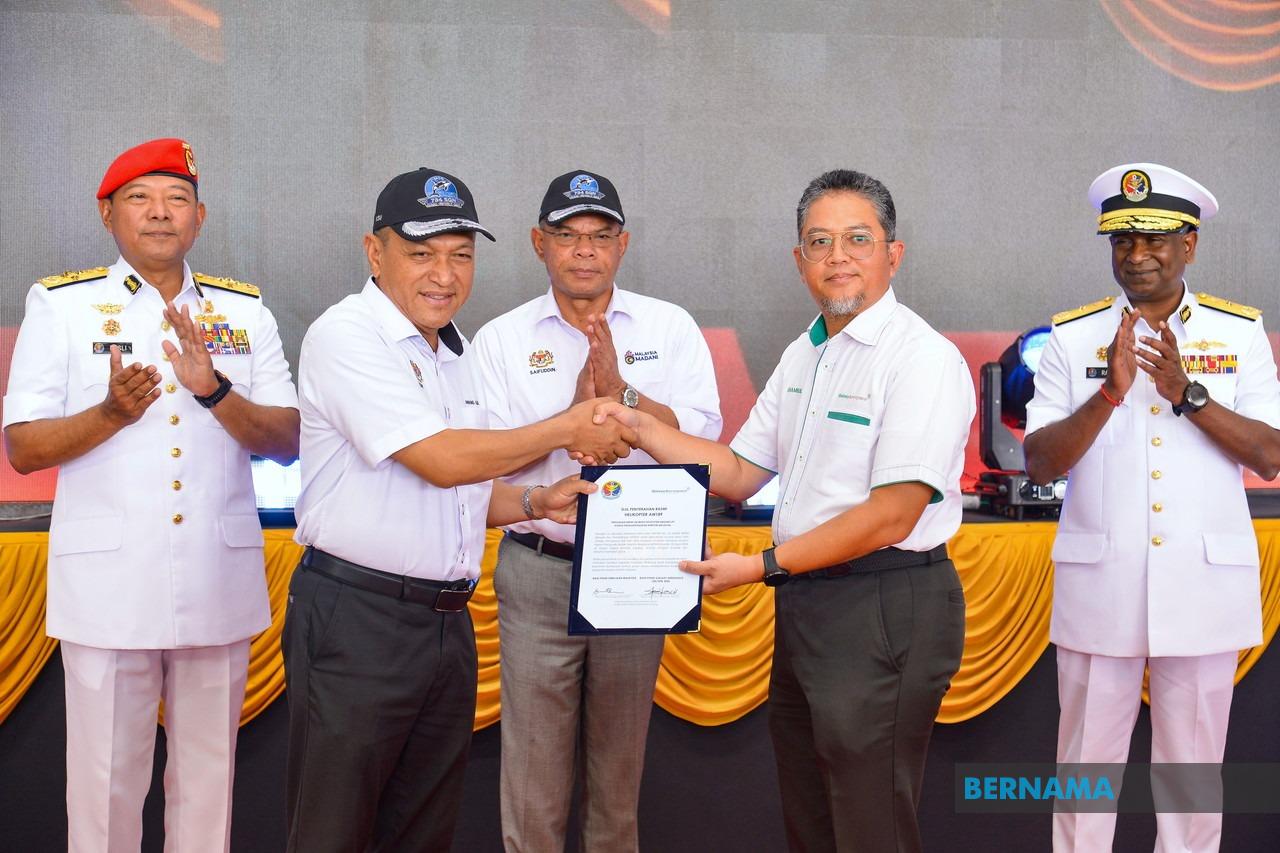
Home Minister Datuk Seri Saifuddin Nasution Ismail has signalled the need for rigorous review of two major policy areas that have drawn increasing public and parliamentary scrutiny: the Security Offences (Special Measures) Act 2012 (SOSMA) and Malaysia's approach to refugee management. The minister, speaking after chairing discussions on both subjects, stressed that neither issue can be adequately addressed through narrow institutional or ideological lenses, but requires examination from multiple angles reflecting current security realities and humanitarian obligations.
The Security Offences Act remains one of the most contentious pieces of legislation on Malaysia's statute book. Introduced in 2012 to replace the far more draconian Internal Security Act 1960, SOSMA was designed to equip law enforcement with specialised tools for combating terrorism and serious security threats whilst operating within a framework of legal accountability. Yet nearly twelve years after its enactment, the law continues to generate debate among human rights advocates, legal scholars and opposition parliamentarians who question both its necessity and proportionality. Some critics contend that SOSMA's provisions, particularly those relating to detention powers and investigative procedures, remain insufficiently constraining and permit executive overreach. The minister's acknowledgement that the law warrants examination suggests growing recognition within government that policy frameworks established in one security context may require recalibration as circumstances evolve.
The refugee question, particularly concerning populations displaced from Myanmar following the 2021 military coup, presents Malaysia with a complex humanitarian and security calculus. The country currently hosts hundreds of thousands of refugees and asylum seekers, including substantial communities from Myanmar, Afghanistan, Pakistan and Palestine. For Malaysia, which is not a signatory to the 1951 Refugee Convention, the absence of a comprehensive legal framework governing refugee status and management has created administrative challenges and occasional tensions between humanitarian impulses and border security imperatives. Recent months have witnessed intensified public discussion about refugee integration, labour market impacts, housing pressures and security screening protocols, reflecting legitimate concerns across Malaysian society about how these populations should be managed.
Saifuddin's emphasis on multi-perspective assessment recognises that policy-making on security and refugee issues cannot occur in isolation from broader contextual factors. SOSMA's implementation has coincided with evolving terrorism methodologies, including increased reliance on digital platforms for radicalization and recruitment. Simultaneously, refugee flows have been shaped by regional conflicts and geopolitical developments that Malaysia cannot unilaterally influence but must nonetheless accommodate. The minister's insistence that policies be "practical, well-founded and suited to current circumstances" implicitly acknowledges that static legislative frameworks can become either excessively restrictive or insufficiently protective depending on how ground-level conditions shift.
The establishment of discussion platforms for examining these issues reflects an apparent institutional recognition that evidence-based policy development requires sustained engagement across stakeholder groups. Such forums typically bring together security practitioners, legal experts, civil society representatives, and affected community voices. For SOSMA, this might include police and intelligence officials who can articulate operational requirements, defence lawyers and judges who understand implementation challenges, and activists who document potential abuses. On refugee policy, relevant voices encompass immigration authorities managing arrivals and status determination, local community leaders in high-density refugee areas, international organisations such as UNHCR, and representatives of refugee communities themselves.
One significant implication of Saifuddin's position concerns the international dimension of Malaysian security policy. SOSMA cannot be divorced from broader counterterrorism cooperation frameworks involving regional partners and developed nations. Similarly, refugee management increasingly involves coordination with ASEAN neighbours, given that population movements frequently extend across multiple Southeast Asian borders. Myanmar's Rohingya and other displaced communities do not remain confined within Malaysia but also affect Bangladesh, Indonesia and Thailand. This regional complexity means that purely national legislative reviews, whilst necessary, must eventually connect to multilateral policy conversations.
The political salience of both issues should not be underestimated. SOSMA has become a touchstone in Malaysian debates about security versus civil liberties, with opposition parties consistently calling for legislative reform or repeal. The refugee question, meanwhile, resonates with voters concerned about resource allocation, housing availability and community cohesion. Any review that Saifuddin's ministry undertakes will inevitably attract scrutiny from political opponents, activist organisations and international human rights bodies. The minister's framing of the inquiry as seeking practical solutions "well-founded" in evidence rather than ideology may be an attempt to insulate the process from partisan contestation, though such insulation remains elusive on divisive issues.
For Malaysian business and civil society, the outcomes of these policy reviews could have material consequences. International companies considering investment in Malaysia often conduct due diligence on security legislation and rule-of-law conditions. Similarly, SOSMA's application to corporate contexts, particularly regarding financial compliance and counterterrorism financing, affects banking and international trade operations. On the refugee dimension, labour-intensive industries including manufacturing, construction and services have developed dependencies on migrant and refugee workforces that any regulatory tightening would disrupt, necessitating careful transition planning if policies change substantially.
The timing of Saifuddin's statement arrives as Malaysia navigates broader regional security challenges. The potential for transnational terrorist organisations to exploit ungoverned spaces, cyber vulnerabilities and community grievances remains acute. Simultaneously, Myanmar's instability continues generating refugee outflows that show no immediate sign of reversing. These dual pressures suggest that any policy review is unlikely to result in either blanket deregulation of SOSMA or open-borders approaches to refugee acceptance. Instead, refinement appears more probable—potential modifications to SOSMA that maintain security capabilities whilst strengthening judicial oversight, and refugee policies that balance humanitarian obligations with strategic capacity assessments.
The minister's invocation of discussion-based policy development also reflects broader governance trends in Southeast Asia. Rather than pursuing rapid legislative overhauls susceptible to political reversal, governments increasingly favour extended consultative processes that build stakeholder consensus. This approach offers advantages including greater legitimacy and implementation buy-in, but risks extended delays in addressing urgent problems. For both SOSMA and refugee policy, Malaysian civil society will be monitoring whether these announced discussions translate into substantive legislative change or constitute primarily symbolic gestures.
Moving forward, the effectiveness of any policy review will depend substantially on the independence granted to examining bodies, the quality of evidence they gather and analyse, and the political will to implement recommendations that might challenge institutional interests or departmental preferences. SOSMA's twelve-year existence provides sufficient implementation history to identify problematic provisions or application patterns through systematic analysis. Similarly, Malaysia's extensive experience managing refugee populations since the 1990s offers empirical foundations for evidence-based design of more effective future frameworks. Whether Saifuddin's initiative translates these analytical opportunities into concrete reform remains a question that Malaysian policymakers, civil society and affected communities will closely observe.

