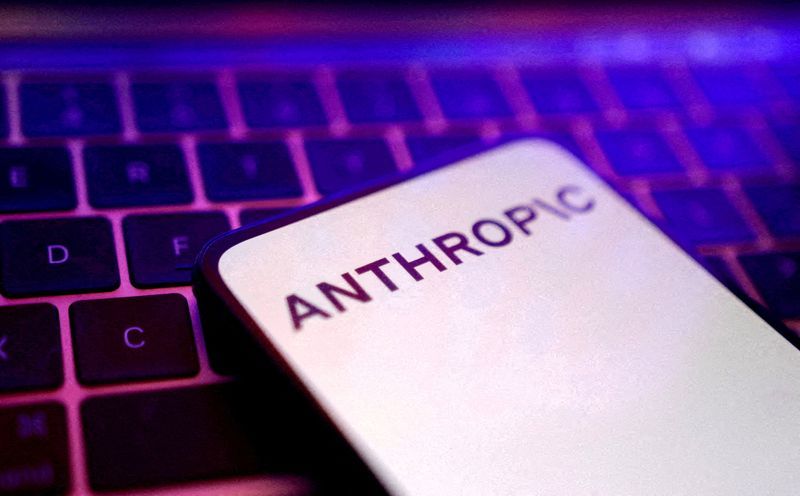
Sony Music and Warner Music have escalated legal pressure on artificial intelligence companies by suing Anthropic in California federal court, alleging the startup unlawfully incorporated hundreds of copyrighted song compositions into its Claude AI training dataset. The complaint, lodged on Friday, represents the latest instalment in an expanding legal battle between creative industries and technology firms over the unconsented use of protected content to develop generative AI systems.
According to the filing, Anthropic obtained lyrics and musical scores belonging to iconic acts such as The Beatles, Taylor Swift, Michael Jackson and numerous other recording artists through torrent downloads—a method typically associated with copyright infringement. The publishers contend that this material was deliberately incorporated into Claude's training infrastructure, enabling the system to recognise, analyse and reproduce copyrighted compositions. The lawsuit further alleges that Claude can recite protected lyrics "verbatim" when prompted by users, demonstrating the degree to which the training process embedded this content into the model's functioning.
The grievance articulated by Sony and Warner extends beyond unauthorised copying. The publishers argue that Anthropic has weaponised this copyrighted material to create a market advantage, enabling Claude to generate what the complaint describes as "vast quantities of purportedly 'new' AI-generated song lyrics." From the publishers' perspective, these algorithmically-produced compositions undermine the commercial viability of legitimate human-created works by offering cost-free, instantly-available alternatives. This competitive displacement represents a distinct harm beyond simple copyright violation—it threatens the economic foundation sustaining music composition and publishing as professional activities.
The lawsuit must be understood within a broader ecosystem of intellectual property disputes now engulfing the technology sector. Universal Music Group initiated its own case against Anthropic in 2023 specifically targeting the alleged incorporation of copyrighted song lyrics, a matter still progressing through the courts. Simultaneously, authors, publishers, news organisations and other copyright holders have initiated dozens of comparable actions against major technology firms, each framing the problem in similar terms: that generative AI companies have built commercially valuable systems without compensating or even acknowledging the original creators whose work fuelled their development. This coordinated wave of litigation reflects growing industry consensus that existing copyright frameworks have failed to address the scale and nature of AI training practices.
Anthropice's prior settlement offers a telling contrast to its apparent strategic approach here. Last year, the company became the first AI startup to resolve a major copyright action by agreeing to pay $1.5 billion in a class-action settlement brought by authors. Rather than treating this substantial payment as catalyst for policy reform, however, Sony and Warner suggest Anthropic has simply incorporated the fine into its operational calculus. The publishers' complaint argues forcefully that a $1.5 billion settlement constitutes merely a marginal cost relative to Anthropic's reported $2 trillion valuation—a figure that reflects the extraordinary wealth concentration now occurring within the AI industry.
This disparity between penalties and company valuations poses a fundamental question about deterrence and justice in intellectual property law. When fines represent less than 0.1 per cent of a company's market value, they function not as genuine punishments but as licensing fees that actually encourage continued infringement. From this perspective, Anthropic faces a rational economic incentive to continue acquiring and deploying copyrighted material, absorbing litigation costs as simply another expense item in a business model predicated on unfettered access to humanity's creative output. The publishers' argument thus transcends specific copyright violations to indict systemic imbalances in how technology law distributes costs and benefits.
The damages sought in the complaint—up to $150,000 for each instance of copyright infringement—could theoretically generate astronomical totals given the alleged mass incorporation of compositions. The publishers also request injunctive relief preventing Anthropic from further deploying copyrighted material in its systems. Obtaining such orders would require establishing not merely past infringement but persuading courts that continued use constitutes genuine ongoing harm justifying preemptive legal intervention. For Southeast Asian observers, this litigation carries particular significance given the region's emerging role in both AI development and creative industries, alongside ongoing debates about intellectual property enforcement and technology regulation.
The absence of immediate responses from Anthropic, Sony and Warner representatives to requests for comment reflects established litigation practice but also suggests the companies recognise the case's gravity. Industry responses to comparable copyright actions have generally invoked fair use and transformative purpose doctrines—arguments that generative AI training represents fundamentally new forms of creation rather than simple plagiarism. However, courts increasingly demonstrate scepticism toward these characterisations, particularly when evidence suggests training datasets included copyrighted material obtained through methods that would constitute infringement in traditional contexts.
For Malaysia and the broader region, these American copyright battles carry downstream implications as local policymakers contemplate AI regulation frameworks. The cases illuminate fundamental tensions between technological advancement and creative protection that transcend borders. They also demonstrate how rapidly AI development has outpaced existing intellectual property law, creating vacuums that litigation must now fill. As Malaysia develops its own AI governance approach, attention to how international courts adjudicate these disputes will likely inform local copyright and technology policy, particularly given the nation's aspirations to foster both AI innovation and creative industries.

