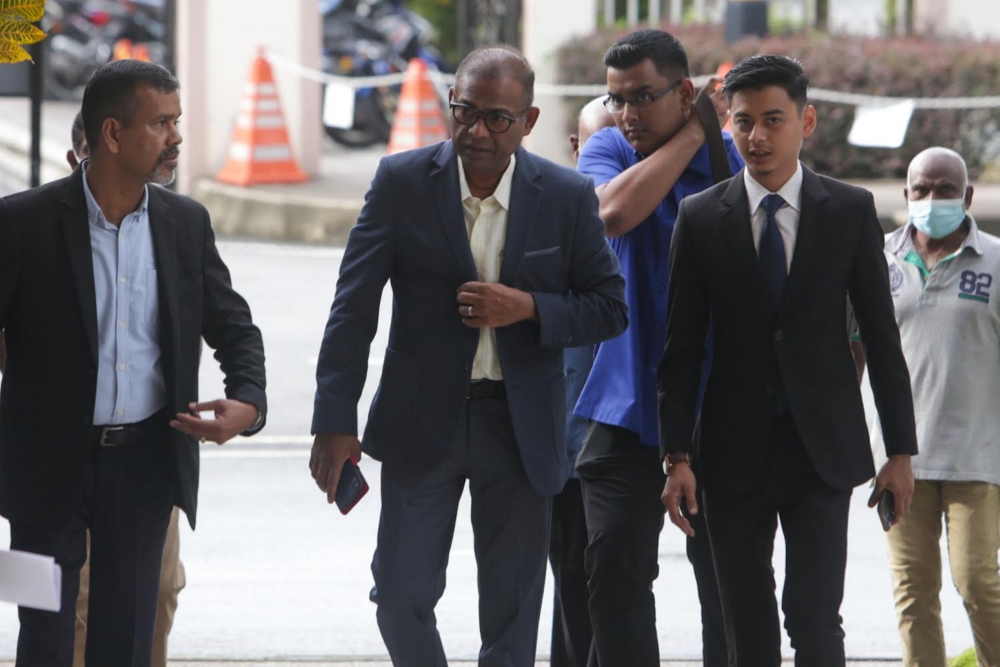
The son of former Baling Member of Parliament Datuk Seri Abdul Azeez Abdul Rahim has rejected claims spreading across social media platforms suggesting his father is facing imminent arrest by the Malaysian Anti-Corruption Commission. The online speculation, which gained traction in recent days, linked potential action to the ongoing Royal Commission of Inquiry into Tabung Haji's affairs. Speaking publicly to address what he characterised as unfounded gossip, Abdul Azeez's son stressed that no formal action has been taken against his father and that the circulating reports lack any credible foundation.
The rumours emerged amid heightened public scrutiny of Tabung Haji's governance and operations, following mounting concerns over the pilgrimage fund's financial management and strategic direction. The establishment of the Royal Commission of Inquiry represents a significant step by authorities to examine the institution's institutional practices and decision-making processes. As the investigation progresses and gathers evidence, speculation has naturally intensified regarding potential accountability measures for individuals previously connected to the fund's leadership and major decisions.
The Tabung Haji saga has captured sustained national attention, reflecting deeper anxieties about institutional transparency and fiduciary responsibility in Malaysia's public sector. The fund serves approximately 9 million account holders and manages billions in accumulated savings intended specifically for Muslim Malaysians planning to undertake the hajj pilgrimage. Its financial stability and proper stewardship therefore carry profound significance not only for individual depositors but for the broader integrity of Malaysia's religious and financial institutions.
Social media has proven instrumental in amplifying unverified claims related to the Tabung Haji matter, demonstrating both the power and peril of digital communication platforms in contemporary Malaysian politics. Sensational allegations spread rapidly without the filtering mechanisms traditionally provided by established media editorial standards. This phenomenon underscores the growing challenge authorities and public figures face in managing information flow during sensitive investigations and inquiries.
The public denial by Abdul Azeez's son serves several strategic purposes beyond merely refuting specific allegations. It signals the family's intent to engage proactively with public discourse rather than remain silent, potentially concerned that unchallenged rumours might accumulate credibility through sheer repetition. The statement also implicitly asserts the family's confidence that no evidence exists to support speculative claims—a calculated positioning before any formal action materialises.
The timing of these rumours within Malaysia's broader political context warrants consideration. Questions regarding governmental accountability, institutional reform, and the management of public assets remain particularly sensitive topics as the nation navigates post-electoral political dynamics and ongoing governance challenges. The Tabung Haji inquiry exists within this environment, where scrutiny of previous administrations and their appointees carries both political and public interest dimensions.
Regional observers of Malaysian governance have noted how public institutions managing religious affairs and citizen savings occupy uniquely sensitive intersections of temporal and spiritual authority. The Tabung Haji institution carries responsibilities that transcend conventional financial management, touching upon the religious obligations and personal aspirations of millions of Malaysian Muslims. Any perception of mismanagement therefore resonates far beyond technical banking concerns, engaging profound questions of trust in institutional stewardship.
The Royal Commission of Inquiry into Tabung Haji's operations represents an institutional mechanism designed to investigate comprehensively, gather documentary evidence, hear testimonies, and establish factual baselines regarding any irregularities or governance lapses. Such formal investigative processes inherently require time and methodical examination. The public and media must exercise patience and restraint, allowing the inquiry to function without prejudgement or amplification of unverified speculation that might prejudice eventual findings.
For Malaysian citizens and depositors holding accounts with Tabung Haji, the uncertainty surrounding the fund's current direction and future governance framework remains a genuine concern. Rather than engaging with unsubstantiated social media narratives, stakeholders would benefit from monitoring official statements from the Royal Commission itself, awaiting its formal conclusions and recommendations. The inquiry's eventual report should provide authoritative clarity regarding institutional failings, accountability measures, and structural reforms necessary to restore confidence and proper governance standards.
The broader lesson from this episode concerns the necessity for Malaysian society to develop more sophisticated mechanisms for distinguishing credible information from rumour in the digital age. Media literacy, institutional transparency, and traditional journalistic standards of verification and attribution become increasingly valuable as social media democratises information distribution. Public figures and institutions must engage constructively with legitimate public interest while simultaneously helping citizens resist the amplification of baseless speculation that ultimately serves no productive purpose in advancing genuine accountability or reform.

