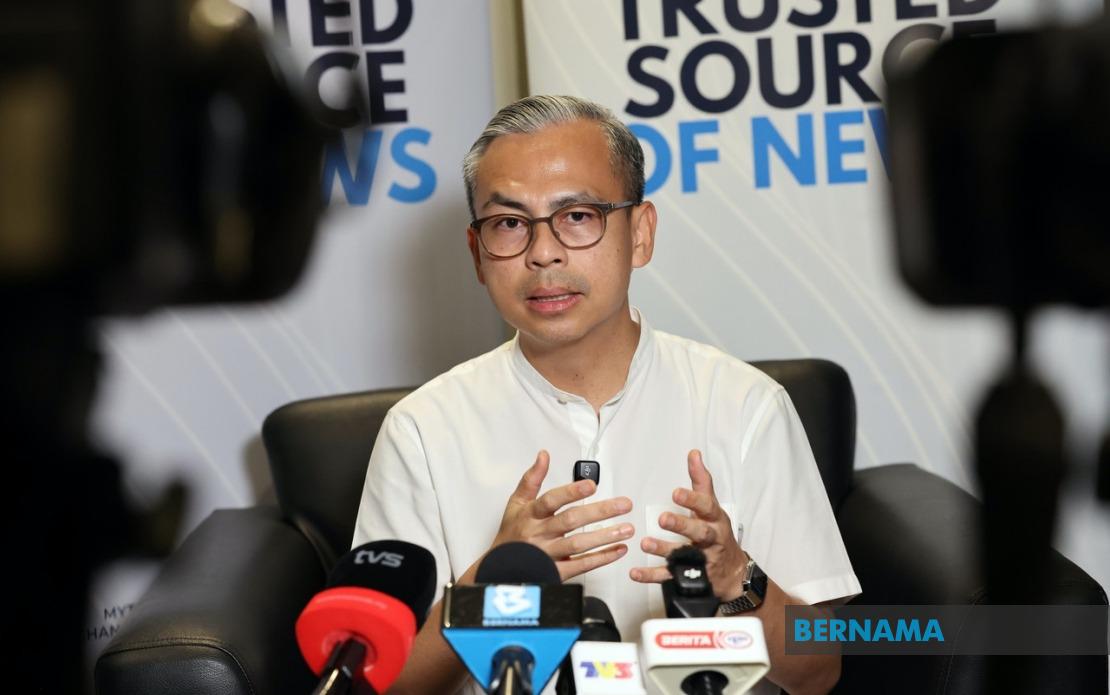
Communications Minister Datuk Fahmi Fadzil has raised concerns about the spread of election-related misinformation on social media platforms, urging providers to adopt more aggressive stances in combating false narratives during the 16th Johor state election. His remarks came after a visit to the Malaysian National News Agency operations centre in Johor Bahru ahead of Saturday's polls, highlighting growing anxiety within the government about potential confusion that could sway voters or undermine democratic processes.
While major social media platforms maintain formal policies prohibiting the circulation of false information, Fahmi stressed that the gap between stated rules and actual enforcement remains problematic. The Communications Minister pointed out that monitoring capabilities and the speed of intervention need substantial improvement, particularly during the critical hours of polling day and the immediate aftermath when results become available. This concern reflects broader anxieties across the region about the role of unverified content in shaping electoral outcomes, an issue that has affected multiple Southeast Asian democracies in recent election cycles.
The minister identified polling night as a particularly vulnerable window when fabricated claims about electoral results or individual seat winners could rapidly proliferate across networks. Such false claims carry genuine risks, as they may discourage voter participation, fuel accusations of irregularities, or create unnecessary tension among communities. Fahmi's warning suggests the government has observed patterns in previous elections where social media played a destabilising role, prompting more vigilant planning for this contest.
Fahmi emphasised that tackling misinformation requires collaborative action between platform operators and Malaysian regulatory authorities. He specifically referenced the Malaysian Communications and Multimedia Commission and the Malaysian Media Council, both of which have previously signalled willingness to participate in efforts to combat electoral falsehoods. However, he acknowledged that fighting misinformation extends beyond simply removing content that misappropriates media logos or official imagery—a practice that has become increasingly common. The misuse of credible media branding to lend false legitimacy to fabricated graphics remains a significant challenge that regulatory bodies have targeted.
The Communications Minister identified a crucial distinction often overlooked in broader misinformation debates: while authorities can work with platforms to address structural issues and obvious fraud, the substantial bulk of election-related false content originates from regular social media users themselves. Citizens producing and sharing misleading graphics, unverified claims, or distorted narratives about candidates, policies, or voting procedures create a decentralised problem that cannot be solved through top-down intervention alone. This reality underscores the limitations of platform moderation and suggests that addressing electoral misinformation ultimately requires shifts in media literacy and user behaviour across society.
To date, the Malaysian Communications and Multimedia Commission has not recorded formal complaints specifically targeting campaign misconduct on social media during this election cycle, though Fahmi's proactive warnings suggest officials anticipate such issues may emerge. This preventive approach reflects lessons learned from previous Malaysian elections and regional contests where misinformation campaigns flourished with insufficient early intervention. By signalling government concern and calling for platform vigilance in advance, authorities hope to establish expectations and prompt swifter responses when problematic content surfaces.
Beyond the misinformation challenge, Fahmi outlined the Pakatan Harapan coalition's campaign strategy for the final stretch before polling day. The opposition coalition is banking heavily on mobilising voters who have relocated outside Johor, recognising that strong turnout among this demographic could prove decisive. Public enthusiasm for special transportation arrangements organised by bus companies and government initiatives to facilitate voter travel suggests the outstation voter push is gaining traction. This emphasis on participation reflects confidence in the party's position while acknowledging that election outcomes often turn on which campaign can more effectively mobilise its base.
The government is encouraging employers across key sectors—particularly retail and food and beverage operations—to grant workers flexibility on Saturday to cast their ballots. This appeal targets businesses typically resistant to staffing disruptions and suggests concern that ordinary working hours voting constraints might suppress turnout among certain demographics. Such sector-specific appeals are pragmatic acknowledgement that economic interests can impede civic participation if not actively managed through persuasion and negotiation.
Students have been granted leave from the Youth and Sports Skills Training Institute to return home and vote, a measure that recognises young voters' importance to electoral outcomes while addressing practical barriers to their participation. Fahmi's broader appeal to parents to encourage their children studying outside Johor to return represents a grassroots mobilisation effort that depends on familial networks rather than institutional mechanisms. This tactic reflects understanding that personal influence often proves more effective than official campaigns in motivating voter turnout, particularly among younger demographics.
The minister has publicly set a target of exceeding 60 per cent voter turnout, framing participation as both a civic duty and a responsibility specific to Johoreans whose electoral choices will shape the state's governance trajectory across the next four to five years. This dual framing—emphasising both universal citizenship obligations and local identity—attempts to tap into multiple motivational frameworks that might resonate across diverse voter segments. The turnout question carries broader implications for Malaysian democracy and could signal whether electoral engagement patterns are strengthening or weakening as the nation navigates more frequent state-level contests.
The convergence of misinformation concerns and voter mobilisation efforts reveals the interconnected challenges facing contemporary elections in Malaysia and across Southeast Asia. Officials must simultaneously combat false narratives that could undermine democratic processes while ensuring broad-based participation that legitimises eventual outcomes. The degree to which social media platforms respond to government calls for enhanced enforcement, combined with actual voter turnout figures on Saturday, will provide important indicators about the effectiveness of Malaysia's current approach to managing elections in an age of digital communication and information abundance.

