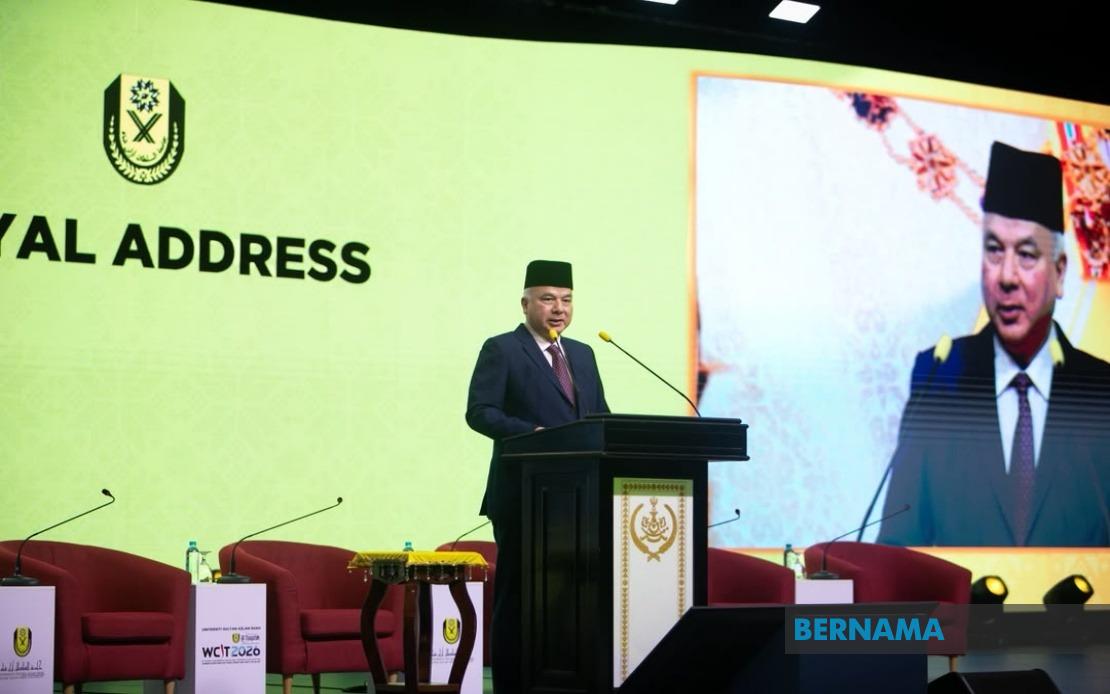
The Sultan of Perak, Sultan Nazrin Shah, has articulated a vision of national security that extends far beyond conventional defence measures, arguing that the bonds holding society together are ultimately more valuable than any military apparatus or cyber infrastructure. Delivering the keynote address at the 8th World Conference on Islamic Thought and Civilisation in Ipoh on July 21, His Royal Highness positioned social cohesion as the bedrock upon which durable security rests, challenging policymakers and citizens alike to reconsider what true protection of the nation actually means.
While acknowledging that border defence and safeguarding against cyber threats and extremism remain essential functions of any state, Sultan Nazrin stressed that these defensive mechanisms cannot substitute for the deeper bonds of mutual trust and inclusion that characterise a genuinely secure nation. For Malaysia specifically, and for Islamic-majority countries more broadly, he argued that national integrity requires constant vigilance against those who would weaponise religious sentiment to serve narrow political ambitions. This warning resonates particularly within the Malaysian context, where periodic tensions between different religious and ethnic communities have occasionally been inflamed by politicians seeking to consolidate support among particular constituencies.
The monarch articulated his concern about what he termed the manipulation of faith, pointing to the dangerous tendency of some actors to invoke religious principles to justify division rather than unity, and exclusion rather than the inclusive vision that the conference itself championed. This framing suggests that true religious integrity—authenticity in the practice and teaching of Islam—actually demands the opposite of what political opportunists claim: it requires transcending narrow sectarian interests in favour of broader national cohesion. Such a statement carries particular weight coming from a constitutional head of state with the standing to speak on matters of both governance and Islamic values.
Central to Sultan Nazrin's argument is the proposition that genuine national security cannot be disaggregated from national integrity. A state that stands impregnable against external enemies yet suffers from internal corruption and systemic injustice has not truly secured itself; rather, it has merely deferred the reckoning that internal decay inevitably brings. This perspective aligns with developmental security literature emphasising that countries facing weak institutions, endemic corruption, or profound inequality are vulnerable to instability regardless of military capability. For Malaysia, a nation that has invested substantially in defence infrastructure and intelligence services, such a message offers an important reminder about the limits of hardware-centric approaches to security.
The Sultan's insistence that genuine cohesion cannot be imposed through uniformity or the suppression of dissent presents another challenging premise for consideration. Rather than viewing disagreement or plurality as threats to security, he framed them as natural features of diverse societies that require institutional and social mechanisms to manage constructively. Authentic national security, in this formulation, emerges when every community—whether defined by ethnicity, religion, region, or socioeconomic status—can perceive that it possesses a legitimate voice in national decision-making and can observe itself fairly represented within the law, the economy, educational institutions, and among national leaders.
This emphasis on tangible representation across multiple domains speaks to substantive rather than merely symbolic inclusion. A citizen who sees laws that protect their interests, economic structures that offer genuine opportunity, schools that respect their cultural heritage while providing quality education, and leadership that looks like their community is far more likely to invest emotionally and materially in national success than one relegated to the margins regardless of formal citizenship. The distinction Sultan Nazrin drew between unity imposed through coercion—which he characterised as inherently brittle—and unity built upon genuine shared belonging and stake in national outcomes provides a useful framework for evaluating social policy effectiveness.
Addressing the human capital dimension of national security, the Sultan pivoted to the critical importance of education investment as a foundation for resilience in the face of emerging challenges. He identified automation, climate change, and the accelerating transition towards knowledge-based economies as civilisational challenges that Malaysia and other nations must navigate with educated, capable populations. This framing positions education not as a social benefit divorced from security concerns but as an integral component of national preparedness and competitive positioning in a rapidly changing world.
His Royal Highness advocated for a comprehensive educational philosophy that refuses false dichotomies between sciences and humanities, technical training and academic pathways, or digital fluency and foundational literacy skills. The vision articulated was one in which a student choosing vocational training receives investment and societal esteem equivalent to one pursuing medicine or engineering—a cultural and resource shift that many Southeast Asian nations struggle to implement given entrenched preferences for academic credentials. Such parity in valuation and funding would expand the talent pool available to address both immediate labour shortages and long-term competitiveness challenges.
Reflecting on the demands of an artificial intelligence-transformed world, Sultan Nazrin identified a critical mismatch between twentieth-century educational practices and twenty-first-century skill requirements. Rote memorisation and standardised testing, while serviceable for industrial economies where jobs were relatively stable and information scarce, poorly equip young people for contexts where routine information is instantly accessible and employment landscapes shift rapidly. The capacities he identified as essential—critical thinking, ethical reasoning, creativity, and adaptability—represent precisely the human capabilities that artificial intelligence cannot readily replicate and therefore represent humans' enduring comparative advantage in future labour markets.
Particularly significant was the Sultan's assertion that a properly conceived Islamic education, grounded in both revealed knowledge and rational inquiry, has historically cultivated these very capacities. This formulation challenges narrow interpretations of Islamic education focused exclusively on memorisation of religious texts, instead recovering a tradition emphasising intellectual engagement, dialectical reasoning, and the integration of both faith and reason. For Malaysia's Muslim-majority education system, such a directive from a respected Islamic authority could catalyse curricular reform prioritising analytical over purely reproductive learning outcomes.
The presence at the conference of Deputy Prime Minister Datuk Seri Fadillah Yusof, Perak Menteri Besar Datuk Seri Saarani Mohamad, and Higher Education Minister Datuk Seri Dr Zambry Abd Kadir underscored the official importance attached to these discussions, suggesting potential policy implications flowing from the Sultan's articulated vision. Educational transformation at the scale and scope outlined requires sustained commitment and resource allocation at the highest political levels.
Ultimately, Sultan Nazrin's address reframes security discourse in Malaysia and the Islamic world away from an exclusive focus on military and enforcement capacities towards a more holistic understanding encompassing social equity, educational quality, and inclusive governance. This perspective, grounded in both Islamic values emphasising community welfare and contemporary security studies emphasising the stability benefits of legitimate institutions, offers a compelling alternative paradigm to securitised approaches that have sometimes characterised responses to Malaysia's internal challenges. Whether and how such ideas translate into concrete policy shifts will determine their ultimate significance for national development.

