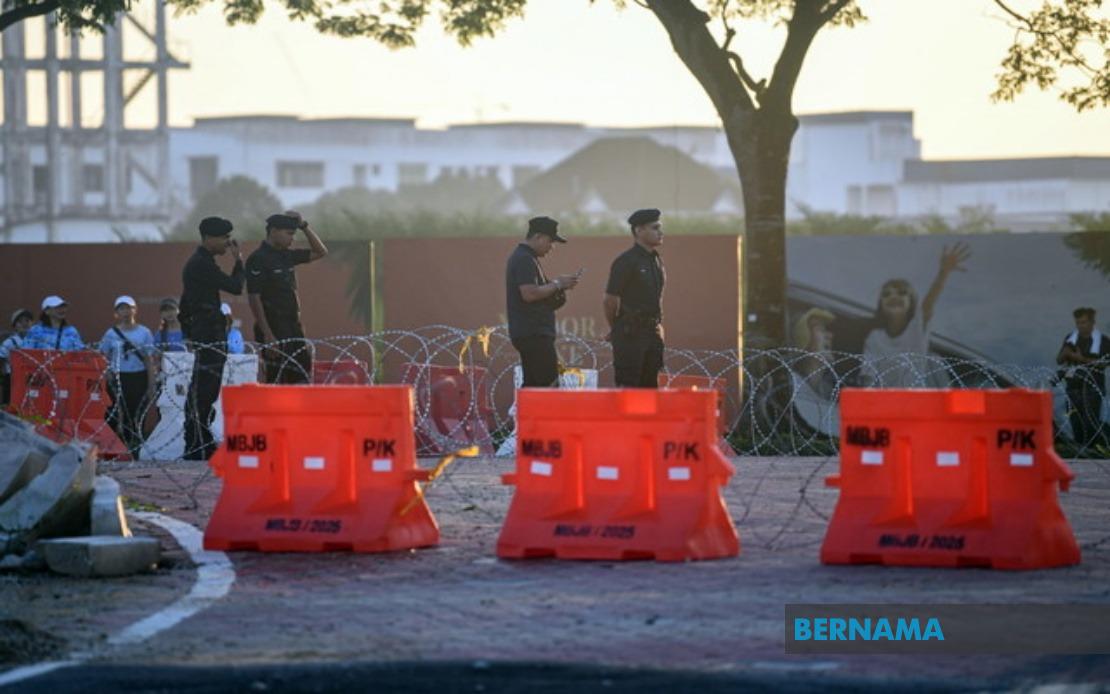
The 16th Johor State Election got off to an organized start on June 27 as nomination proceedings took place at 56 centres throughout the state under favorable meteorological conditions. The benign weather proved instrumental in facilitating the orderly movement of candidates and supporters across nomination centres, which operated from 9am to 10am for the receipt of nomination papers. Election Commission officials had completed their final preparations beforehand, ensuring that administrative procedures ran without significant hiccups at any of the polling venues.
The conduct of nomination day reflected a well-coordinated effort between various state institutions. Security personnel were deployed across all 56 centres to maintain public order and prevent disruptions, a standard precaution that proved particularly important given the anticipated volume of foot traffic and the enthusiastic participation of party loyalists. The presence of armed and law enforcement officers created a measured but professional atmosphere that allowed candidates and their supporters to participate in the democratic process without incident or tension.
Party enthusiasm was evident from the earliest hours, with supporters mustering at several nomination centres as early as 7.30am to demonstrate backing for their respective candidates. This early mobilization underscored the competitive nature of the contest and the organizational readiness of participating political parties. The gathering of supporters ahead of official proceedings is a customary feature of Malaysian electoral cycles, reflecting the grassroots engagement that characterises state-level campaigns.
Weather forecasts issued by the Malaysian Meteorological Department offered largely encouraging news for the nomination process. Most districts across Johor were predicted to experience dry conditions throughout the morning hours, providing optimal circumstances for outdoor queuing and movement between centres. However, MetMalaysia cautioned that afternoon thunderstorms were anticipated in several areas, suggesting that the favourable conditions that characterized the morning were likely to deteriorate as the day progressed. This weather pattern is typical of the southwest monsoon season in Peninsular Malaysia.
The electoral landscape for this state contest encompasses substantial numbers. The Johor State Legislative Assembly comprises 56 seats, making this one of the more consequential state elections on the Malaysian calendar. The decision to dissolve the state assembly on June 1 set in motion a compressed electoral timeline, with the Election Commission scheduling early voting for July 7 and general polling day for July 11. This compressed schedule concentrates political activity and media attention into a relatively brief period.
The electorate participating in this election reflects Johor's demographic composition and civic participation patterns. According to Election Commission data, the state boasts 2,727,926 registered voters overall. This figure comprises 2,703,175 ordinary citizens eligible to vote in their respective constituencies, supplemented by 12,041 military personnel and their spouses, and 12,710 police personnel and their spouses. The inclusion of uniformed service voters, while constituting a relatively small proportion of the total electorate, demonstrates institutional provisions for ensuring that security force members can participate in democratic exercises.
For Malaysian observers and analysts monitoring electoral administration and performance, the smooth conduct of nomination proceedings offers an early indicator of institutional preparedness. State elections serve as important barometers of political sentiment and governmental efficiency, particularly in a federalised system where state-level contests provide opportunities for voters to express views on both state-specific issues and national political trajectories. Johor, as one of Malaysia's largest and most economically significant states, warrants close attention during electoral cycles.
The nomination process itself functions as a critical gateway in Malaysia's electoral system. The requirement for candidates to submit nomination papers during specified windows ensures that only serious contenders proceed to the polling stage and that administrative records contain verified candidate information. The orderliness observed on June 27 suggests that both Election Commission processes and participating political parties maintained discipline in submitting documentation and meeting procedural requirements.
Looking toward the July 11 polling day, the early energy displayed by party supporters during nominations hints at a competitive contest likely to generate substantial voter participation. State elections in Malaysia typically draw respectable turnout levels, particularly when contests are perceived as closely competitive or when incumbent administrations face significant electoral challenges. The enthusiasm evident on nomination day, combined with the organizational capacity demonstrated across 56 centres simultaneously, suggests that election officials are positioned to administer the polling phase professionally.
The significance of the Johor election extends beyond state boundaries, as results may influence calculations within the Perikatan Nasional coalition and Opposition Pact blocs regarding political momentum and strategic positioning ahead of potential federal elections. Johor's electoral outcome could provide insights into voter preferences concerning contemporary national issues and the relative popularity of competing political narratives across Malaysia's second-largest state by population.

