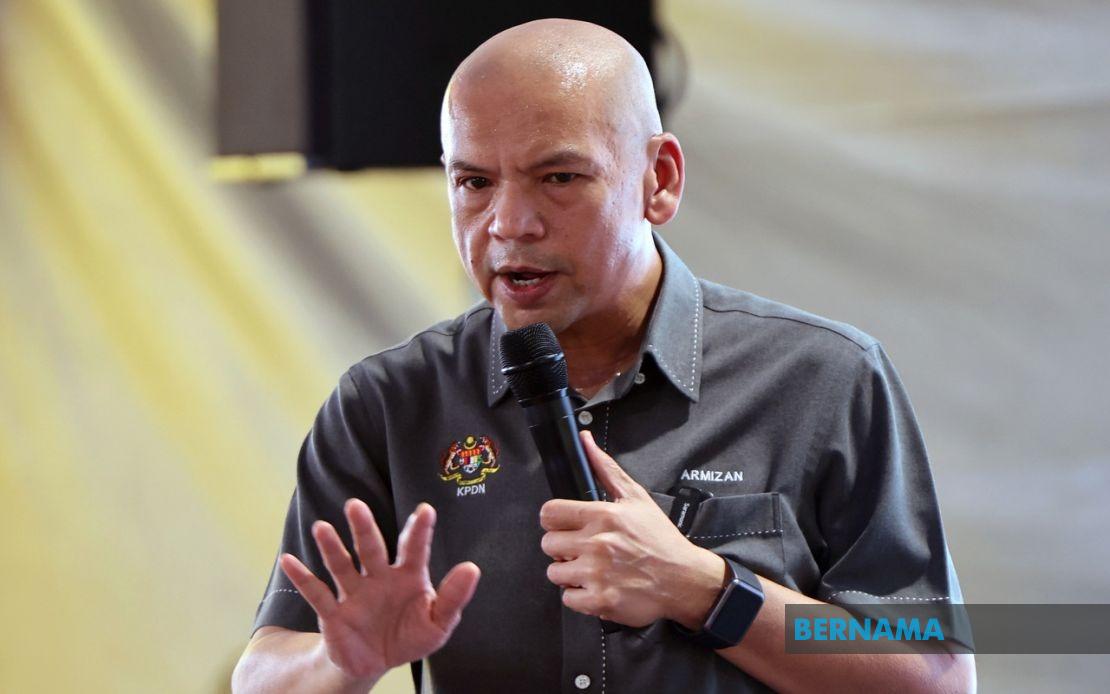
The Malaysian government has extended support to small enterprises and local contractors through a monthly subsidised diesel allocation of 300 litres, delivered via fleet card systems, as part of efforts to cushion operating expenses under the newly implemented targeted diesel subsidy programme across designated states. Domestic Trade and Cost of Living Minister Datuk Armizan Mohd Ali announced this measure at Kampung Sekalong in Menumbok, Sabah, following the start of the targeted scheme on July 1 in Sabah, Sarawak, and the federal territory of Labuan.
The allocation represents a strategic policy intervention designed to capture a segment of the business community previously excluded from formal subsidy assistance pathways. Specifically, the quota applies to diesel-powered vehicles registered as partnership companies or sole proprietorships operating across Malaysia for legitimate commercial purposes. This adjustment acknowledges a gap in the original framework, which had created barriers for micro-entrepreneurs seeking assistance under individual proprietorship structures.
Armizan explained that the cabinet-approved flexibility addresses a longstanding implementation challenge. Micro-entrepreneurs had encountered significant obstacles when attempting to access subsidy benefits through personal registration channels, prompting the ministry to devise an alternative mechanism. The revised approach recognises that many small operators run legitimate businesses through formal company structures yet fell outside the two primary sector classifications originally targeted by the Subsidised Diesel Control System.
The two established pillars of the SKDS framework cover public transport operators and enterprises engaged in goods or consumer necessities transport—sectors deemed essential to national economic function and public welfare. Contractors and small businesses operating general commercial ventures, from construction to services, typically operated beyond these narrowly defined categories despite facing genuine operational pressures from fuel costs. The new 300-litre monthly quota effectively creates a third pathway for these overlooked participants.
Implementation of the subsidy scheme in East Malaysia has prompted the government to consider operational refinements guided by three critical evaluation criteria. The first centres on protecting consumer purchasing power and affordability in the target regions. The second addresses leakage prevention and system integrity, ensuring subsidies reach intended beneficiaries rather than being diverted through black markets or unofficial channels. The third factor encompasses fiscal sustainability, balancing welfare expenditure against the government's budgetary capacity and broader economic priorities.
To strengthen delivery operations in interior regions of Sabah and Sarawak, where geographic dispersion complicates administration, state-level agencies will assume enhanced responsibility for beneficiary registration and eligibility verification. This decentralised approach aims to ensure comprehensive coverage in remote areas where centralised processing mechanisms might prove inaccessible or inefficient. The reliance on local institutional capacity reflects recognition that programme success depends not merely on policy design but on ground-level execution capacity.
Beyond the subsidy announcement, Armizan outlined related development initiatives in Sabah. The government has allocated RM500,000 to implement five infrastructure projects in Kampung Sekalong under the MADANI Foster Village Programme, a government scheme targeting development disparities between urban and rural settlements. The projects encompass construction of a multi-purpose community hall, village road upgrades, culvert construction and repairs, installation of solar-powered street lighting, and development of a village landmark structure.
These rural development interventions carry significance beyond immediate infrastructure enhancement. They reflect broader policy recognition that rural competitiveness and livelihood sustainability require investment in foundational amenities—reliable roads, electricity access, water supply, digital connectivity, and community spaces. The MADANI initiative attempts to systematically bridge rural-urban development gaps by ensuring villages possess essential services necessary for economic participation and improved quality of life.
Project implementation timelines emphasise urgency, with completion scheduled within 2024. This accelerated schedule suggests political commitment to demonstrable delivery, particularly important in constituencies where development momentum has historically lagged. The Papar Member of Parliament designation underscores the localized political significance of such initiatives within Malaysia's competitive electoral landscape.
The Kampung Sekalong projects represent the third phase of the MADANI Foster Village Programme, following earlier implementations in Mukim Kaiduan, Papar in 2024, and Mukim Tikam Batu, Kedah in the preceding year. This staged rollout suggests a deliberate approach to programme institutionalisation, establishing operational templates and building implementation experience before broader scaling.
For Malaysian small business operators and rural communities, these interventions carry tangible implications. The diesel quota directly reduces transport-intensive operating costs for contractors and small firms during a period of global energy volatility. Infrastructure development enhances rural village viability, potentially stemming rural-to-urban migration pressures and improving local economic resilience. However, programme effectiveness ultimately depends on implementation fidelity, preventing leakage, and ensuring that intended beneficiaries can practically access allocated benefits without excessive bureaucratic friction or logistical barriers.
The government's willingness to modify subsidy mechanisms post-launch demonstrates policy flexibility, though questions remain regarding whether 300 litres monthly adequately matches typical small contractor fuel requirements and whether fleet card systems function effectively across geographically dispersed and digitally underdeveloped areas. Success metrics will eventually reveal whether this targeted approach achieves intended outcomes without generating unintended economic distortions or fiscal pressures.

