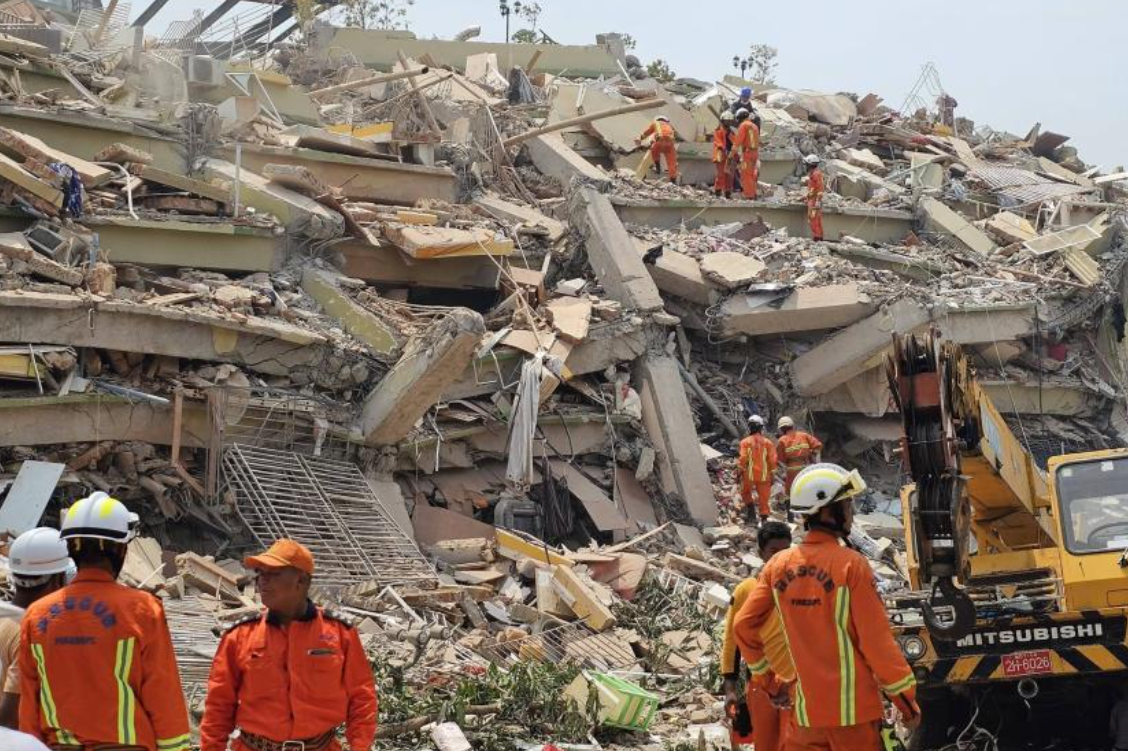
The owner of Sky Villa Condominium has been sentenced to five years imprisonment with hard labour by the Aungmyaythazan Township Court in connection with the devastating collapse of the building during the Mandalay earthquake. U Naing Htun Lin, who owns the eleven-storey residential complex situated on 60th Street between 21st and 22nd Streets in Aungmyaythazan Township, received the penalty on June 23 under Section 304-A of the Penal Code, which covers causing death by negligence.
The legal proceedings against U Naing Htun Lin commenced when charges were formally filed on February 10 at the Aungmyaythazan Township Court. Initially, the defendant was granted bail and permitted to remain free during the trial process. This arrangement changed dramatically on March 17, when the court revoked his bail and ordered him remanded in custody, signalling a shift in the judicial assessment of the case's gravity and the circumstances surrounding the accused.
The investigation that led to the charges was conducted by the No. (1) Area Police Station in Aungmyaythazan Township, with the case eventually being brought before the township court. U Zaw Moe Aung, a staff officer from the Special Investigation Department, represented the prosecution throughout the proceedings. The charge of causing death through criminal negligence carries significant legal weight in Myanmar's justice system, particularly in cases involving structural failures that result in mass casualties.
The Sky Villa collapse stands as one of the most catastrophic building failures in the Mandalay earthquake disaster. More than 200 bodies were recovered from the rubble of the condominium, making it among the deadliest individual building collapses triggered by the seismic event. For Malaysian observers and regional analysts, this case underscores the critical importance of building code enforcement and contractor accountability in earthquake-prone regions across Southeast Asia, particularly given Myanmar's own seismic vulnerability and rapid urbanisation.
U Naing Htun Lin is the managing director of NTL Construction Company, the firm that built the Sky Villa condominium. This dual role—as both owner and developer—has placed particular scrutiny on the quality of construction and adherence to building standards. The involvement of the developer in ownership decisions raises questions about governance structures and oversight mechanisms that should exist between construction companies, local authorities, and regulatory bodies responsible for ensuring public safety.
Following the collapse, U Naing Htun Lin's wife, Daw Thet Thet Khine, participated in a series of three commemorative ceremonies held at a monastery pavilion on 19th Street in the township. These events represented an attempt at reconciliation and acknowledgement of responsibility toward the bereaved families. During the ceremonies, the group issued formal apologies to the victims' families and provided compensation amounting to 10 million kyats per deceased person. While such gestures acknowledge the tragedy, they do not diminish the legal accountability that the court system has now formally determined.
The five-year sentence, though handed down in June, is not final. Both the prosecution and defence teams have initiated appeal and revision proceedings challenging the verdict. The Aungmyaythazan District Court has requested the case file for review under Criminal Revision Case No. 39Ka/2026, indicating that higher judicial scrutiny is ongoing. This appellate process reflects the complexity of determining appropriate penalties in disaster-related negligence cases, where questions arise about individual culpability amid systemic failures.
For the broader Southeast Asian context, the Sky Villa case serves as a cautionary illustration of how rapid urban development can outpace regulatory capacity and enforcement mechanisms. Myanmar, like many regional economies experiencing swift urbanisation, faces challenges in maintaining consistent building standards across construction projects. The case demonstrates that even where local authorities and courts attempt to establish accountability, questions persist about whether individual punishment adequately addresses underlying systemic vulnerabilities in construction oversight and disaster preparedness.
The implications extend to Malaysia and other ASEAN nations similarly prone to natural disasters. The enforcement of building codes, regular structural inspections, and the establishment of clear liability frameworks for developers become increasingly important as cities expand. The Sky Villa case illustrates that without robust regulatory frameworks and consistent application of penalties, developers and contractors may prioritise cost-saving measures over safety compliance, with tragic consequences for residents and communities.
The ongoing legal proceedings surrounding this case will likely influence how Myanmar's judiciary approaches future disaster-related negligence cases. The sentence, whether upheld or modified on appeal, will establish precedent regarding the gravity with which courts view failures in construction quality that lead to mass casualties. For regional policymakers, the case reinforces the necessity of strengthening building regulations, enhancing inspection protocols, and ensuring swift and proportionate accountability when failures occur.

