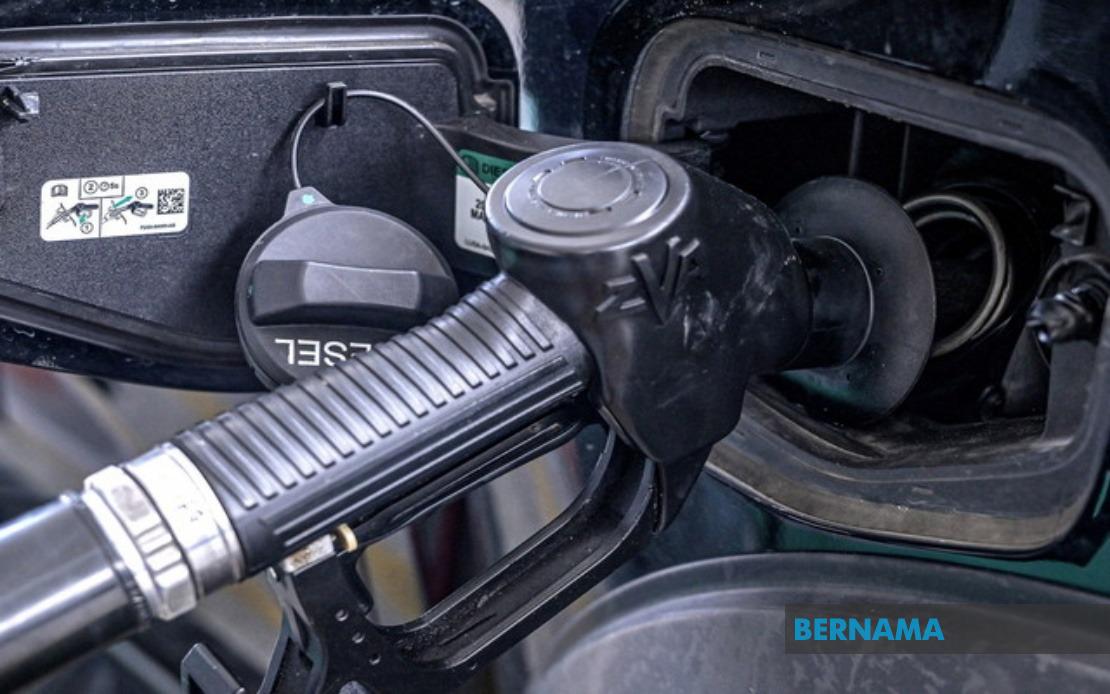
The Subsidised Diesel Control System (SKDS) programme has widened its reach to encompass business-registered private vehicles, with the Domestic Trade and Cost of Living Ministry announcing today that applications are now being accepted. The expansion, announced by Datuk Armizan Mohd Ali, marks another step in the government's effort to ease operational costs for Malaysia's small business community by extending fuel subsidy access beyond the commercial transport sectors previously covered.
Under this latest phase of SKDS expansion, eligible applicants will begin receiving diesel subsidies from July 15 onwards, provided their applications are approved and they receive the requisite fleet card. The timing of the initiative aligns with the government's broader strategy to cushion businesses against volatile fuel prices while maintaining fiscal discipline through a controlled subsidy mechanism rather than blanket price controls.
The eligibility criteria have been carefully designed to target micro and small enterprises operating within specific legal structures. Vehicles must be formally registered with the Road Transport Department's MySikap system under the Company Private Use classification, coded as AE. This requirement ensures that only genuine business vehicles—rather than privately-owned cars falsely claiming commercial status—access the subsidy. The specification of jeeps and pickup trucks suggests the policy targets businesses in logistics, agriculture, construction, and related sectors where such vehicles are integral to operations.
Beyond vehicle registration requirements, applicants must satisfy additional conditions related to business formation and registration. The business entity itself must be registered either as a sole proprietorship or partnership structure with the Companies Commission of Malaysia, or with relevant local authorities in Sabah and Sarawak. This dual-registration approach reflects Malaysia's federal structure while ensuring only formally recognized business entities benefit, closing potential loopholes where informal or unregistered operators might otherwise gain access to subsidised fuel.
The expansion of SKDS builds upon earlier phases that brought public land transport operators and consumer goods freight operators into the subsidy regime. The progressive rollout suggests the government is learning from initial implementation experiences before broadening access, a measured approach that allows for systems monitoring and fraud prevention mechanisms to mature before reaching additional categories. The inclusion of private vehicle categories now represents a significant enlargement of the programme's scope and budgetary implications.
Applications are being processed through the MySubsidi online portal, positioning this initiative as part of Malaysia's broader digital transformation of government services. Prospective beneficiaries are being encouraged to apply promptly, likely because the government intends to establish a defined beneficiary base before the July 15 subsidy commencement date. The digital application channel also creates an audit trail and reduces opportunities for corruption compared to manual submission processes.
For Malaysia's micro and small business sector—which remains economically significant despite rapid industrialization—fuel costs represent a material operational expense. By targeting this demographic specifically, the SKDS programme acknowledges the sector's vulnerability to energy price shocks while recognizing their contribution to employment and economic activity at the grassroots level. The restriction to sole proprietorships and partnerships, rather than extending to limited companies, reflects a deliberate policy choice to prioritize smaller, less-capitalized operators who face greater difficulties absorbing cost increases.
The programme's evolution reflects broader regional economic pressures. Across Southeast Asia, governments have grappled with subsidy policies in recent years, balancing inflation concerns against industry competitiveness and the political economy of price controls. Malaysia's tiered SKDS approach—rolling out to different sectors progressively rather than implementing universal diesel price ceilings—offers a more fiscally sustainable model than wholesale price controls, though it requires robust administration to prevent leakage and misuse.
For small businesses contemplating expansion or asset acquisition, the SKDS availability may influence fleet decisions, potentially making jeeps and pickup trucks more economically viable than previously calculated. This indirect industrial policy effect could shape supply chains and logistics practices across the economy, though quantifying such impacts would require sustained monitoring beyond the policy's initial rollout phase.
The initiative also signals the government's recognition that business competitiveness in manufacturing-dependent economies hinges partly on operational cost management. By reducing fuel expenses for registered commercial operators, SKDS effectively subsidizes production costs for downstream businesses reliant on freight and logistics services, creating ripple effects across supply chains. The policy thus represents an implicit subsidy not merely to vehicle operators but to the broader production ecosystem dependent on their services.
Small business owners seeking to participate should prioritize verifying their vehicle's registration status and business entity structure before submitting applications. The MySubsidi portal's opening indicates the government is prepared to process applications immediately, and early submissions may advantage applicants given the administrative workload involved in vetting applications before the July 15 implementation date. Any uncertainty regarding eligibility should be clarified promptly with relevant authorities to avoid application rejections or delays.

