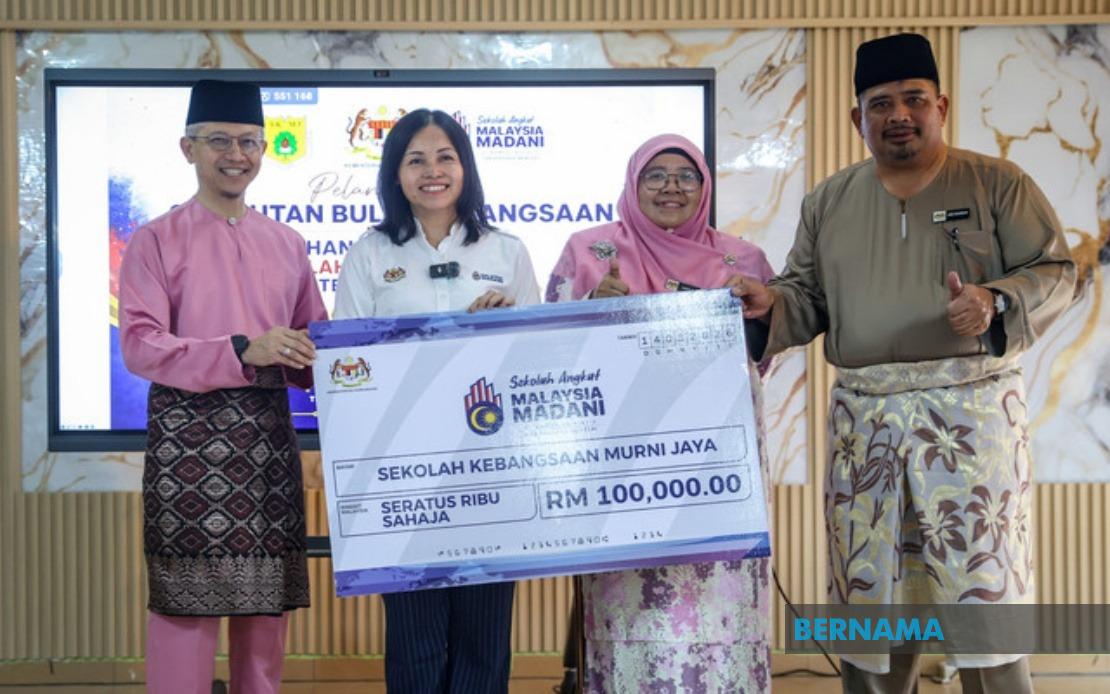
Sekolah Kebangsaan Murni Jaya in Layang-Layang, Kulai, has secured RM100,000 in government funding as part of the Ministry of Communications' MADANI Adopted School initiative, marking a significant boost to the institution's capability and learning environment. Deputy Communications Minister Teo Nie Ching handed over the allocation at a funding ceremony held at the school, signalling the ministry's commitment to modernising educational facilities across the nation.
The allocation represents a strategic investment in digital infrastructure and campus amenities designed to elevate teaching standards and student engagement. The funds will be deployed across multiple priority areas, including the installation of four new school signboards that will enhance campus visibility and identity. The ministry has allocated substantial resources for digital learning, acquiring two interactive Smartboards for deployment in both the school hall and resource centre, alongside a suite of ten iPads earmarked specifically for the computer laboratory to facilitate technology-enhanced instruction.
Beyond computing resources, the funding supports a comprehensive facility refresh aimed at improving the physical learning environment. Lighting systems throughout the campus will undergo systematic upgrades to ensure adequate illumination in classrooms and common areas, while the school hall will benefit from aesthetic enhancements that create a more welcoming venue for assemblies, performances, and community gatherings. The installation of a new public address system will strengthen the school's capacity for effective communication during daily operations and special events.
Climate control represents another critical component of the modernisation effort, with two air-conditioning units being procured to ensure comfort in key facilities during Malaysia's tropical climate. The school canteen—a vital community space—will receive an additional allocation of RM20,000 to purchase 19 new tables and chairs, directly improving the dining experience and capacity for students and staff during meal periods.
Teo emphasised the ministry's ambition to embed science, technology, engineering, and mathematics instruction throughout the secondary education ecosystem. To this end, the funding includes a Robot Sumo set specifically designed for STEM and vocational education and training (VVET) activities. This equipment positions SK Murni Jaya to develop students' problem-solving capabilities and hands-on technical skills, aligning with Malaysia's broader agenda to nurture a digitally-literate and technologically-competent workforce.
The implementation timeline reflects coordinated planning between the ministry and school leadership. SK Murni Jaya has been tasked with completing all facility upgrades by October, providing a focused deadline for contractors and administrators to execute the various projects. This compressed schedule underscores the ministry's expectation of operational efficiency and demonstrates confidence in the school's project management capacity.
For the broader cohort of schools participating in the MADANI Adopted School programme, Teo outlined a standardised compliance framework requiring all recipient institutions to achieve full implementation of their funded projects within the calendar year. This uniform deadline aligns with Ministry of Finance guidelines governing the deployment of government capital allocations, ensuring transparent and accountable use of taxpayer resources across all participating schools nationwide.
The MADANI Adopted School initiative reflects a deliberate policy pivot toward addressing infrastructure deficits in the public education sector. By targeting facility upgrades, digital resources, and specialised equipment, the programme tackles documented gaps in learning infrastructure that have historically constrained pedagogical innovation and student achievement in Malaysian schools. The emphasis on STEM education and vocational training capabilities recognises the evolving demands of Malaysia's economy and the imperative to equip students with competencies aligned to emerging job markets.
SK Murni Jaya's selection as a MADANI Adopted School signals recognition of the institution's strategic importance within Kulai's educational landscape and its potential to serve as a catalyst for quality improvement. The investment in physical infrastructure, digital tools, and specialised equipment positions the school to enhance teaching quality and broaden the experiential learning opportunities available to its student population. For Kulai residents, the modernisation effort represents tangible commitment to elevating local educational standards and ensuring that children in this district have access to facilities and resources comparable to schools in more developed areas.
The timing of this allocation coincides with broader government emphasis on education as a foundational pillar of national development. By channelling resources toward schools like SK Murni Jaya, the Ministry of Communications and its parent government underscore the conviction that investing in contemporary learning environments, integrated technology, and hands-on technical education generates multiplier effects across individual student trajectories and community prosperity. The RM100,000 investment, while modest in absolute terms, carries disproportionate significance for a school serving Kulai's families and reflects the incremental but cumulative approach through which Malaysia is attempting to upgrade its educational infrastructure systematically.

