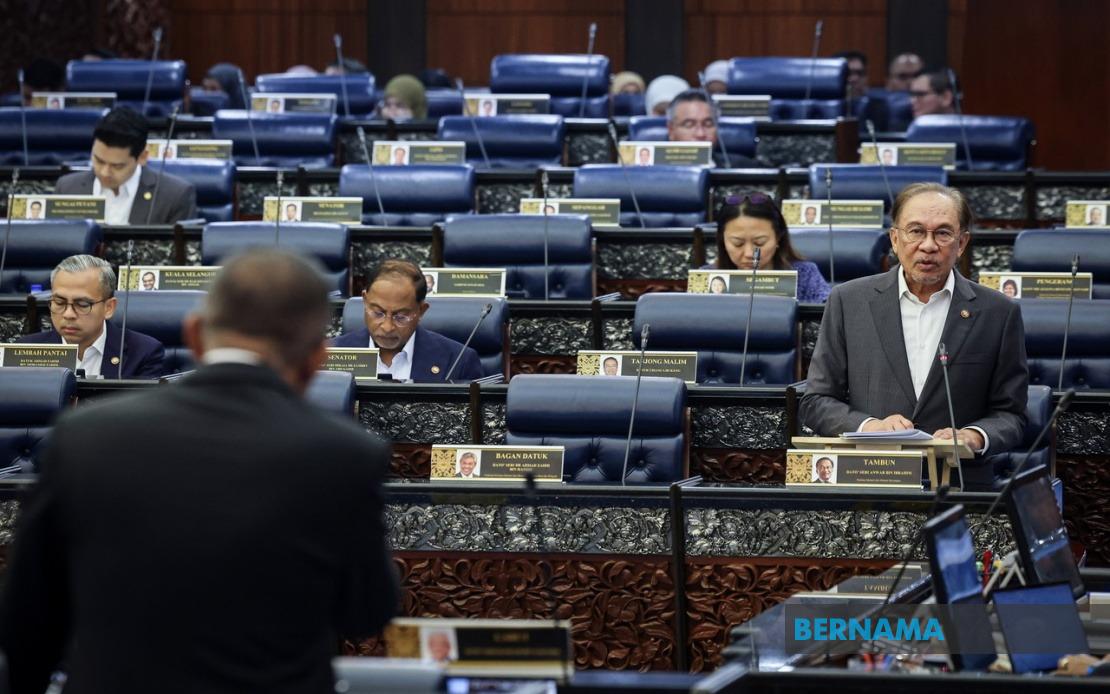
Malaysia's Small Business Financing Company (Syarikat Jaminan Pembiayaan Perniagaan, SJPP) has approved RM4.9 billion in financing facilities for more than 6,000 micro, small and medium enterprises during the first six months of 2026. Prime Minister Datuk Seri Anwar Ibrahim made the announcement during parliamentary questioning on Monday, emphasizing the MADANI government's commitment to addressing financing barriers that continue to hamper enterprise development across the nation.
SJPP, a subsidiary wholly owned by the Minister of Finance (Incorporated), functions as a critical intermediary in Malaysia's small business support ecosystem. As both Prime Minister and Finance Minister, Anwar highlighted how the latest disbursements reflect coordinated efforts to reduce friction in the lending landscape, where traditional banks have historically imposed stringent collateral requirements that exclude many smaller operators from conventional credit channels. The scale of approvals demonstrates the government's intention to treat financing accessibility as a foundational economic policy priority rather than a peripheral initiative.
The context for this announcement is particularly significant given persistent global economic headwinds and their cascading effects on domestic entrepreneurship. Legislators representing constituencies like Ipoh Timor have raised concerns about the precarious position of MSME operators navigating currency fluctuations, supply chain disruptions, and rising operational expenses. Anwar's response positioned the RM4.9 billion commitment within a much larger financial architecture, revealing the government's multi-layered approach to sustaining the small business sector through uncertain economic cycles.
Within the broader policy framework, Malaysia has mobilized over RM15 billion in combined loan and financing guarantee products specifically designed to fortify working capital availability for small enterprises. This quantum of support underscores recognition that MSMEs function as employment generators and innovation incubators within the economy, warranting protective interventions during volatile periods. The allocation demonstrates the government's willingness to deploy fiscal resources strategically rather than rely solely on market mechanisms to distribute credit to smaller operators.
A particularly noteworthy component of this initiative targets Bumiputera-owned businesses, with RM5 billion explicitly reserved for enterprises led by indigenous entrepreneurs. This preferential allocation reflects longstanding policy commitments to ensure that wealth-building opportunities through business ownership remain accessible across Malaysia's diverse population groups. The ringfencing of capital specifically for Bumiputera ventures acknowledges historical disparities in asset accumulation and business formation rates, positioning targeted financing as a corrective instrument within Malaysia's socioeconomic development agenda.
The administrative architecture underlying these approvals requires operational coordination across multiple government agencies and financial intermediaries. SJPP's capacity to process and disburse nearly RM5 billion across thousands of separate transactions within a six-month window reflects institutional maturation and streamlined procedures designed to minimize bureaucratic delays. For enterprises seeking to expand operations, acquire equipment, or navigate temporary cash-flow constraints, the availability of government-backed financing reduces risk premiums that traditional lenders would otherwise demand, thereby lowering the effective cost of capital.
Malaysia's MSME ecosystem comprises roughly 1.7 million registered businesses, predominantly concentrated in retail, services, and light manufacturing sectors. These enterprises collectively employ over five million workers and contribute significantly to GDP and tax revenue. However, financing constraints remain one of the most frequently cited obstacles to expansion, innovation, and competitiveness. By mobilizing RM15 billion in broader support and channeling RM4.9 billion through SJPP in a single half-year period, the government signals determination to systematically dismantle financial barriers that impede enterprise growth.
Regional context adds further dimension to this initiative. Across Southeast Asia, governments are competing to attract entrepreneurial talent and investment capital through increasingly sophisticated small business support ecosystems. Thailand, Indonesia, and Vietnam have similarly expanded state-backed financing programs to retain domestic entrepreneurship and prevent capital and talent flight. Malaysia's commitment to MSME financing positions the country competitively within this regional landscape, potentially making it a more attractive destination for business formation and expansion compared to peers offering comparatively anemic support mechanisms.
The financing approvals also intersect with Malaysia's broader digital economy ambitions. Many approved MSMEs are increasingly engaged in e-commerce, digital service delivery, and technology-enabled business models. Government financing that reaches these emerging sectors reinforces national efforts to accelerate digital transformation, enhance productivity through technology adoption, and integrate Malaysian enterprises into higher-value supply chains. Capital availability that specifically extends to tech-forward SMEs can catalyze sectoral productivity improvements with multiplier effects across the broader economy.
Implementation sustainability remains a critical question for policymakers. Past MSME financing programs have encountered challenges including high default rates, inadequate business planning among recipients, and insufficient follow-up support beyond initial loan disbursement. For the RM4.9 billion to generate meaningful economic impact, SJPP and partner institutions must combine credit accessibility with technical assistance, mentoring, and monitoring frameworks that enhance repayment compliance and business viability. Anecdotal evidence from previous programs suggests that financing alone, without complementary business development support, yields suboptimal outcomes.
Looking forward, the trajectory of SJPP approvals and broader government financing commitments will serve as important indicators of MADANI government prioritization. Economic downturns often prompt budget retrenchment that disproportionately affects discretionary spending categories including MSME support programs. Sustaining financing availability through economic cycles requires political will and adequate fiscal space. The current announcement, therefore, should be interpreted not merely as a statistical achievement but as a policy commitment requiring ongoing resource allocation and institutional focus to deliver transformative impact on small enterprise sustainability and growth.

