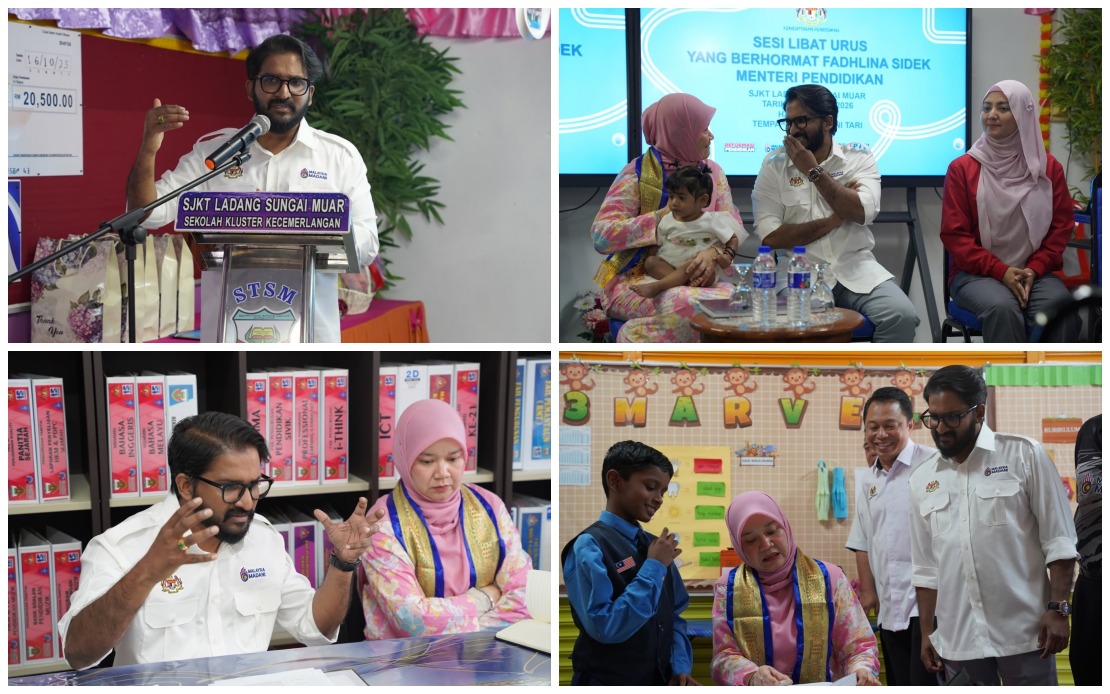
The long-awaited relocation of Sekolah Jenis Kebangsaan Tamil (SJKT) Ladang Sungai Muar in Segamat has progressed to a critical juncture, with the project now focused on land acquisition and ownership matters. Officials confirmed during an engagement session that the administrative framework is being developed through coordination between Segamat Member of Parliament R. Yuneswaran and the Segamat Land and Mines Office, signalling tangible momentum on an issue that has drawn sustained attention from state and federal stakeholders.
Education Minister Fadhlina Sidek's attendance at the engagement session underscores the federal government's commitment to resolving the relocation challenge. Her presence at the July 3 gathering in Segamat served as a public affirmation that the matter has secured high-level endorsement within the education establishment. Yuneswaran acknowledged this backing as a validation of years of advocacy, emphasising that ministerial involvement demonstrates the gravity with which authorities treat the school's predicament.
The Tamil vernacular school has been flagged repeatedly as requiring relocation due to multiple compounding factors. Safety vulnerabilities at the current site have been the primary concern driving calls for change, with the school's distance from the population it serves creating additional complications for student accessibility and community engagement. Infrastructure deficiencies—ranging from basic facilities to educational amenities—have further reinforced the case for establishing the institution in a more appropriate location. These concerns have not emerged suddenly but rather represent accumulated grievances expressed by educators, parents, and administrators over an extended period.
Since his election to Parliament in the 2022 general elections, Yuneswaran has positioned the school's relocation as a personal priority, leveraging his legislative platform to maintain pressure on relevant government agencies. His sustained engagement with the issue reflects a broader pattern among Malaysian elected representatives who champion constituency-specific projects requiring inter-departmental coordination. The Segamat MP's visibility on this matter has helped keep the proposal within the political spotlight, preventing it from fading into bureaucratic obscurity.
The transition to the land ownership phase represents a distinct developmental stage in the relocation process. Before construction can commence and a new facility can be established, the government must secure appropriate land through either purchase or allocation from existing state reserves. The involvement of the Segamat Land and Mines Office indicates that initial surveying, site assessment, and title verification procedures are underway. This phase typically involves substantial administrative groundwork, including financial assessments and legal documentation, which can span several months depending on local conditions and availability of suitable sites.
The MADANI Government's educational reform agenda has positioned school infrastructure improvement as a priority area for resource allocation. Relocating institutions from suboptimal environments to purpose-built or refurbished facilities aligns with broader policy objectives to enhance educational standards and create environments conducive to learning. For the Tamil-language education sector specifically, demonstrating tangible investment through infrastructure development carries symbolic significance beyond the immediate functional benefits, validating the community's place within Malaysia's plural education landscape.
Segamat, located in northern Johor, represents a district where Tamil-speaking communities maintain significant demographic presence. The school serves families across multiple villages and settlements, making relocation logistically complex yet educationally important. A new location closer to population centres could reduce daily commute burdens on students and facilitate greater parental participation in school activities. Improved accessibility would also strengthen the institution's integration within the broader Segamat community fabric.
The engagement session format—bringing together the MP, Education Ministry representatives, and school stakeholders—reflects modern governance practices emphasizing consultation and transparency. Such forums allow officials to hear directly from educators and parents regarding their expectations and concerns, while simultaneously communicating government progress on promised initiatives. For a school community that has awaited resolution of relocation questions for years, such visible engagement provides assurance that the matter remains active rather than shelved.
The path forward remains subject to procedural timelines and resource availability. Land identification and acquisition can encounter unexpected complications, from competing claims to environmental considerations requiring remediation. Once the land matter is resolved, project design, cost estimation, and funding allocation must follow. Nevertheless, the advancement to the land ownership stage signals meaningful progression rather than merely rhetorical commitment. The coordination between federal education authorities and state land administration indicates institutional alignment necessary for projects requiring resources and jurisdiction across governmental silos.
For Malaysian Tamil-language education stakeholders broadly, the SJKT Ladang Sungai Muar case demonstrates both the challenges facing vernacular schools and the possibility of government responsiveness when elected representatives champion specific institutions. The relocation project, if successfully completed, would provide a concrete example of state investment in improving conditions for minority-language education, potentially influencing broader policy frameworks and budget allocation discussions affecting other Tamil schools facing similar difficulties.

