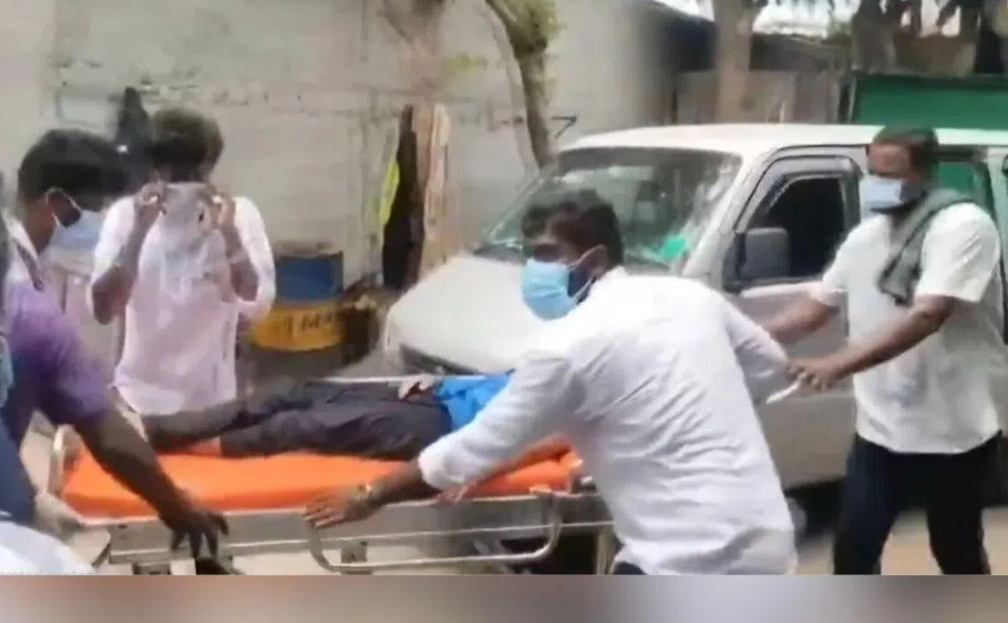
A catastrophic industrial accident unfolded at a seafood export processing facility near Periyapalayam village in Tamil Nadu's Thiruvallur district on Sunday, claiming the lives of at least six workers and sending dozens more to hospital. The incident, attributed to a suspected ammonia leak from the plant's refrigeration or processing systems, underscores persistent safety concerns at manufacturing facilities across South Asia that employ large populations of migrant labourers.
The facility housed approximately 120 migrant workers at the time of the incident, a demographic composition typical of India's seafood processing sector. The workforce comprised women and men recruited from states including Assam, Odisha and Jharkhand, reflecting the geographical reach of labour supply chains that feed India's thriving seafood export industry. These workers, often far from home and unfamiliar with local support networks, face heightened vulnerability during industrial emergencies.
The ammonia discharge spread rapidly through sections of the processing unit, overwhelming workers with minimal warning. Those exposed experienced acute physiological distress characterised by severe respiratory impairment, vertigo and mucous membrane irritation. The severity of exposure manifested in alarming symptoms including oral and nasal haemorrhaging, indicators of the gas concentration's toxicity. Panic consumed the workplace as staff attempted to evacuate, with some workers collapsing from inhalation before reaching safety.
Emergency services mobilised swiftly, with police and local authorities coordinating rescue efforts and transporting casualties to regional medical facilities. Hospital admission records reveal that several victims remain in serious condition, with ongoing medical intervention required. The rapid response likely prevented an even higher death toll, though the incident's trajectory from initial exposure to mass casualty event unfolded with alarming speed.
Chief Minister C. Joseph Vijay responded by issuing directives for comprehensive medical support to all affected individuals. Recognition of the broader systemic implications prompted him to establish a three-member inquiry committee tasked with forensic examination of the accident's root causes. The panel received explicit instruction to complete a detailed investigative report within 24 hours, a condensed timeline reflecting the urgency with which state authorities view the incident.
The forthcoming inquiry will examine multiple dimensions of operational safety. Investigators must scrutinise the adequacy of safety protocols governing hazardous gas handling, the frequency and quality of maintenance procedures applied to refrigeration apparatus, and potential regulatory lapses that may have created conditions enabling the accident. Questions surrounding worker training, emergency response preparedness and hazard communication systems will necessarily form part of the analysis.
Police have initiated formal proceedings by registering a criminal case and commencing preliminary investigations. Authorities are simultaneously evaluating whether the facility's management violated established industrial safety standards and whether such violations materially contributed to the disaster. This dual-track investigative approach—criminal inquiry alongside administrative safety review—aims to establish both culpability and systemic failures.
The incident resonates across Southeast Asia's seafood processing sector, where similar labour-intensive facilities operate with varying standards of occupational safety compliance. Malaysia's own seafood processing industry, concentrated in coastal states and employing significant numbers of migrant workers, faces comparable operational risks. Foreign workers in comparable Malaysian facilities, whilst benefiting from more developed regulatory frameworks than those in Tamil Nadu, remain susceptible to industrial accidents where safety oversight proves inadequate.
Ammonia's widespread use in industrial refrigeration systems—essential infrastructure for cold-chain seafood processing—means that leak incidents constitute an inherent occupational hazard. The lethal potential of ammonia exposure at high concentrations makes this particular gas especially concerning in densely occupied processing environments where rapid evacuation may prove difficult. The Tamil Nadu incident illustrates how industrial infrastructure designed primarily for efficiency rather than worker protection can transform from productive asset to death trap within moments.
Broader implications extend to questions of labour protection and regulatory enforcement across Asia's food processing sector. Migrant workers, often operating across state or national borders and lacking established community connections at destination locations, frequently experience systematic disadvantages in workplace safety advocacy. They possess limited leverage to demand improved conditions and may lack awareness of their legal protections, particularly when employed through subcontracting arrangements that obscure employer accountability.
The trajectory of this inquiry will signal whether Tamil Nadu's regulatory authorities can meaningfully address systemic safety failures or whether the incident represents merely another tragedy absorbed within operating margins of a high-turnover industry. Whether the investigation identifies negligence by facility management, insufficient state oversight, or combinations thereof will determine the scale and character of remedial measures. International attention to such incidents increasingly pressures governments and companies to improve standards, particularly when incidents claim multiple lives within single events.
For Malaysian policymakers and industry participants engaged in food processing, the Tamil Nadu incident provides cautionary perspective on the consequences of prioritising production efficiency over occupational safety infrastructure. Labour-intensive manufacturing sectors within the region would benefit from regarding such catastrophes not as isolated misfortunes but as signals of systemic vulnerabilities demanding preemptive attention before comparable incidents impact their own workforces.

