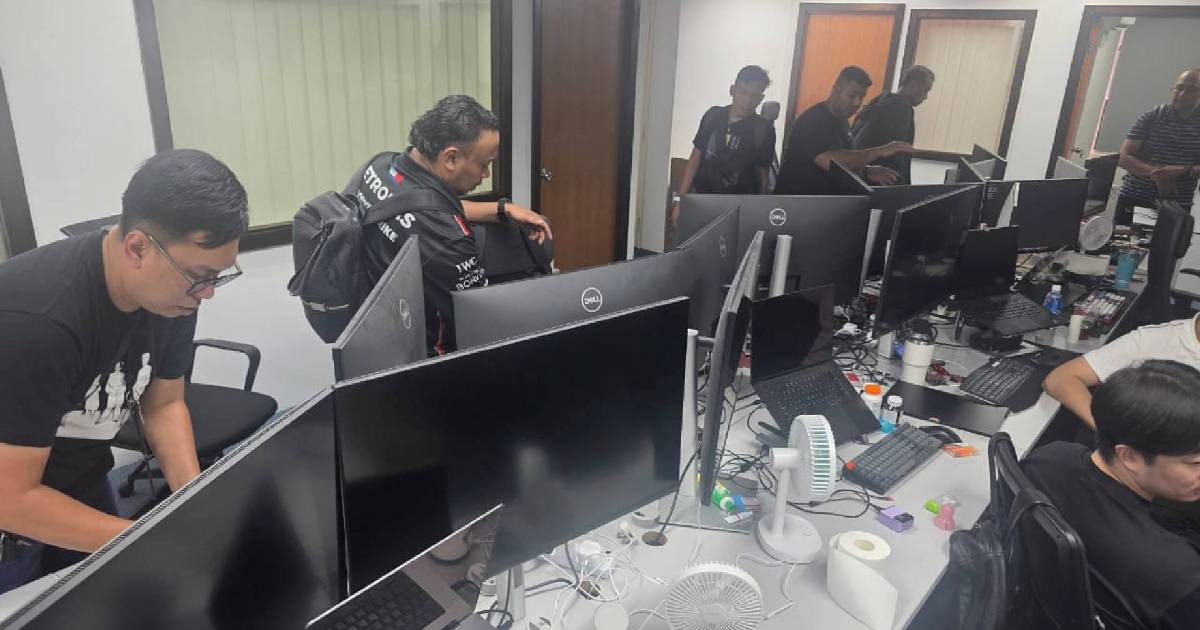
Authorities in Kuala Lumpur have dismantled an illegal World Cup football betting operation following a coordinated police raid that resulted in the detention of 11 suspects, six of whom are South Korean nationals. The enforcement action targeted a call centre facility situated within an office complex in Taman Desa, Brickfields, and marks another significant crackdown on organised illegal gambling networks operating across the city.
The operation represents ongoing efforts by Malaysian law enforcement to combat organised sports gambling, which remains a persistent challenge in urban centres. Illegal betting syndicates typically operate through call centre models, employing sophisticated communication systems to connect clients with facilitators who place wagers on international football matches. These networks have been a particular focus for authorities given their scale, cross-border connections, and the volume of illicit funds they generate.
The involvement of South Korean nationals in the syndicate highlights the increasingly transnational character of illegal gambling operations in Southeast Asia. International syndicates often recruit foreign operatives for specific roles, leveraging language skills, technical expertise, and established networks within their home countries to attract clientele and process transactions. The presence of Korean nationals suggests this particular operation may have had significant customer bases in South Korea as well as among Korean expatriate communities across Malaysia and the region.
Taman Desa's location in Brickfields, a commercially mixed area in central Kuala Lumpur, provides the kind of inconspicuous urban setting that illegal betting operations favour. Office buildings housing multiple tenants and serviced offices offer operational cover, with betting activities concealed among legitimate business traffic. Such locations allow syndicates to maintain relatively low profiles while managing high call volumes during major sporting events, particularly global tournaments like the World Cup which generate unprecedented betting demand.
The timing of this raid reflects intensified monitoring during international football events. World Cup tournaments create peak activity periods for illegal betting networks, as punters increase wager frequency and volume. Law enforcement agencies often coordinate enhanced surveillance and intelligence-gathering operations during these periods, using financial tracking, telecommunications monitoring, and informant networks to identify and locate active betting centres.
The arrest of 11 individuals simultaneously suggests coordinated intelligence work and surveillance operations preceding the raid. Police operations against these syndicates typically require weeks of preparation, involving tracking financial flows, monitoring communications, identifying operational locations, and building sufficient evidence for prosecution. The scale of arrests indicates this was likely a significant operation with multiple layers of management and operational staff.
Illegal sports betting remains deeply embedded in Malaysian society despite regulatory frameworks prohibiting it. Licensed operators like Magnum 4D and others offer legal alternatives, yet underground syndicates continue expanding through superior odds, credit facilities, and direct personal relationships. Many customers prefer underground networks for convenience and anonymity, while the syndicates themselves are attracted by profit margins far exceeding those of legitimate operators, and the absence of tax obligations and regulatory compliance costs.
The international dimension of these operations complicates enforcement efforts considerably. Syndicates operate across multiple jurisdictions, using sophisticated systems to obscure financial trails through money laundering networks. The integration of South Korean elements introduces additional complexity, as coordination with foreign law enforcement becomes necessary for comprehensive investigations. Previous operations have revealed how Korean syndicates work closely with Malaysian and Singaporean networks, creating integrated regional gambling markets.
Successful prosecutions following such raids remain inconsistent, particularly when foreign nationals are involved. Deportation frequently occurs after minimal legal proceedings, allowing the broader organisational structures to reconstitute themselves with replacement operatives. This revolving-door pattern suggests that targeting individual call centres, while operationally significant, addresses symptoms rather than addressing the underlying economic incentives that sustain these networks.
For Malaysian authorities, this raid underscores the persistent cat-and-mouse dynamic that characterises illegal gambling enforcement. While major operations occasionally get disrupted, new syndicates routinely emerge elsewhere, often adopting more sophisticated concealment methods. The transnational nature of modern organised gambling requires sustained intelligence capabilities, international cooperation frameworks, and prosecution strategies sophisticated enough to address financial engineering and operational compartmentalisation.
The incident also reflects broader regional patterns, with similar raids occurring regularly across Singapore, Thailand, and other Southeast Asian jurisdictions. However, the absence of coordinated regional enforcement mechanisms means that disrupting one network often simply displaces operations to neighbouring countries rather than eliminating them. This mobility advantage enjoyed by criminal syndicates, combined with limited resources available to individual national authorities, contributes to the persistence of these operations despite consistent police efforts.

