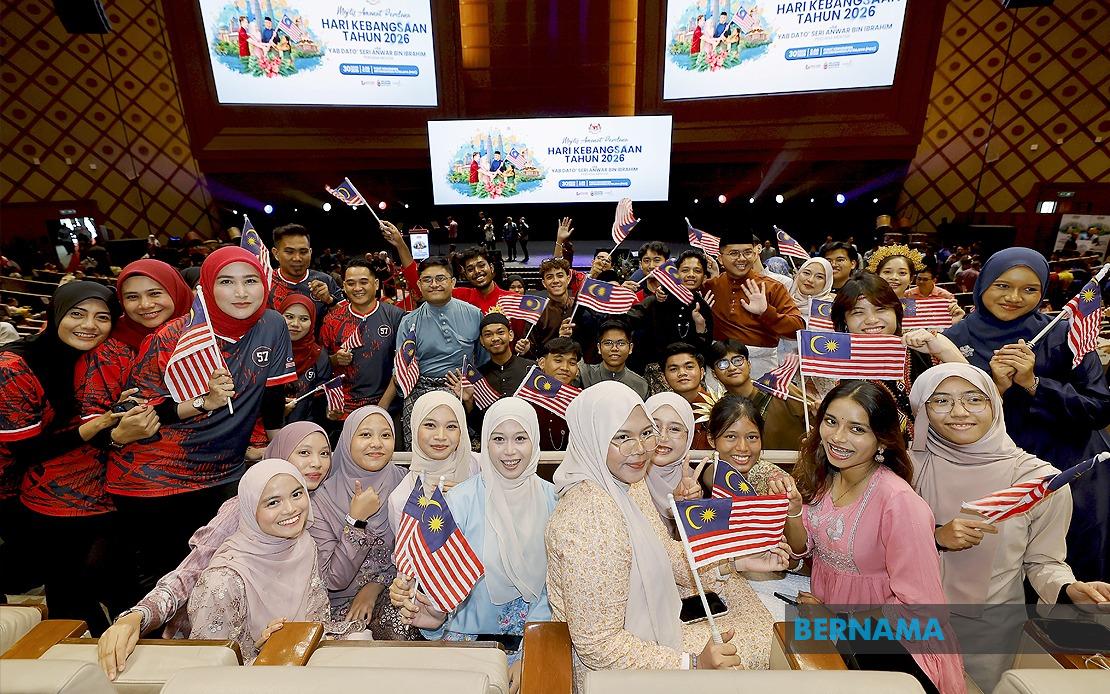
Prime Minister Datuk Seri Anwar Ibrahim has unveiled six key policy measures during his National Day address, signalling the government's commitment to distributing economic support across diverse population segments including middle-income earners, young adults and entrepreneurs operating at grassroots level. The announcement, delivered at the Putrajaya International Convention Centre, encompasses initiatives spanning fuel subsidies, technological access, educational funding and business support—reflecting an attempt to address the cost-of-living pressures felt across Malaysia's social strata.
Among the headline measures, the government has moved to restore the Budi MADANI RON95 petrol subsidy programme to its earlier allocation of 300 litres per month, reversing a reduction that had constrained monthly fuel access for eligible vehicle owners. This decision addresses a key concern for Malaysian motorists who rely on daily transportation for work and personal matters. The restoration of the 300-litre threshold provides immediate relief to commuters and delivery workers for whom fuel costs directly impact household budgets. Beyond RON95 petrol, the administration has also increased the Budi Diesel quota from 300 litres to 400 litres per month, extending support to those using heavier vehicles for commercial purposes and long-distance travel.
A distinctive feature of the package targets technological inclusion through the AI for the People programme. The initiative will provide free three-month subscriptions to three artificial intelligence applications for approximately 100,000 youths aged 18 to 30 who successfully complete designated learning modules. This move acknowledges the growing centrality of AI literacy in contemporary employment and education, positioning technological competence as an essential skill for Malaysia's younger workforce. For students and early-career professionals, such access removes financial barriers to experimenting with tools that increasingly shape productivity and innovation across industries.
The government has pledged substantial increases to educational infrastructure, committing to boost allocation for school maintenance by 50 percent to RM1.5 billion in 2027. This expansion signals recognition of deteriorating facilities at many Malaysian schools and the necessity for systematic upkeep to ensure conducive learning environments. Concurrent with this, RM200 million has been earmarked through the Geran Sejahtera MADANI scheme specifically to support informal economy participants including hawkers, night market vendors and mothers operating home-based enterprises. These groups, typically excluded from formal credit systems, depend on targeted grants to maintain operational viability.
Microfinancing capacity has been expanded by RM1 billion, elevating total funding available in 2026 to RM6 billion. This enlargement provides small-scale entrepreneurs with improved access to capital for business expansion or establishment. For Malaysia's dense network of micro and small enterprises—the backbone of employment in many communities—enhanced lending availability could facilitate job creation and income diversification. Simultaneously, the government has raised the e-Invoice exemption threshold from RM1 million to RM3 million in annual turnover, reducing compliance burden on small businesses and lowering administrative costs for proprietors with limited finance personnel.
Private-sector professionals interviewed regarding the measures expressed measured optimism about their reach. Mohd Aliff Rino, a 26-year-old company secretary, observed that the package demonstrates breadth by addressing both corporate and individual concerns. He highlighted the practical significance of the restored petrol allocation, noting that vehicle owners will experience reduced anxiety about meeting daily mobility requirements without constant budgetary recalculation. His assessment reflects broader middle-class perspectives wherein fuel subsidies, though sometimes characterised as regressive, function as tangible cost-of-living relief.
The artificial intelligence component attracted particular attention from younger demographics. Nur Liyana, a 24-year-old accounts assistant, characterised the AI access initiative as timely given technology's pervasive role in modern employment and education. She noted from personal experience that AI tools substantially augment productivity and problem-solving capacity for professional tasks. Her perspective underscores how younger workers view technological literacy not as optional enhancement but as competitive necessity—a concern the government's programme directly addresses through subsidised access.
For those engaged in logistics and transport-dependent occupations, the diesel quota increase carries specific weight. Iqbal Hakimi Kaharudin, working in procurement, identified the expanded fuel allocation as meaningful for long-distance commuters and those whose work necessitates regular travel. The differentiation between petrol and diesel subsidies recognises that Malaysian economic activity depends significantly on road-based movement of goods and workers, particularly in regions where public transport remains underdeveloped.
The package's architectural approach—layering support across fuel access, education, technology, informal entrepreneurship and formal lending—suggests governmental recognition that Malaysian households and businesses face multifaceted financial pressures rather than singular issues. By simultaneously addressing fuel costs, skill development, institutional maintenance and working capital availability, the measures attempt to distribute benefit across socioeconomic strata. The Middle 40 percent (M40) of income earners, who occupy an economically vulnerable position between poverty assistance and upper-income thresholds, feature prominently as intended beneficiaries across several initiatives.
The timing of these announcements during National Day celebrations carries symbolic weight, positioning economic relief as a patriotic government obligation. For policymakers, the visible bundle of initiatives demonstrates responsiveness to citizen concerns regarding living standards. However, the measures' efficacy will depend substantially on implementation consistency and targeting accuracy—challenges that have historically complicated Malaysian social spending programmes.
Regional observers will note that Malaysia's strategy parallels patterns across Southeast Asia wherein governments attempt to balance subsidy maintenance against fiscal sustainability. The emphasis on technology access and skill development reflects regional competition for attracting and retaining capable workers amid rapid economic transformation. By investing in AI literacy among youth, Malaysia positions itself within broader efforts across the region to develop workforces capable of thriving in digitally mediated economies.

