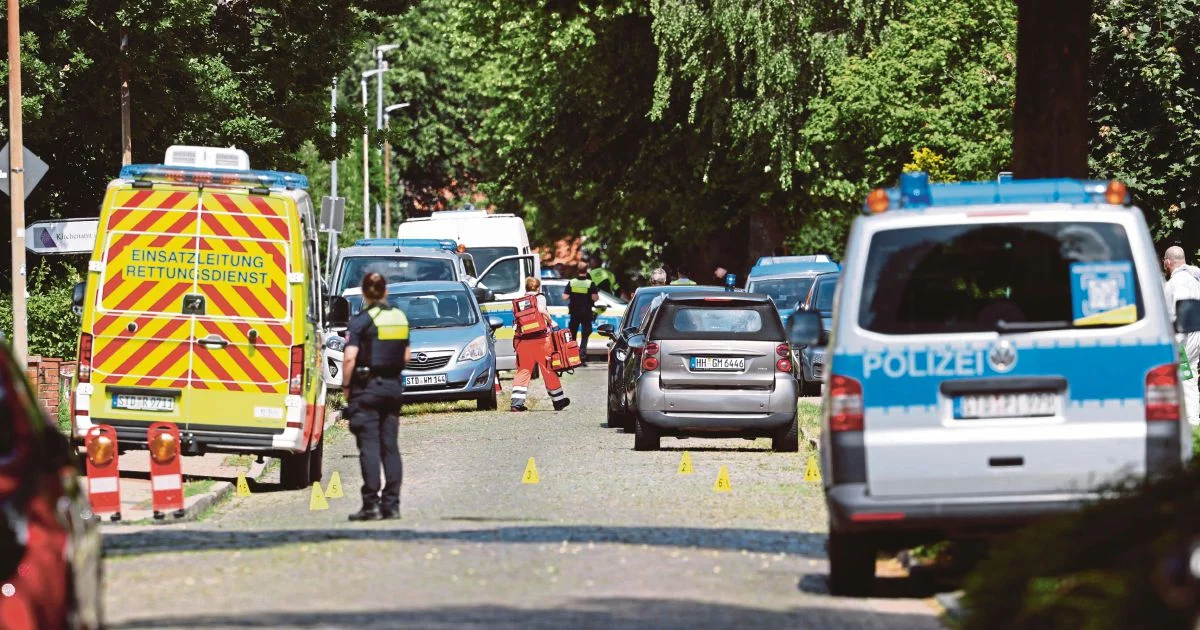
A mass shooting at a welfare facility serving vulnerable mothers and young children in Germany has left six people dead, with law enforcement describing the incident as a probable family-related tragedy rather than a random act of violence. The attack occurred at a youth centre dedicated to supporting mothers navigating welfare assistance, prompting immediate police response and the arrest of two suspects—a male gunman and a female companion—shortly after the violence erupted.
The characterisation of the incident as a "family tragedy" carries significant weight in German law enforcement's initial assessment, suggesting that personal relationships or domestic circumstances may have motivated the shooting rather than ideological extremism or indiscriminate violence. This distinction matters considerably for understanding the nature of the threat and its implications for public safety more broadly. Investigators appear to have established connections between the perpetrator and victims through family or social ties, indicating that this was not a spontaneous or random targeting of the location.
Youth welfare centres in Germany serve a critical social function, providing support systems for mothers facing economic hardship, housing instability, or other challenging life circumstances. These facilities represent a safety net within the German social welfare apparatus, offering resources and programmes designed to help vulnerable families stabilise their situations. The targeting of such a centre raises troubling questions about the psychological state of the perpetrator and whether access to vulnerable populations may have been a factor in the suspect's calculation.
The fact that both a male and female suspect were apprehended at the scene suggests the possibility of a coordinated action or joint involvement, though the specific roles each played in the incident remain under investigation. Police have not yet released detailed information about the relationship between the two arrested individuals or clarified whether both parties were directly involved in the shooting or what circumstances led to their capture. Understanding the dynamics between the suspects could prove crucial to establishing motive and determining accountability.
German society has grappled repeatedly with mass shooting incidents, and police protocols for responding to active shooter situations have evolved significantly over the past two decades. The rapid containment of this incident and swift arrest of suspects suggests that local law enforcement responded efficiently to contain the immediate threat and prevent further casualties. However, the deaths of six individuals—including children—at a welfare facility that serves some of Germany's most vulnerable residents will inevitably prompt difficult conversations about security measures, risk assessment, and the adequacy of existing safeguards.
The emotional and psychological toll on surviving staff members and visitors to the facility will be substantial, particularly given the nature of the venue and the families it serves. Trauma counselling and mental health support resources will likely be mobilised for survivors and their families. The incident occurs against a backdrop of sustained public debate across Europe and North America regarding gun violence, access to firearms, and the effectiveness of various regulatory approaches to preventing mass shootings.
For Southeast Asian observers, Germany's developed infrastructure for law enforcement response and victim support stands in sharp contrast to capacity constraints faced by many countries in the region. At the same time, the incident underscores that high-income nations with robust social safety nets and democratic institutions remain vulnerable to acts of domestic violence that can escalate to mass casualty events. The investigation into the psychological state of the gunman, any warning signs that may have been missed, and systemic vulnerabilities that permitted access to weapons will likely inform policy discussions in Germany and potentially across the European Union.
The distinction authorities have drawn between this incident and other categories of mass violence—avoiding language of terrorism or ideological motivation—shapes the immediate political response. German political leaders are likely to emphasise the isolated or aberrational nature of the event while acknowledging the tragedy that has befallen affected families. Meanwhile, advocates for stronger firearm regulations may cite the incident as evidence supporting further restrictions on weapon access, particularly for individuals with documented mental health concerns or histories of domestic disputes.
As investigation into the two arrested individuals continues, prosecutors will need to establish the precise sequence of events, the legal status of any weapons used, and the criminal liability of both the primary shooter and the female companion. German courts will ultimately determine whether charges of murder, manslaughter, or other offences are appropriate, and whether aggravating circumstances—such as the vulnerable status of victims or the location of the attack—warrant enhanced sentencing recommendations.

